Gothic Jeans Fit Guide: Slim, Wide-Leg & Vintage Cuts
The best gothic jeans fit your waist and hips first, then your legs. Slim cuts suit tucked-in tops and tall boots, wide legs balance strong shoulders and give you movement, and vintage straight cuts work with almost everything. Measure your waist, hips, and inseam before you buy, and most fit problems disappear.
Why Gothic Jeans Never Seem to Fit
If your black jeans fit your hips but gape at the back waist, the problem is almost never your body. Most off-the-rack jeans are cut for a straighter waist-to-hip ratio, so a bigger waist-to-hip difference leaves excess fabric at the back waistband. Sizing up makes it worse, sizing down squeezes your hips, and this pattern mismatch is the single most common jeans complaint in forums and reviews.
Black denim makes fit flaws more visible, not less. A gaping waistband, pulling at the knee, or a hem pooling on the floor all stand out against solid black. Fit the waist and hips first: legs can be hemmed or tapered cheaply, but a flat-sitting waistband cannot be faked with a belt.
The Three Fits at a Glance
Three silhouettes cover almost every gothic wardrobe. A slim fit is close through thigh and ankle and reads sleek. A wide-leg fit is fitted at the hip and opens from the knee down, giving drama and movement. A vintage straight fit falls cleanly from hip to ankle and is the most versatile cut of all.
Rise matters as much as leg shape. High-rise jeans define the waist and work with cropped tops and corset tops. Mid-rise jeans give a relaxed, early-2000s feel.
Slim Fit: Sleek, But Only With Stretch
Slim jeans are the goth classic: they show off boots, balance a corset-top outfit, and look sharp with a fitted tee or cropped jacket. But slim only works in the right fabric. Look for stretch denim with at least 2 percent elastane so the jeans move with you. Rigid slim jeans that pull at the knee or dig at the waist are the wrong cut for you, not proof you should give up on slim fits.
Try the sit test before you commit: sit, bend, and walk a few steps. The waistband should stay put and the knees should not pull into sharp wrinkles. If the jeans pass, they will survive a concert, a club night, and a long day alike.
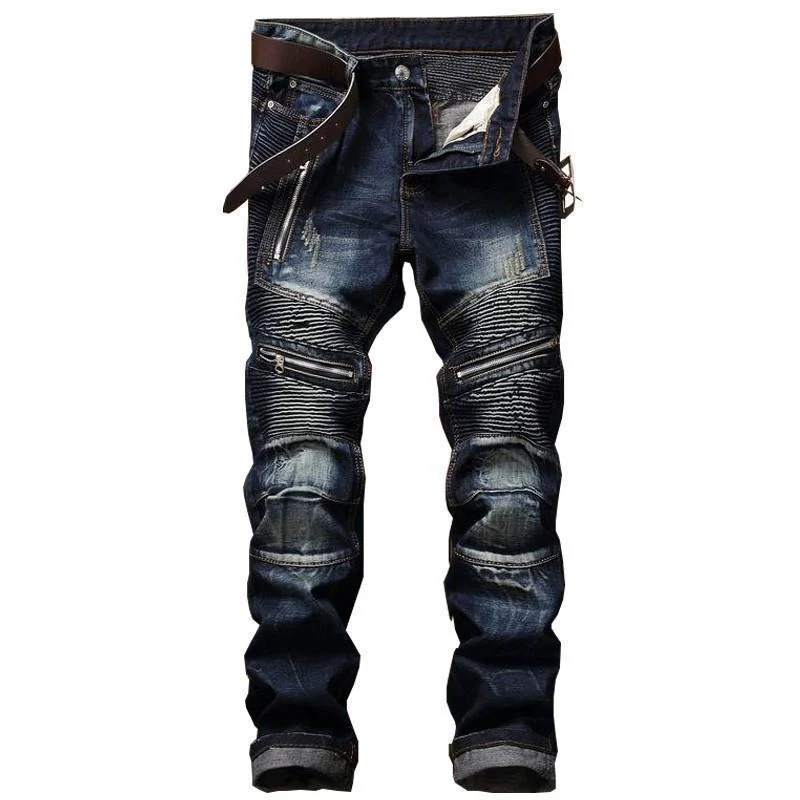
For a clean slim-fit outfit, start with the Men’s Slim Fit Jeans in black, add tall boots, and keep the top fitted.
Wide-Leg Fit: Drama Without the Bulk
Wide-leg jeans balance broader shoulders and hips, move beautifully, and turn a simple top into a full outfit. The rule that keeps them from looking bulky is simple: fit the hip, then let the leg go wide. If the hip is already loose, the whole pair reads oversized; if the hip is fitted and the waist defined, the width below the knee looks intentional.
Hem length is where wide legs succeed or fail. For petite wearers especially, the hem should end at the ankle, not pool on the floor. A dragging hem picks up dirt, frays fast, and shortens your leg line. Pair wide legs with a tucked-in or cropped top so your waist stays visible; an oversized top plus wide legs together turns an outfit into a shapeless block.
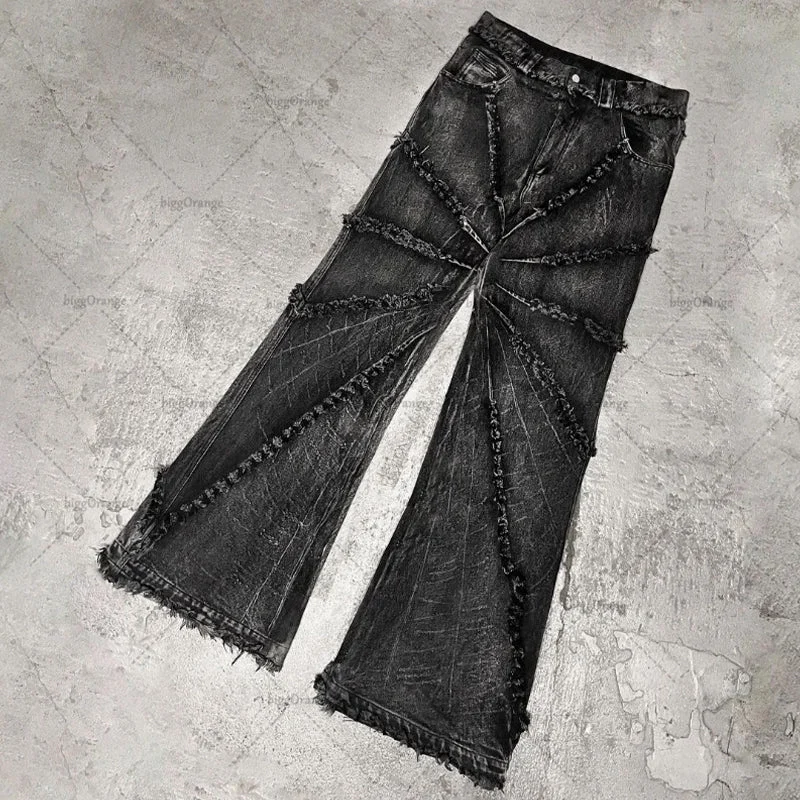
The Men’s Wide Leg Jeans are the easy entry point: fitted hip, strong wide leg, and a clean black wash for platform boots or a cropped tee.
Vintage Straight Fit: The Safe First Pair
If you only own one pair of gothic jeans, make it a vintage straight cut. Straight legs fall cleanly from hip to ankle, suit almost every body shape, and work with sneakers, boots, and heels. They are also the most forgiving fit to buy online, since a straight leg does not depend on exact calf or ankle measurements.
Wash changes the message. Dark or solid black reads sharper for evenings and nights out. Vintage washed black feels more casual, hides wear better, and suits daytime. A clean hem reads polished, while distressing adds edge.
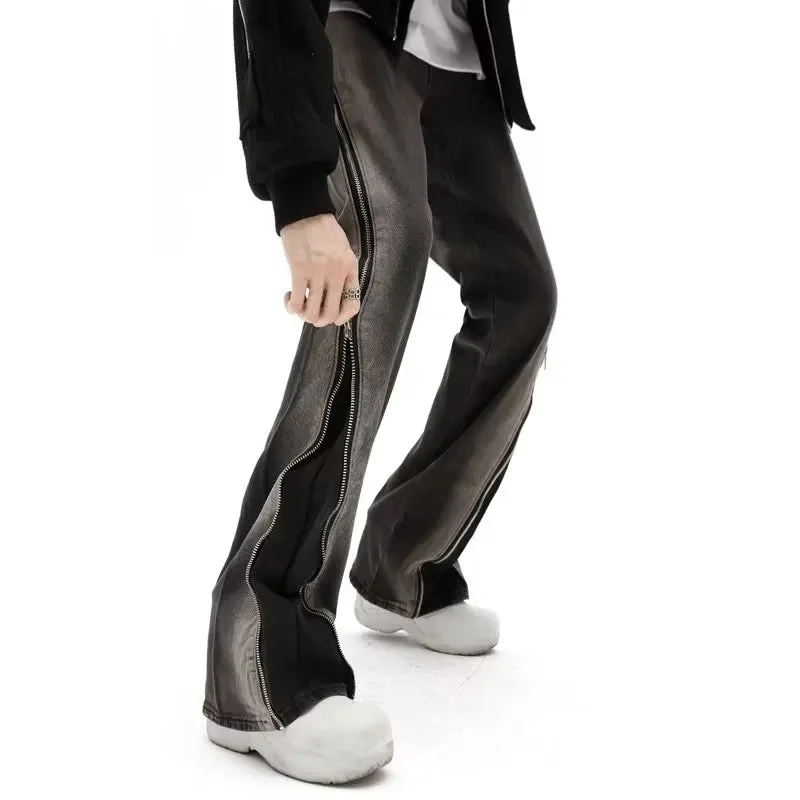
The Men’s Vintage Jeans in washed black are the workhorse pair: straight leg, relaxed but not baggy, easy to dress up or down.
How to Measure Before You Order
Take three measurements with a soft tape, standing relaxed: your natural waist at its narrowest point, your hips at their fullest point, and your inseam from inner crotch to ankle bone. Compare all three to the size chart instead of ordering your usual letter size, since alternative brands cut differently from mainstream ones. Between sizes, choose the size that fits your hips, then fix the waist with a belt or a tailor’s dart.
Check fabric content too. Stretch denim forgives small measurement errors; rigid 100 percent cotton does not. If you are between sizes in rigid denim, size up and tailor down.
Fix the Five Most Common Problems
Waist gap. Do not just size down. Look for curvy or hourglass cuts with a fuller seat, or have a tailor take in the center-back waistband.
Dragging hems. Buy the ankle length or budget for hemming. It costs little and saves the pair from fraying within a season.
Knee pulling in slim jeans. Switch to a straight-slim cut or a fabric with better stretch recovery. Diagonal wrinkles below the knee mean the cut is too narrow for your legs.
Tight waist, loose legs. Fit the waist and hips first, then have the legs tapered. Tailors slim legs every day; they cannot add fabric to a too-small waistband.
Black fading fast. Wash inside out in cold water and line dry. Heat kills black dye, so skip the hot dryer.
Styling Each Fit for a Full Gothic Outfit
Slim jeans love boots and structure: tall boots, a corset top or fitted band tee, and a cropped jacket for a sharp night-out look. Wide-leg jeans love a defined waist: a cropped top, a tucked-in tee, and platform boots. Vintage straight jeans love everything: an oversized tee and moto jacket by day, or a blazer and boots for a more put-together evening.
One proportion rule covers all three fits: if the bottom is wide, keep the top fitted or tucked. If the bottom is slim, you can go bigger on top.
Frequently Asked Questions
Should I size up if my jeans gap at the waist?
No. Sizing up makes the waist gap worse. Choose a curvy or hourglass cut, or buy for your hips and have the waist taken in.
Can petite people wear wide-leg jeans?
Yes. Pick a fitted hip, a hem that ends at the ankle, and a tucked-in or cropped top so your waist stays defined.
How tight should slim jeans be?
Close, but not strained. You should be able to sit, bend, and walk without pulling at the knee or digging at the waist. If you cannot, the cut is wrong for you.
The right gothic jeans are not the trendiest pair. They are the pair that fits your waist, clears your boots, and survives a full day without adjusting. Measure first, choose the silhouette that matches your life, and let the black denim do the rest.