Gothic Combat Boots: Break-In, Fit & Styling Guide
Gothic combat boots are the hardest-working shoes in a dark wardrobe: lace-up ankle support, chunky soles, and hardware that survives concerts, rain, and daily wear. This guide explains how to choose the right pair, break them in without blisters, and style them for everyday goth outfits.
Why Combat Boots Belong in Every Goth Wardrobe
Few goth staples do as much as a good pair of combat boots. They anchor a flowing skirt, toughen up a velvet dress, and finish a jeans-and-band-tee outfit without any extra effort. Unlike fashion boots built for looks alone, real combat-style boots are made to be walked in: thick soles, sturdy eyelets, and leather or faux leather uppers that mold to your feet over time.
Community experience backs this up. In goth fashion forums, the most common advice to newcomers is simple: buy one solid pair of black boots before anything else. Boots get worn more than any other single item, so cost per wear is low even when the upfront price is higher than a pair of fast-fashion shoes.
Three Gothic Combat Boots Worth Considering
Not every combat boot fits the same foot or the same look. Here are three distinct styles from ROCK CLOTHING, each suited to a different wearer.
Gothic Assault Boots: The Classic Lace-Up
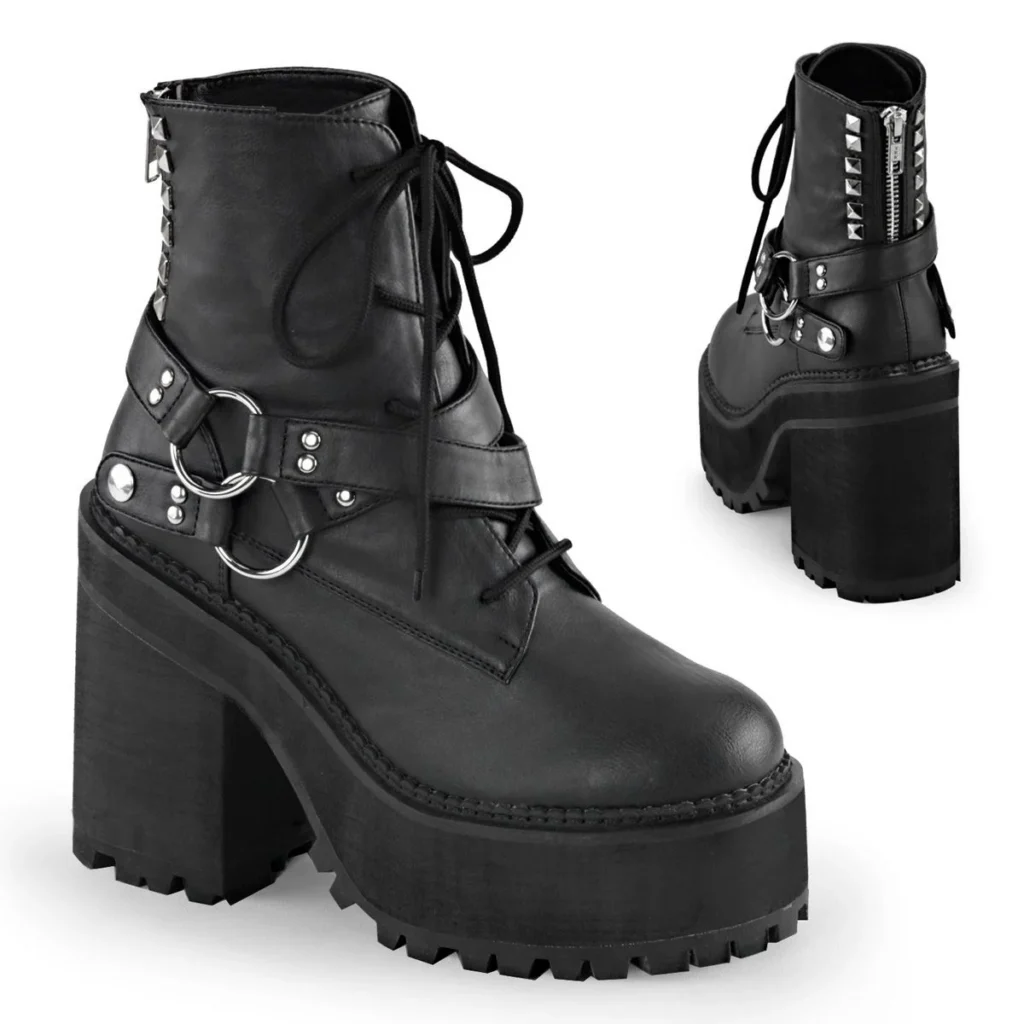
The Gothic Assault Boots are the closest thing to a default goth boot: a tall lace-up shaft, rugged sole, and clean black finish that works with almost everything. They are the best choice if you want one pair that covers concerts, daily wear, and bad weather alike.
Because the shaft laces all the way up, you can adjust the fit around the ankle and calf independently. Wearers with slim calves can lace tightly for support, while those with wider calves can leave the top eyelets looser without the boot looking sloppy.
Classic Gothic Boots: The Everyday Pair
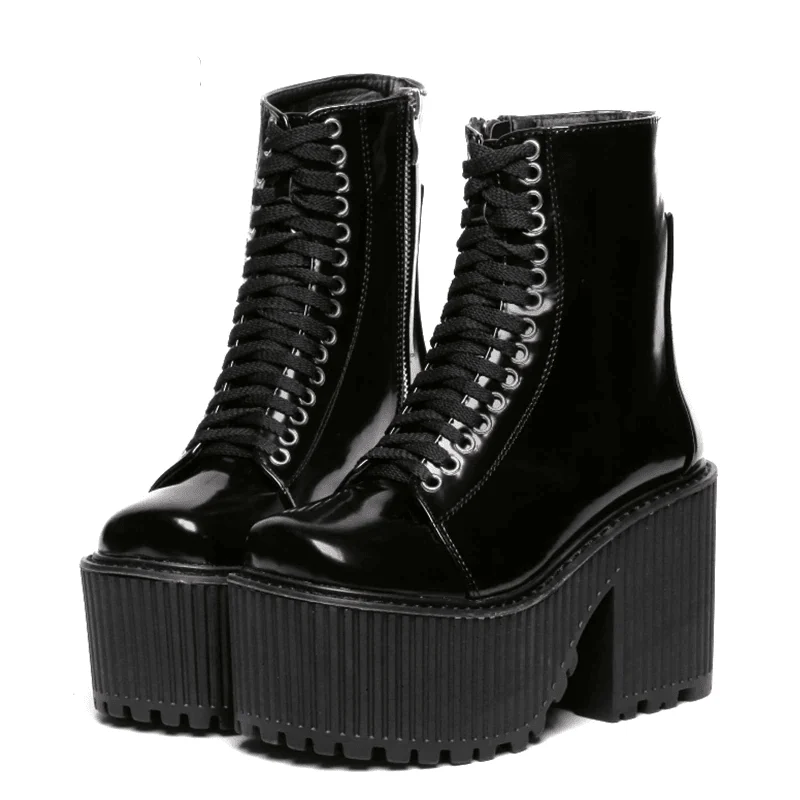
The Classic Gothic Boots are a simpler, more understated take on the style. Less hardware means fewer things to catch on fishnets or long skirts, and a cleaner silhouette that pairs well with work-friendly dark outfits and corp goth looks.
These are the pair to reach for when you want the comfort and toughness of combat boots without shouting about it. They also tend to break in faster, since there are fewer stiff panels and straps to soften.
Punk Gothic Boots: The Statement Pair
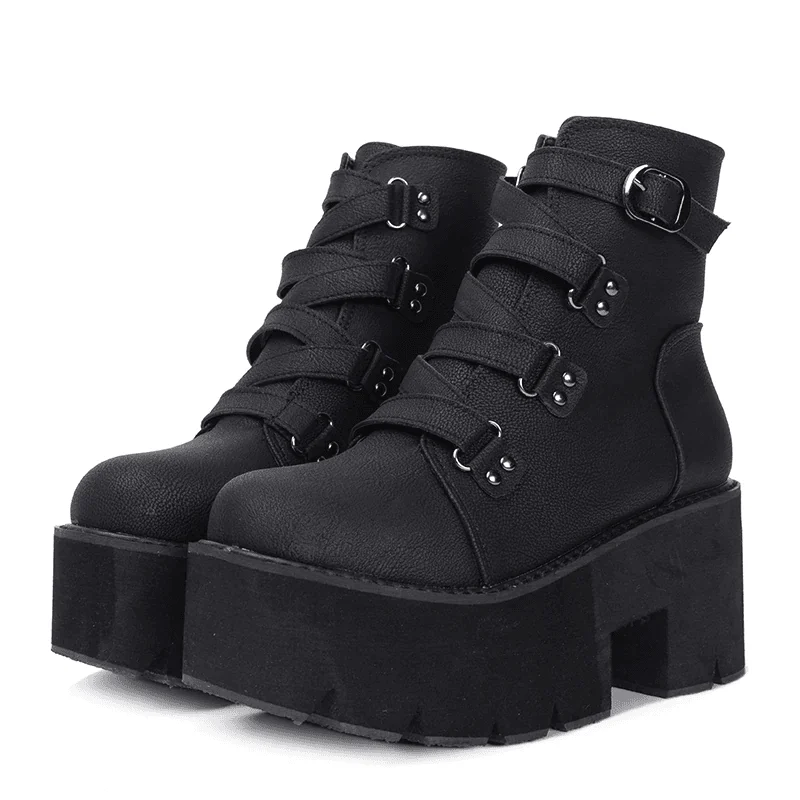
The Punk Gothic Boots lean harder into punk attitude: bolder detailing and a silhouette that reads instantly as statement footwear. Wear them when the boots are meant to be the outfit’s focal point, not just its foundation.
Statement boots pair best with simpler outfits. Let the boots carry the look and keep the rest of the outfit relatively plain: black jeans, a fitted tee, and one or two accessories at most.
How to Get the Fit Right
Combat boots that fit badly will hurt, no matter how good they look. Three checks matter most:
1. Size for Your Socks
Always try boots on with the socks you will actually wear. Thick boot socks take up real volume, and a pair that fits perfectly in thin socks can feel painfully tight in winter socks. If you are between sizes, most boot wearers size up and use an insole or thicker sock to fine-tune the fit.
2. Check the Toe Box
Your toes should be able to wiggle slightly, and the widest part of your foot should sit at the widest part of the boot. Cramped toes cause blisters and numbness on long days, and they are the most common complaint in boot reviews across brands.
3. Test the Ankle
Lace the boots fully and walk up and down stairs. Your heel should lift only slightly, and the ankle should feel supported rather than pinched. If the top of the shaft digs into your shin, the shaft is too tall or too stiff for your leg shape, and a shorter style will suit you better.
Breaking In Combat Boots Without Blisters
New combat boots are stiff by design, and the break-in period is where most buyers give up. Do not wear a brand-new pair to a full-day event. Instead, follow a gradual plan:
Wear them around the house for an hour or two at a time, with thick socks, for the first few days. Flex the ankles, bend the soles by hand, and lace them snugly but not painfully tight. Many wearers report that the worst stiffness fades after about a week of short sessions.
Protect known hotspots before they blister. Moleskin or blister patches on heels and the sides of the little toes prevent most break-in pain, and a leather conditioner softens stiff uppers faster than wear alone. For faux leather, a gentle conditioner or even just repeated short wears will relax the material without damaging the finish.
One common mistake is over-tightening the laces to force support. Over-tight lacing cuts circulation and causes numbness, while slightly looser lacing with a good insole gives the same support more comfortably.
Styling Combat Boots for Everyday Goth Looks
Combat boots are unusually versatile. With skinny jeans or leather pants, they create a sharp, grounded silhouette. With a flowing maxi skirt or velvet dress, they stop the outfit from looking too formal and add the edge that defines goth style. With shorts and fishnets, they are a classic festival and concert combination.
For winter, tuck slim pants into the shaft and let the boots handle snow and slush. For summer, pair shorter combat boots with skirts and dresses, and skip heavy socks in favor of breathable ones to avoid overheating.
Color discipline matters: black boots go with everything in a goth wardrobe, which is exactly why they are the default. Save colored or heavily decorated boots for outfits built around them.
Caring for Your Combat Boots
Good boots last years with basic care. Brush off mud after wear, wipe the uppers clean, and let wet boots air-dry away from direct heat, which cracks leather and warps soles. Condition real leather every few months, and clean faux leather with a damp cloth rather than harsh solvents.
Check the laces and eyelets regularly. Worn laces snap at the worst moment, and a loose eyelet left unrepaired can tear out of the upper. Replacing laces is cheap insurance, and keeping a spare pair in your bag costs almost nothing.
Store boots upright with shoe trees or rolled newspaper inside, so the shafts keep their shape instead of flopping and creasing.
Frequently Asked Questions
Are gothic combat boots comfortable for all-day wear?
Yes, once broken in. A well-fitted pair with cushioned insoles is comfortable for full days on your feet, including concerts and festivals. The key is gradual break-in and proper socks, not tougher feet.
Should I size up in combat boots?
If you are between sizes or plan to wear thick socks, size up half a size. A slightly roomy boot can be adjusted with insoles and socks, but a tight boot cannot be stretched comfortably.
Can you wear combat boots with dresses?
Absolutely. Combat boots with dresses, especially velvet, lace, or flowing maxi styles, are a signature goth combination. The contrast between tough boots and soft fabrics is what makes the outfit work.