Gothic Sandals: Fit, Styling & Summer Care Guide
Gothic sandals give you dark style without the heat of boots, but only when the straps, footbed, and sole fit your foot. Choose a style that matches your walking distance, fit straps snugly without cutting circulation, and break them in gradually to avoid blisters and sore arches.
Why Gothic Sandals Deserve a Real Guide
Sandals look simple, which is exactly why they cause so many complaints. A boot hides fitting mistakes behind a shaft and laces; a sandal exposes every one of them. Straps that are a fraction too tight rub the ankle raw within an hour, footbeds that are too short let toes hang over the edge, and flat soles turn a festival day into an arch-ache marathon.
Community feedback on gothic footwear keeps returning to the same problems: straps that chafe the ankle bone, buckles that snap after one summer, soles so thin you feel every stone, and sandals that stretch out until they flop off the foot. None of these are reasons to avoid gothic sandals. They are reasons to buy them with a fitting checklist instead of a guess.
Three Gothic Sandal Styles Worth Knowing
Gladiator Sandals: Strapped-In Drama
Gladiator sandals lace or buckle up the leg, turning the strap itself into the statement. They pair naturally with short skirts, shorts, and dresses, and they anchor an outfit that would otherwise float away in summer. The trade-off is fitting: every strap is a potential pressure point, so try them on with the socks or bare feet you will actually wear.
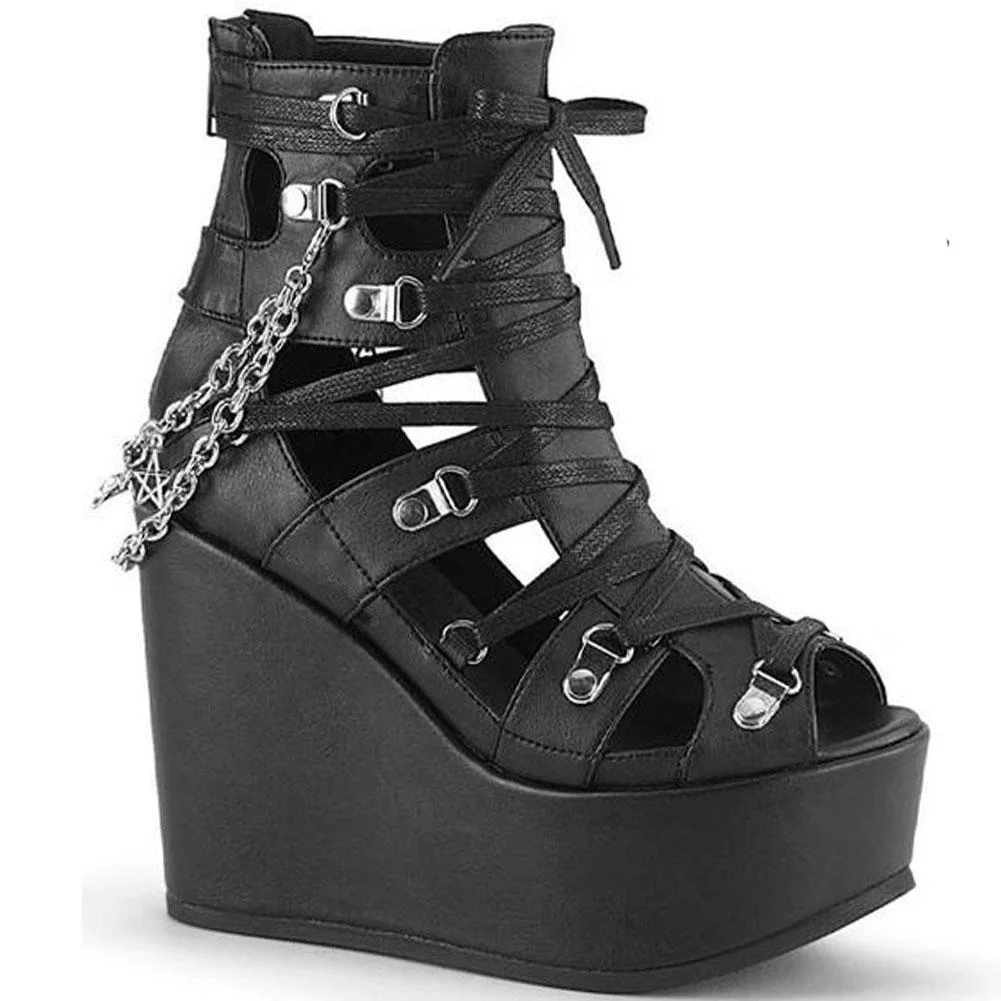
When you fit gladiators, check the ankle bone first. Straps that cross directly over the bone will rub on long walks, so look for padding or a strap path that sits just above or below it. Buckles should close on a middle hole, not the last one, so you have room to tighten as leather straps stretch.
Gladiator Platform Sandals: Height Without Heels
Platform sandals deliver the height of a heel with the stability of a flat sole. The wide base spreads your weight, so you can wear them for hours at a concert or market without the wobble of a stiletto. They also add presence to simple outfits: a black dress and platform sandals read as a complete look, not an afterthought.
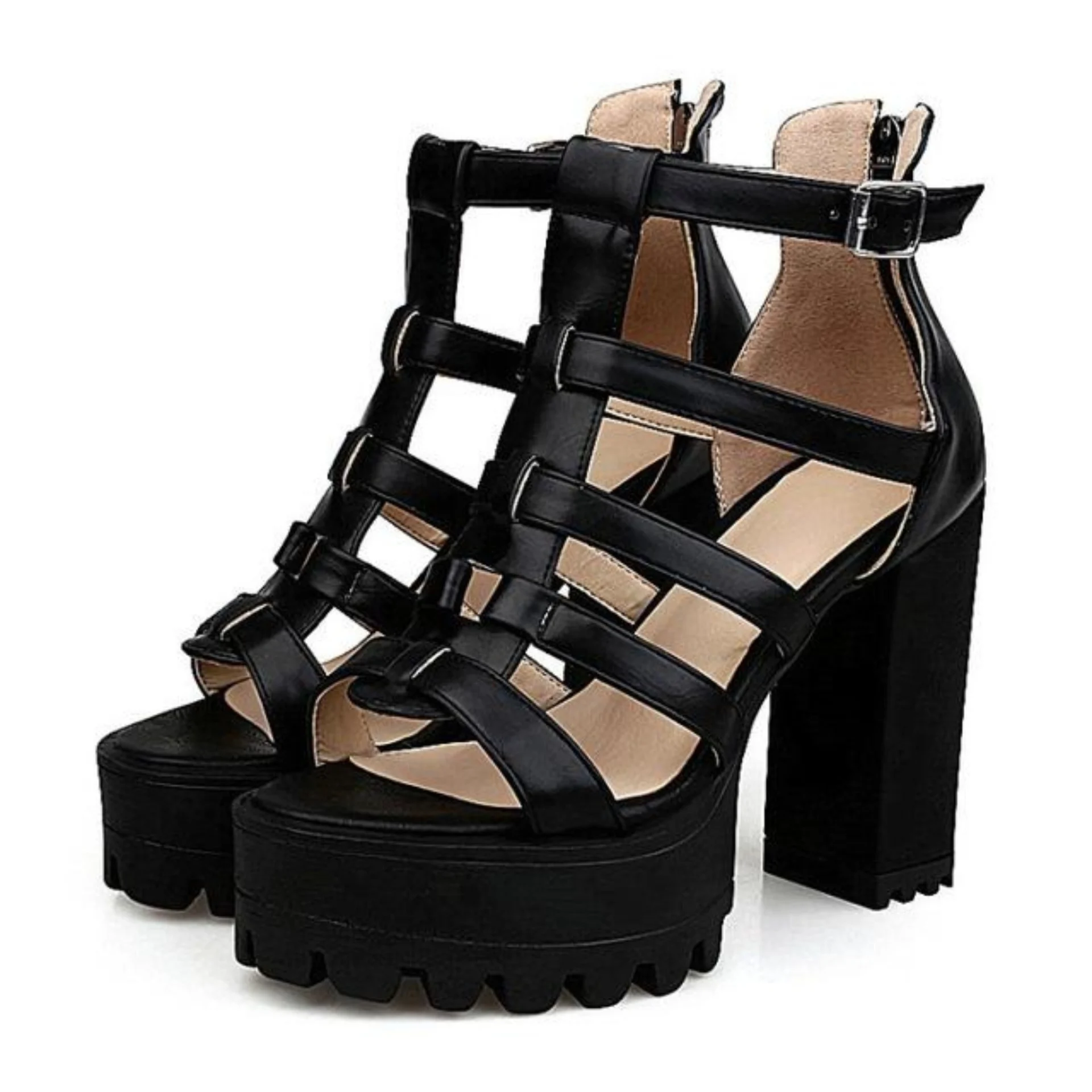
Fit platforms by the footbed, not the platform height. Your heel should sit fully on the sole with no overhang, and your toes should stop a few millimeters short of the front edge. If the platform makes you walk heel-first and slap the sole down, the shoe is too stiff or too heavy for your stride; a lighter pair will feel far better by the end of the day.
Casual Summer Sandals: Everyday Dark Comfort
Not every summer day needs a statement. Casual gothic sandals are the slip-on pair you reach for on errands, beach trips, and hot afternoons when boots are unthinkable. Simple straps, a cushioned footbed, and dark hardware keep them firmly goth without demanding attention.
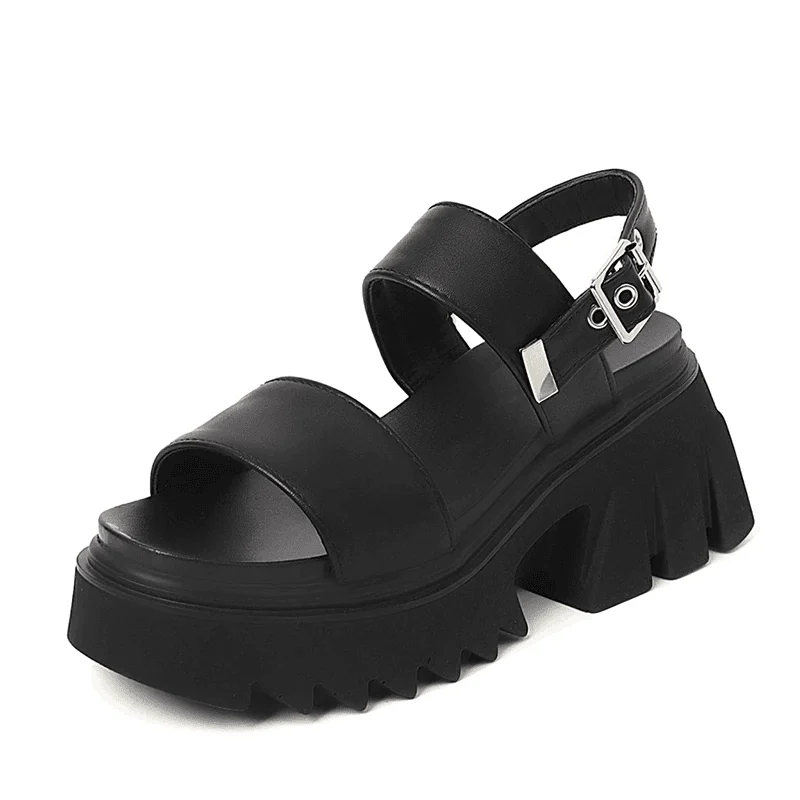
The fitting trap with casual sandals is buying them too loose. Because they slip on easily, many people size up, and then the foot slides forward with every step, jamming toes against the front strap. Your heel should stay put when you walk, and the straps should hold the foot without you having to grip with your toes.
Getting the Fit Right: Three Checks Before You Buy
Strap tension. Slide one finger under each strap. If it will not fit, the strap will cut circulation on warm days when feet swell. If two fingers fit easily, the sandal will loosen further and your foot will slide.
Footbed length. Stand with your full weight on the sandal. Your heel and longest toe should both sit on the footbed with a small margin at each end. Sandals that fit while seated often fail this standing test, so always check it upright.
Between sizes. If you fall between sizes, the safer choice depends on the style. For strappy gladiators, size down and let the straps adjust; for slip-on casual sandals, size up only if your toes would otherwise hit the front edge, and add a thin insole to take up the slack.
Breaking In Sandals Without Blisters
New straps are the main blister culprit, not the sole. Wear new sandals indoors for an hour on day one, then two hours on day two, adding time gradually over a week. Apply moleskin or anti-blister balm to any spot that feels warm before it turns red; once a blister forms, you have lost days of wear.
Leather straps soften faster if you flex them by hand before the first wear, bending each strap back and forth a dozen times. Synthetic straps do not stretch much, so with those, fit matters more than break-in: what feels tight in the shop will still feel tight in August.
Styling Gothic Sandals for Summer
Gladiator sandals shine with short hemlines: mini skirts, shorts, and above-the-knee dresses let the straps do their work. Platform sandals balance long, flowing pieces like maxi skirts and wide-leg pants, where the height keeps fabric off the ground. Casual sandals go with everything from jeans to swim cover-ups, and black hardware keeps even the simplest pair looking intentional.
For festivals, choose the pair you have already broken in, not the newest one in the box. Pack a second pair of straps-friendly socks or a blister kit, and remember that dust and mud wash off synthetic straps easily while leather needs a wipe-down at the end of the day.
Keeping Your Sandals Alive Past One Summer
Most sandal deaths are preventable. Rinse off sweat and salt after beach or festival wear, because dried salt stiffens straps and corrodes buckles. Let sandals air-dry away from radiators and direct sun; heat warps footbeds and cracks faux leather. Store them flat, not stacked under boots, so straps keep their shape and buckles do not dent the footbed.
Check buckles and rivets at the start of each season. A loose rivet tightened early is a five-minute fix; a rivet that pulls through the strap is a dead sandal. Replace worn heel pads before the sole wears through, since a thin sole transfers every impact straight to your heel.
Frequently Asked Questions
Should I size up in gothic sandals?
Only if your toes hit the front edge in your usual size. Otherwise, buy your true size: sandals stretch with wear, and a loose sandal makes your toes grip, which causes cramps and blisters.
Can you wear gothic sandals all day?
Yes, if the footbed is cushioned and the straps hold your foot without sliding. Flat, thin-soled sandals tire your arches after a few hours, so for all-day wear choose a contoured footbed or a low platform.
Do gladiator sandals suit short legs?
They can, if the straps stop below the knee rather than wrapping the whole calf. Knee-high lacing visually shortens the leg, while ankle-height gladiators keep the leg line long.
Ready to find your pair? Start with the Gladiator Sandals for strappy drama, the Gladiator Platform Sandals for height with stability, or the Casual Summer Sandals for everyday dark comfort.