Gothic Boots for Wide Feet: Fit, Styles & Comfort Guide
Wide feet do not have to mean painful gothic boots. Choose a style that adjusts to your foot: full lace-up shafts, buckle straps, and elastic gussets give width where it matters. Measure in the afternoon, pick a forgiving style, and break boots in gradually for all-day comfort.
Why Wide Feet Struggle in Gothic Boots
Most gothic boots are built on a narrow last, the foot-shaped form used to shape the shoe. That is why the same boot can fit in length yet pinch across the ball, squeeze the little toe, or press the bunion area. Patent and stiff faux leather barely stretch, making it worse. Wide-footed buyers repeat the same complaints: toes going numb after an hour, red marks across the forefoot, and boots that only survive short outings.
The fix is not to suffer through it. Boots that lace all the way down, boots with adjustable straps, and boots with elastic panels all let you control width. A rigid zip-only boot with no give is the hardest style for wide feet, while a lace-up boot loosens exactly where your foot is widest.
Three Gothic Boot Styles That Fit Wide Feet
These three styles solve width in different ways. Pick the mechanism that matches where your foot needs room.
1. Tall Lace-Up Boots With Buckle Straps
A tall lace-up boot is the most adjustable option for wide feet. The lacing runs the full length of the shaft, so you can leave the forefoot loose, tighten the ankle for support, and adjust the calf separately. Buckle straps add control and hold the fit once you have it dialled in.
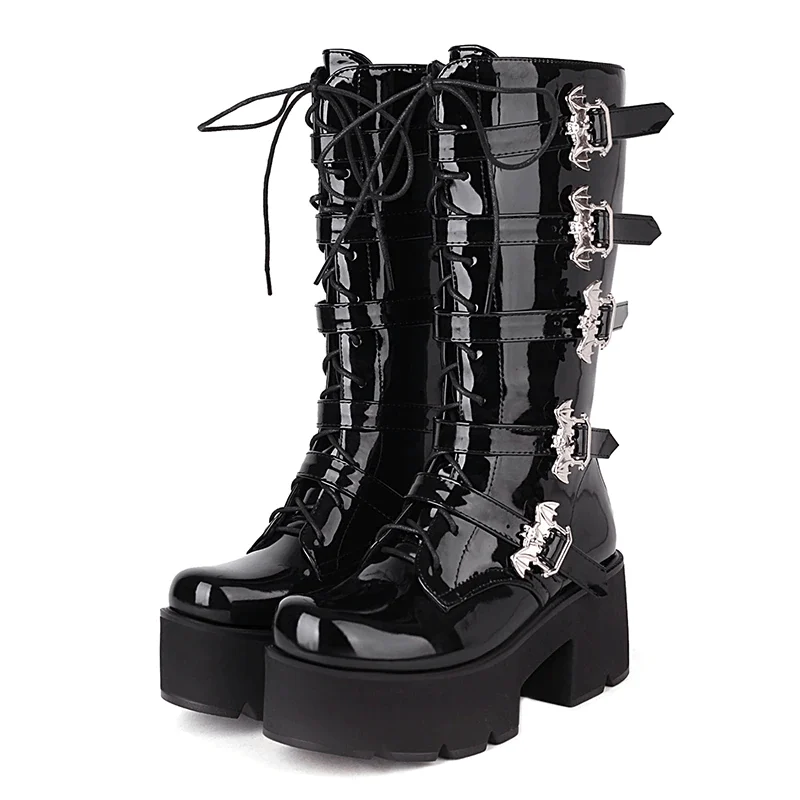
The Dark Combat Boots show this design at its best: a tall glossy shaft, full front lacing, and five buckle straps for fine-tuning from ankle to calf. If your toes are wide but your ankles narrow, start here: no other closure gives that much independent control.
2. Lace-Up Platform Ankle Boots
If tall boots feel like too much boot, a lace-up ankle boot gives the same width control in a shorter shaft. The lacing still opens the whole forefoot, so you can make room for wide toes without sizing up so far that your heel slips. A platform sole adds height without the steep pitch of a stiletto, which keeps pressure off the ball of the foot.
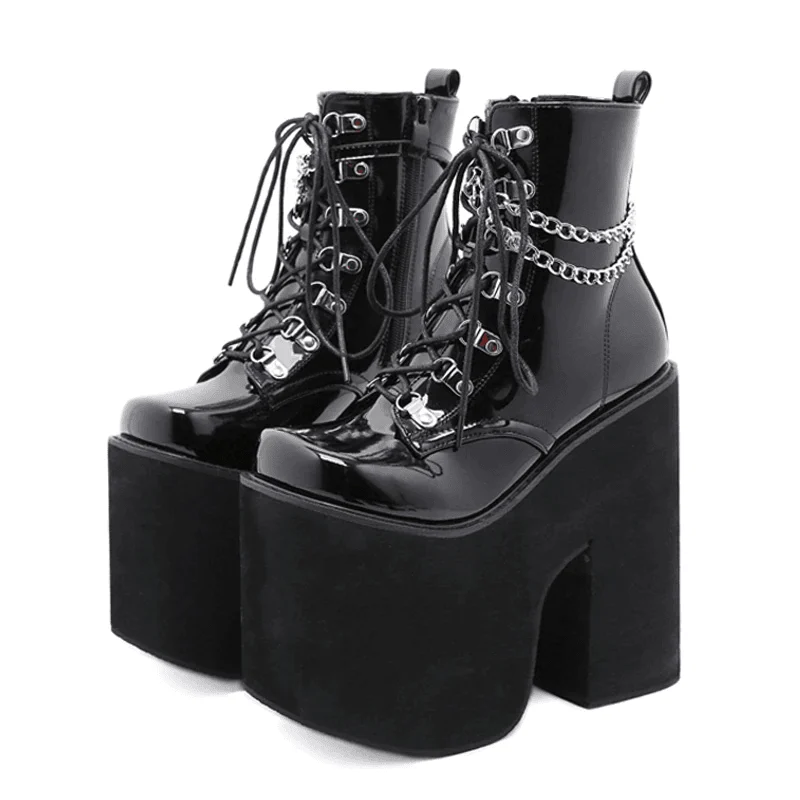
The Chaos Core Boots pair a lace-up front with a chunky platform sole and chain detailing. Skip the top eyelets at first if the ankle feels tight, and use criss-cross lacing rather than straight bar lacing, since criss-cross spreads tension more evenly across a wide forefoot.
3. Elastic-Gusset Chelsea Boots
Some wide feet do not want laces at all. Elastic gussets, the stretch panels on either side of a Chelsea boot, expand when you step in and spring back to hold the foot. They are the easiest wide-fit option for everyday wear, and they work best with a rounded or slightly square toe rather than a sharply pointed one.
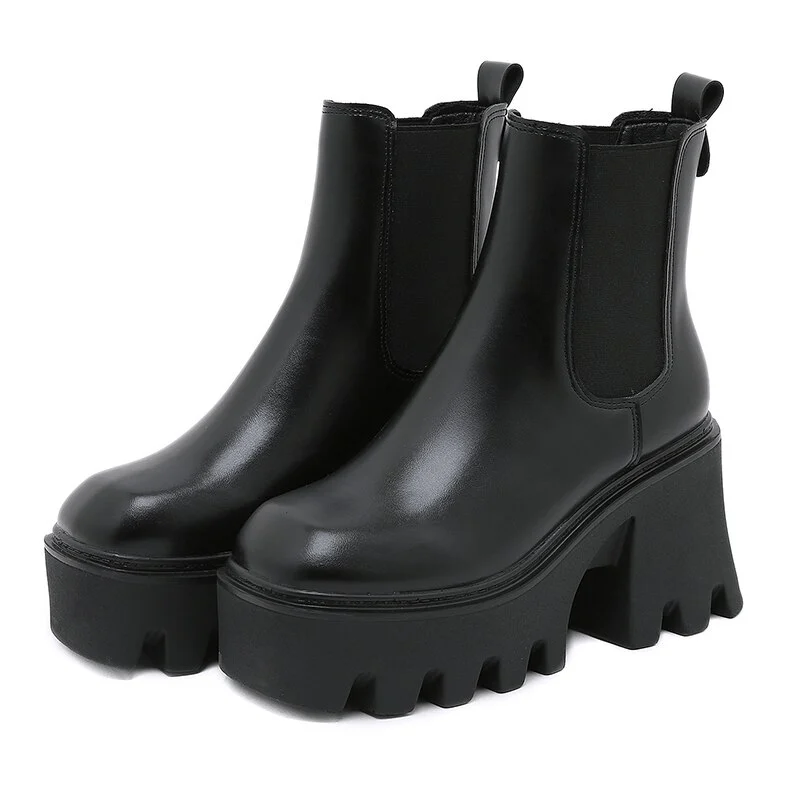
The Coffin Boots are a platform Chelsea style with deep elastic side panels and pull tabs. They suit feet that are evenly wide from toes to midfoot, and they are the fastest option to get on and off. If the elastic feels snug at first, wear them indoors for short sessions; elastic relaxes slightly with wear, but it will not stretch indefinitely, so do not buy a pair that hurts on day one.
How to Measure Your Feet for Gothic Boots
Measure once and most sizing guesswork disappears. Measure in the afternoon, when feet are slightly swollen, wearing the socks you plan to pair with the boots.
Three measurements that matter
First, length: stand on paper, mark heel and longest toe, and measure both feet, then use the larger foot. Second, width: measure around the widest part of the forefoot, across the ball. Third, instep: with a high instep, lace-up styles beat slip-ons, because you can open the lacing over the arch.
Compare those numbers to the size chart rather than trusting your usual size alone. Gothic and alternative brands often run narrower than mainstream brands, so a size chart check beats brand loyalty. If you fall between sizes, read the next section before ordering.
Between Sizes? Size Up, Then Fix the Length
For wide feet, the safer move between sizes is usually to size up and manage the extra length, not squeeze into the smaller size. Width pain rarely breaks in, while extra length can be fixed: a thin insole takes up volume and stops heel slip, and a heel grip can fine-tune the fit.
Never buy a boot that pinches your toes hoping it will stretch. Faux leather stretches far less than real leather, and patent barely stretches at all. If a boot hurts across the widest part of your foot at first try, return it and try a lace-up or elastic style.
Breaking In Wide-Fit Boots Without Blisters
Even a well-fitting boot needs break-in, especially around stiff seams and the toe box. Wear new boots indoors for 30 minutes on day one, an hour on day two, and build up from there, letting the material soften to your foot shape before a full day out.
Protect hotspots before they blister: moleskin on the little toe, heel, and ankle bones. Break boots in with the socks you will actually wear, since thick socks take up width. If one spot keeps rubbing after a week of short wears, that is a fit problem, not a break-in problem.
Styling Wide-Fit Gothic Boots
Wide-fit boots do not have to look bulky. A tall lace-up boot pairs cleanly with skinny jeans or a midi skirt, because the shaft makes one long line. Platform ankle boots work with cropped trousers and short skirts. Chelsea boots are the quietest option, suiting straight-leg jeans and everyday dark looks.
Caring for Laces, Elastic, and Soles
Replace frayed laces before they snap, since worn laces lose tension and let the boot gape. Keep elastic gussets out of high dryer heat, which degrades stretch, and let boots air dry away from radiators. Wipe faux leather and patent with a damp cloth, and brush platform soles so grit does not grind the tread.
FAQ: Gothic Boots for Wide Feet
Should I size up in gothic boots for wide feet?
Usually yes, if you are between sizes. Size up and add a thin insole for the extra length. Do not size up more than one full size, or your heel will slip and blister.
Are lace-up boots better than Chelsea boots for wide feet?
Lace-up boots give more control: you loosen the forefoot and tighten the ankle separately. Chelsea boots are easier daily, but only suit feet whose width the elastic can absorb.
Do wide-fit gothic boots ever stretch out enough?
Real leather softens and moulds to your foot, but faux leather and patent stretch very little. Buy a fit that is comfortable on day one, and treat break-in as softening, not a rescue plan for a pinching boot.
Wide feet are a fit problem with a clear solution, not a reason to give up gothic boots. Choose laces, straps, or elastic over a rigid zip-only shaft, measure before you order, and break boots in gradually.