Gothic Leather Jacket Care: Clean, Condition & Store Real Leather
A real leather jacket only gets better with age if you care for it the right way. Clean it gently with a damp cloth, condition it twice a year with a thin coat, let it air-dry away from heat after rain, and store it on a wide padded hanger. Never machine-wash it or use household cleaners.
Why Real Leather Needs Different Care
Real leather is skin, not fabric. It holds natural oils that keep it soft and flexible, and every wash, sunbeam, and splash of rain slowly pulls those oils out. When the oils go, the surface turns dull, stiff, and eventually cracked. Genuine leather care is therefore the opposite of cotton care: less water, less soap, no heat, and regular conditioner.
The Two-Minute Weekly Routine
A quick routine after wearing stops most damage before it starts:
- Brush the jacket lightly with a soft, dry cloth to lift dust from seams, shoulders, and under the collar.
- Wipe the collar and cuffs, where skin oils collect first, with a cloth wrung out until barely damp.
- Hang it on a wide, padded hanger in open air for a few hours, so trapped moisture can escape.
How to Clean a Leather Jacket Step by Step
For a general clean once or twice a year, follow this order. Always test any product first on a hidden spot, such as the inside of a pocket flap.
Step 1: Brush and wipe
Brush loose dirt from seams and under the collar, then wipe the jacket with a microfiber cloth dampened with plain water only. Keep the leather damp, never soaked, and work one small section at a time.
Step 2: Spot-clean with a leather-safe cleaner
For stubborn marks, apply a pH-balanced leather cleaner to the cloth, not the jacket, and wipe gently in circles. For light dirt, mild soap in warm water on a damp cloth works. Never use window cleaner, all-purpose spray, furniture polish, baby wipes, or alcohol products: they strip natural oils and leave the surface dry and faded.
Step 3: Wipe away residue and air-dry
Wipe once more with a clean, barely damp cloth to remove residue, then hang the jacket in a ventilated room away from sunlight and radiators. Never use a hairdryer or heater to speed drying: heat pulls out the remaining oils, which causes stiffness and cracking.
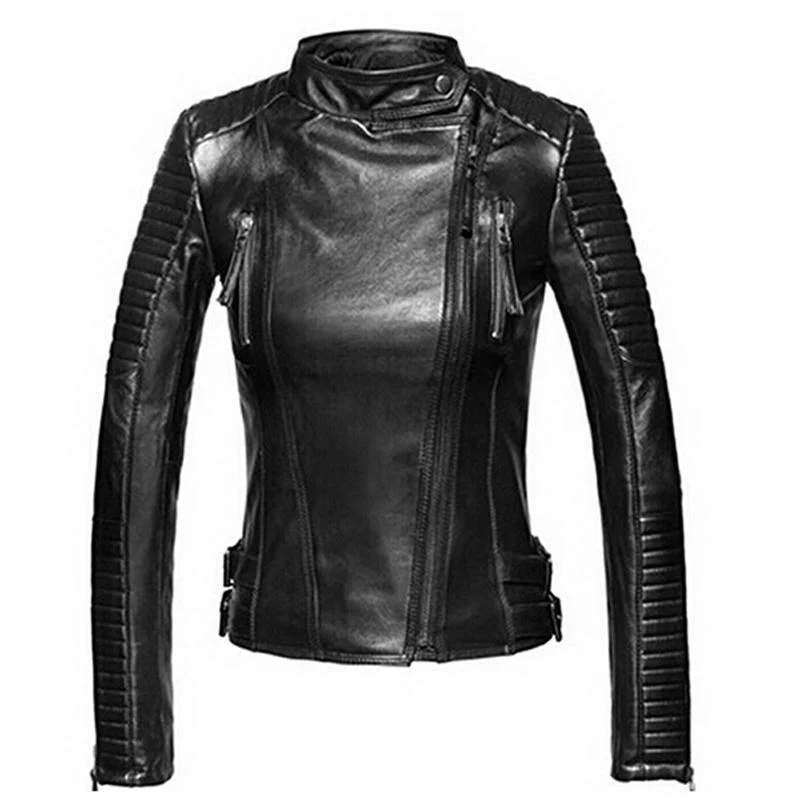
A slim biker shape like the Black Leather Jacket shows dirt early on smooth panels, so regular wiping keeps the finish even. Wipe around zips and hardware, never scrub over them.
Conditioning: How Often and How Much
Conditioning replaces oils lost to wear, water, and sun. For most jackets, a thin coat twice a year is right, or every three to six months for daily wear or hot, dry climates. If still dry after one thin coat, add a second thin coat, not one heavy coat.

The less-is-more rule
The most common conditioning mistake is using too much. A heavy coat never fully soaks in: it stays tacky, attracts dust, and darkens unevenly. Put a small amount on a soft cloth, massage it in evenly, focus on elbows and cuffs, then buff away what is still on the surface.
Match the product to the leather
Delicate lambskin needs a lighter conditioner than rugged cowhide. Suede and nubuck are different entirely and should never get smooth-leather conditioner. If unsure what your jacket is, check the label and test in a hidden spot first. A paneled style such as the Chaos Jacket rewards the same restraint: thin coats keep panels supple without softening the shape.
Rain, Scratches, Stains, and Smells
Caught in the rain
Light rain will not ruin a leather jacket, but soaking will. If it gets wet, hang it on a padded hanger in an airy room and let it dry on its own, away from heat and sunlight. Stuff sleeves lightly with clean towels so the shape holds, and condition once fully dry. Avoid lambskin in heavy downpours, and consider a leather-safe waterproofing spray before the rainy season.
Scratches and scuffs
Most minor scratches buff out. Rub a tiny amount of conditioner over the mark with a soft cloth and let it absorb; the oils darken the exposed fibres and make the scratch less visible. Deep cuts through the grain will not disappear this way, and a professional can usually repair them better than a home dye pen.
Oil and food stains
Blot spills at once with a clean cloth. Do not rub, which spreads the stain and pushes it deeper. For oil marks, sprinkle cornstarch over the spot, leave it for several hours to absorb the oil, then brush it off. For anything larger or older, a professional cleaner is cheaper than a ruined jacket.
Smoke and sweat smells
Odour usually lives in the lining, not the leather. Air the jacket out for several days first. For sweat, spot-clean the lining with mild detergent and water, and let it dry fully before wearing or storing. For smoke, a gentle wipe with diluted vinegar and water, then airing and conditioning, helps. Never soak the jacket in the mixture or mask smells with perfumed sprays.

Shorter shapes need the same routine, but check the hem first, since cropped jackets sit closer to belts and bags. The Cropped Leather Jacket is a good example: its short hem rubs against waistbands and straps, so wipe that edge regularly and condition it with the rest of the jacket.
Storage That Prevents Cracks and Mold
How you store a leather jacket between seasons matters as much as how you clean it. Hang it on a wide, padded hanger in a cool, dry closet with air circulation. Never fold it long-term, since folds become permanent creases, and never keep it in a sealed plastic bag, which traps moisture and invites mildew. A breathable cotton garment bag is the right dust cover.
Keep the jacket away from direct sunlight, which fades black leather to grey-brown, and away from radiators, which dry it out even when unworn. Rotate jackets if you own more than one.
When to See a Professional
Home care covers cleaning, conditioning, and minor scratches. See a professional for deep stains, colour loss, mould, torn seams, or broken zips. A specialist can recolour faded panels in thin layers and repair stitching without weakening the leather. If the jacket is expensive or sentimental, ask first before trying any strong product at home.
FAQ: Gothic Leather Jacket Care
Can you machine-wash a leather jacket?
No. Machine washing shrinks, warps, and cracks leather and damages linings and stitching. Clean by hand with a damp cloth and a leather-safe cleaner, and let the jacket air-dry.
How often should you condition a leather jacket?
Twice a year for most jackets, or every three to six months for daily wear or hot climates. Use a thin coat, buff off the excess, and add a second thin coat if still dry.
Can a leather jacket get wet in the rain?
Yes, light rain is fine. Let the jacket dry naturally in an airy room away from heat and sunlight, then condition it once fully dry. Avoid heavy downpours in lambskin, and waterproof before the wet season if you often walk or ride in rain.