Gothic Puffer Jackets: Warmth, Fit & Styling Guide
A gothic puffer jacket keeps you warm without forcing you to give up your dark style. Choose a cropped, belted, or leather puffer that fits your shoulders, style it with slim bottoms so the volume stays balanced, and wash it gently with dryer balls to keep the loft.
Why a Puffer Belongs in a Goth Winter Wardrobe
Black wool coats look sharp, but they are not always the warmest choice on a freezing night. A puffer traps air in quilted chambers, and that trapped air is what insulates you. For concerts, winter markets, and late walks home, a puffer is often the difference between enjoying the night and counting the minutes until you can go inside.
The old complaint is that puffers look shapeless, like wearing a duvet. That happens when every piece adds volume at once. The fix is simple: let the jacket be the only big-volume piece, and keep everything else close to the body.
Three Gothic Puffer Styles Worth Knowing
A cropped puffer, a belted puffer, and a leather puffer each solve a different styling problem, so start by picking the silhouette that matches how you actually dress.
Cropped Puffer With a Faux-Fur Collar
A cropped puffer ends at or above the waist, which keeps your leg line long and stops the jacket from swallowing your outfit. The faux-fur collar adds the gothic drama a plain sporty puffer lacks, framing the face and softening quilted nylon. It pairs naturally with high-waisted jeans, leather pants, and mini skirts with tights.
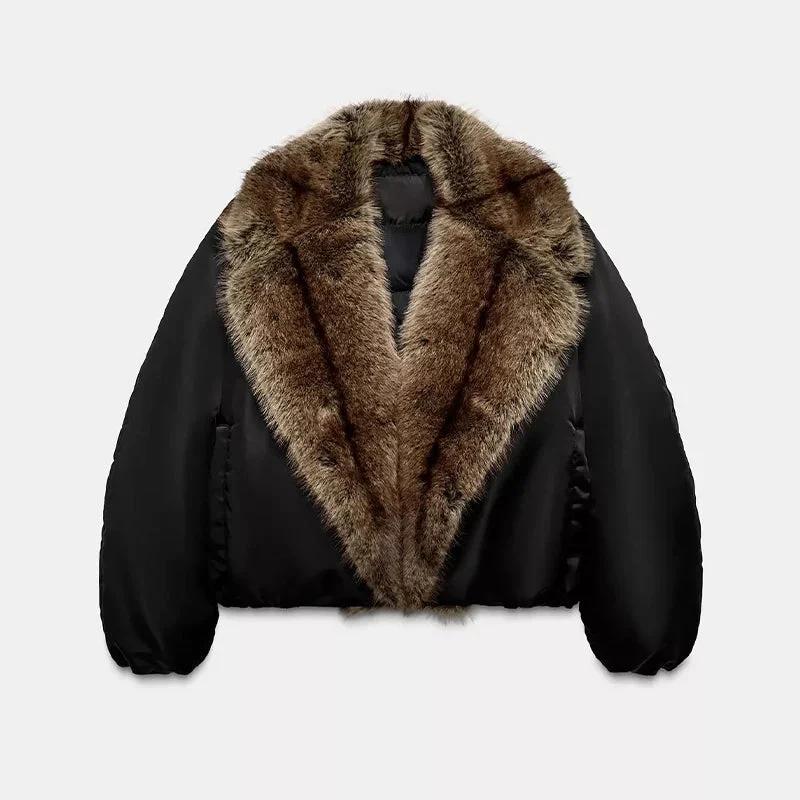
Because the hem is short, a cropped puffer shows off belts, chains, and waist details instead of hiding them. Wear it open over a fitted top when you want the collar to do the talking, and zipped with the collar popped when the wind picks up.
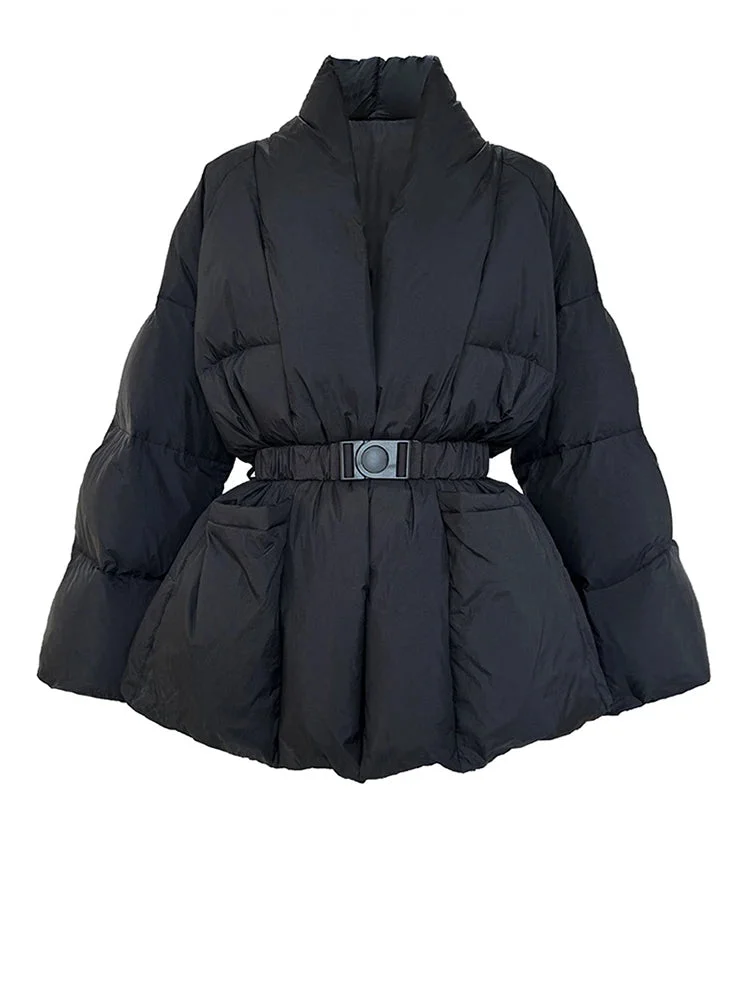
Belted Puffer for a Defined Waist
The belted puffer answers the number one puffer complaint: looking like a shapeless marshmallow. A tie belt pulls the waist in and restores an hourglass line, even over a thick sweater. It also lets you adjust the fit through the day, looser over chunky knits and tighter over a thin thermal.
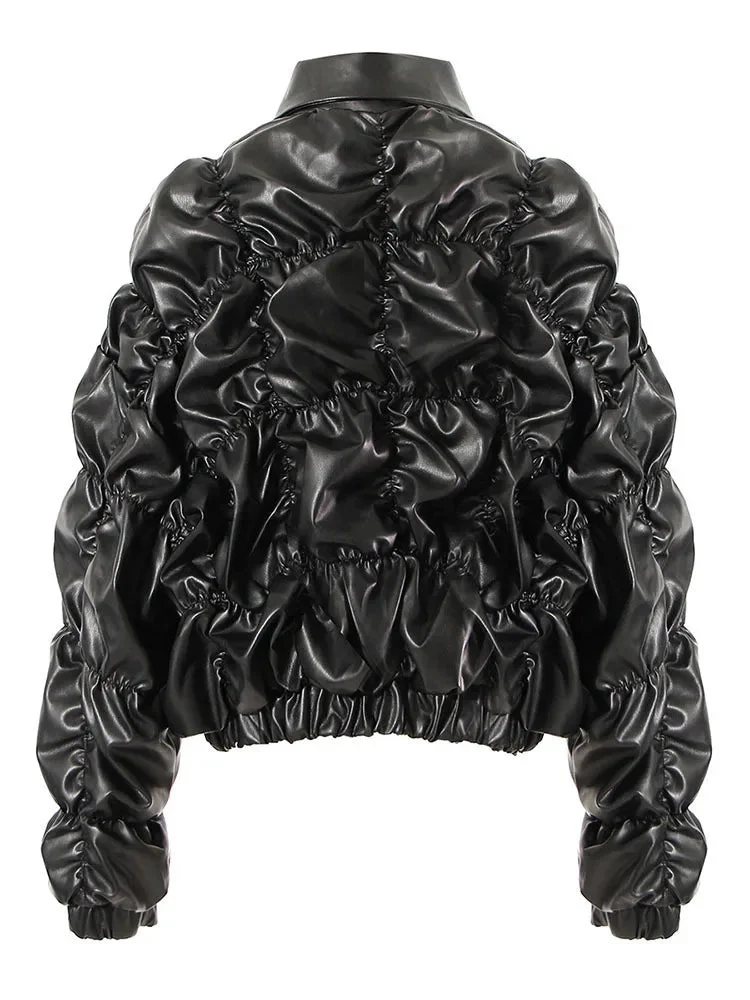
Leather Puffer for Edge Without the Bulk
A leather puffer swaps shiny nylon for a matte leather-look shell, which instantly reads more gothic and less sporty. The leather surface resists wind better than thin nylon and wipes clean, a real advantage at gigs and clubs where drinks and crowds are part of the night.
Fit Checks Before You Buy
Puffer sizing is forgiving, but three checks separate a jacket you love from one that sits in the closet.
Shoulder Seams
The shoulder seam should sit on your shoulder bone, not halfway down your arm. A seam that droops past the shoulder makes the jacket look borrowed, while one pulled inward restricts your arms when you reach. Try the jacket on over the thickest top you will wear under it.
Sleeve Length
Sleeves should cover your wrist bone when your arms hang relaxed. Too-short sleeves let cold air in at the wrist, where you feel it first. Too-long sleeves bunch at the cuff and get in the way of gloves and bracelets.
Closure and Zip
Zip the jacket fully and sit down in it. If the zip pulls or the front gaps at the waist, size up or choose a belted style. A two-way zip is a bonus: opening the bottom a few inches gives you leg room when you sit, and stops the hem riding up over your waistband.
How to Style a Puffer Without Looking Shapeless
The volume rule does all the heavy lifting. Pair a full puffer with slim bottoms: skinny jeans, leggings, or a fitted skirt with opaque tights. The contrast between a voluminous top and a streamlined bottom keeps the outfit reading as styled rather than bundled up.
Keep the layers underneath thin. A fine-knit sweater or thermal turtleneck keeps you warm without adding puff, while a chunky sweater under a puffer stretches the jacket and adds bulk in the wrong places.
Warmth Without the Bulk
Warmth comes from loft, the thickness of the insulation when fully fluffed. A jacket that looks flat on the hanger will not puff up on your body, so check the loft before you buy: press a quilted chamber gently, and it should spring back rather than stay dented.
For real cold, look for a longer length and a hood that covers your ears, since heat escapes fastest from the head and the gap at the neck. A high collar or a scarf tucked inside the collar seals that gap without adding a bulky layer on top.
Puffer Care: Wash, Dry, and Store
The most common way people ruin a puffer is washing it wrong. Most synthetic puffers can be machine washed on gentle with cold water and mild detergent, but read the care label first. Heavy detergents can strip insulation, and fabric softener coats the fill and kills loft.
Drying Is Where Loft Comes Back
Tumble dry on low heat with two or three clean tennis balls or dryer balls. The balls break up clumps as the jacket dries, and it can take several cycles before the fill is fully dry. If the jacket still feels damp or lumpy, it is not done: damp fill clumps, and damp fill can start to smell. Once fully dry, shake it out and hang it for a few hours before wearing.
Storage Between Winters
Hang your puffer on a wide hanger so it keeps its shape, and store it loosely rather than squeezed into a small bag. Compressed storage flattens the fill over months, and a flattened puffer never quite recovers its original loft. Keep it in a cool, dry closet, away from direct heat and sunlight.
Faux-Fur Collar Care
Brush the faux-fur collar gently with a wide-tooth comb to keep it from matting, and spot-clean it rather than soaking it. If the collar is detachable, remove it before washing the jacket. Never use high heat on faux fur: it melts and mats permanently.
Frequently Asked Questions
Can you wear a gothic puffer jacket every day?
Yes. A black puffer in a cropped or belted cut works as a daily winter jacket, and the dark color hides everyday wear far better than a bright one.
How do I stop my puffer looking bulky?
Pair it with slim bottoms, keep underlayers thin, and choose a belted or cropped cut. Leave the jacket open indoors: the open front shows a long line down the middle of your body and makes you look taller and slimmer.
How often should I wash a puffer jacket?
Wash it only when it is actually dirty or at the end of the season. Spot-clean marks between washes, air it out after use, and always dry it fully with dryer balls so the fill regains its loft.
Puffer Buying Checklist
Before you check out, run through this list: shoulder seams on the bone, sleeves covering the wrist, a zip that closes without pulling when you sit, and loft that springs back when pressed.