Breaking In Gothic Platform Boots: A No-Blister Guide
New gothic platform boots almost always hurt before they feel like yours. The stiff leather, the high ankle, and the heavy sole all need time to shape to your feet, but a patient two-week break-in routine — short indoor wears, thick socks, and targeted softening — will get you from blisters to all-night comfort without ruining the boots.
Why New Platform Boots Hurt in the First Place
Platform boots are built from thicker materials than ordinary shoes. Full-grain and faux leather uppers start rigid, the ankle shaft has not yet learned the shape of your leg, and a chunky platform sole changes how your foot rolls with each step. That combination concentrates pressure on the same few spots: the Achilles tendon, the ankle bones, and the ball of the foot. Pain in those places during the first few wears is normal, not a sign that you bought the wrong size.
The most common mistake new owners make is wearing brand-new platforms to a concert or a full day out. Hours of standing, dancing, and walking on unforgiving floors turn minor stiffness into open blisters. Break them in at home first, where you can take them off the moment a hot spot appears.
The Two-Week Break-In Plan
A gradual schedule works better than any single trick. Your feet and the boots adapt together, and each short session stretches the leather a little further without overwhelming your skin.
Days 1–3: Short Indoor Sessions
Wear the boots around the house for 30 to 60 minutes at a time, with thick socks. Walk up and down stairs, crouch, and flex your ankles deliberately. The goal is movement, not endurance. If a spot starts to sting, stop, note where it is, and apply moleskin or a blister patch there before the next session.
Days 4–7: Longer Wears and Lacing Adjustments
Extend sessions to two hours and experiment with lacing. Skipping an eyelet over a sore ankle bone relieves pressure without loosening the whole boot, while a heel-lock lace at the top stops your heel from lifting and rubbing. This is also the week to test the socks you actually plan to wear out — thin dress socks change the fit completely compared with thick boot socks.
Week 2: Short Trips Out
Take the boots on a short errand or a walk of under an hour before committing to a full night out. By now the leather should bend at the ankle instead of digging in, and the insole should feel molded to your arch. If one stubborn spot remains, target it directly with the softening methods below rather than pushing through more long wears.
Softening Stiff Leather Safely
Leather softens with movement, moisture, and conditioner — in that order of safety. A light coat of leather conditioner on the outside of the upper, worked in with a cloth and left overnight, makes the first wears noticeably easier. Repeat once a week during break-in, but never soak the boots or blast them with a hair dryer; heat and saturation can warp the platform sole and crack the finish.
For a stubborn ankle crease, wear the boots with two pairs of socks for one indoor session and bend the ankle repeatedly. The extra bulk stretches the leather exactly where it pinches. Boot stretchers help for width, but they cannot fix a boot that is a full size too small — if your toes are crushed even with thin socks, exchange the size instead of forcing a stretch.
Blister Prevention That Actually Works
Blister prevention beats blister treatment. Apply moleskin or athletic tape to known hot spots before you put the boots on, not after they hurt. Petroleum jelly on the Achilles area reduces friction on longer wears, and moisture-wicking socks keep sweat from softening your skin into blister territory. Carry a spare pair of blister patches in your bag for the first month; a patch applied at the first sting can save the whole evening.
Heel grips and tongue pads are cheap fixes for the two most common fit complaints: heels that lift with every step and ankle shafts that gape. Both change the internal volume slightly, so add them during break-in rather than after, so the leather molds around them.
Choosing Platforms That Break In Well
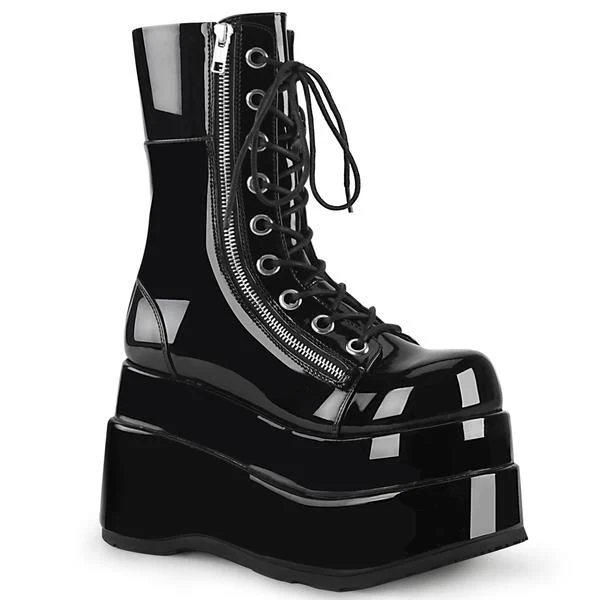
Some designs are simply easier to live with. A lace-up shaft lets you adjust pressure zone by zone as the leather softens, while a side zip makes the boots easier to get on and off during short break-in sessions.
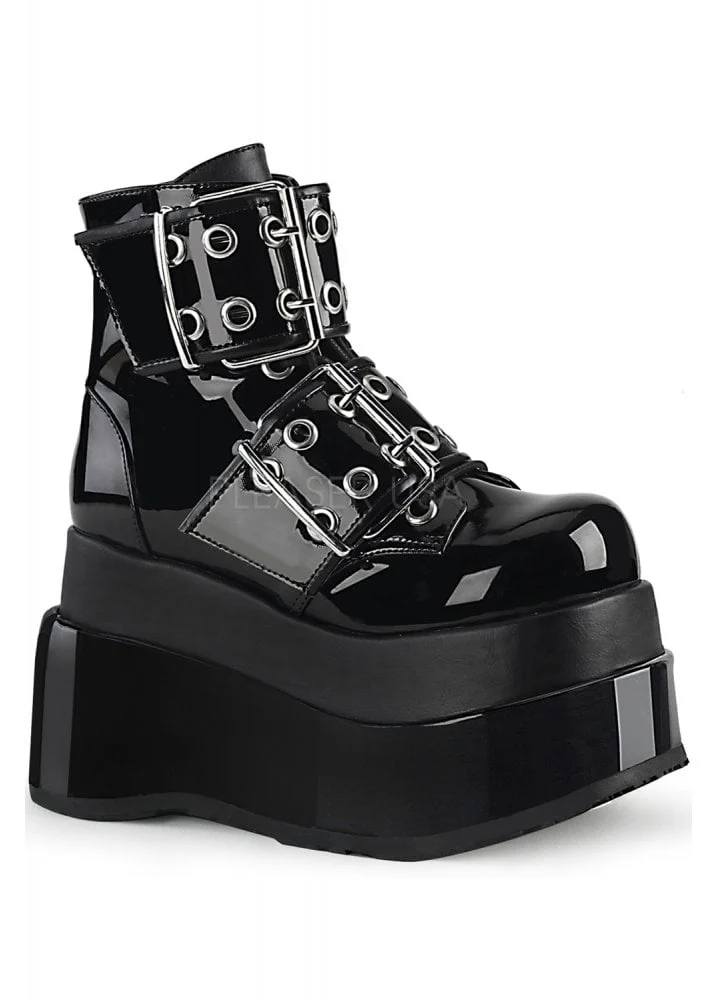
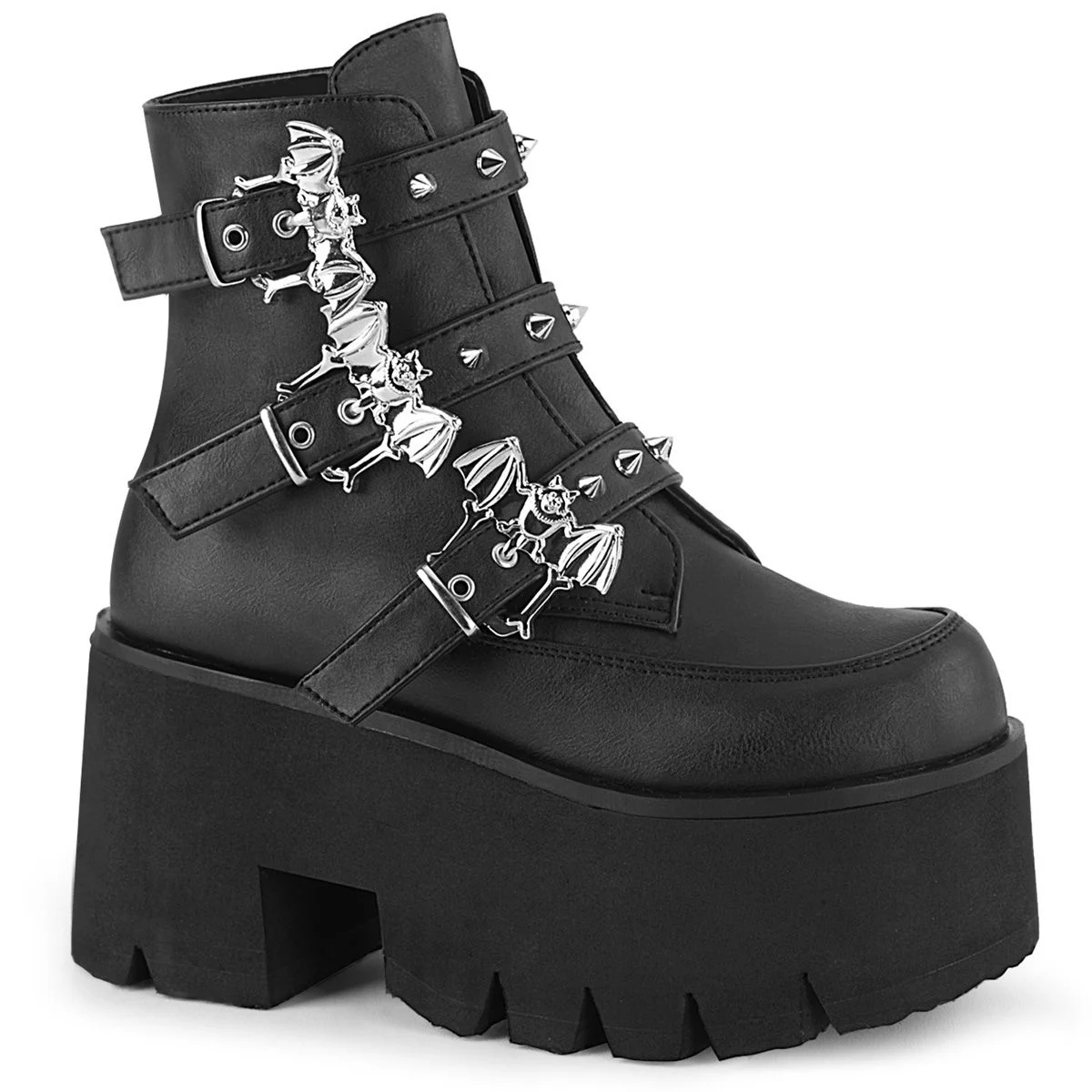
The Gothic Platform Boots are a strong first pair for break-in: the lace-up front lets you fine-tune fit around the ankle as the leather relaxes. If you want a chunkier ankle-boot silhouette, the Bear 104 Platform Boots offer a sturdy platform with a shorter shaft that many wearers find faster to soften. For a more dramatic look with the same lace-up adjustability, the Bat Love Platform Boots pair a bold profile with a shaft you can loosen exactly where it rubs.
Platform Boot Fit Checks Before You Commit
Before starting break-in, run three quick checks. First, your longest toe should not touch the end of the boot when you stand; platforms add weight, and toes slide forward on stairs. Second, you should be able to fit one finger behind your heel when the boot is unlaced — less means the boot is too short. Third, walk up and down stairs: your heel should lift no more than a quarter inch. More lift means blisters are coming, and a heel grip or tighter top lacing will fix it.
Calf fit matters just as much for taller shafts. If the shaft will not close comfortably over your calf even unlaced, the boot will never break in well — look for a wide-calf option or a lace-up style instead of forcing a zip.
After Break-In: Keeping Platforms Comfortable
Once the boots feel like yours, maintenance keeps them that way. Condition the leather monthly, keep shoe trees or rolled towels inside to hold the shape, and rotate with another pair so the insoles dry fully between wears.
FAQ: Breaking In Gothic Platform Boots
How long does it take to break in platform boots?
Most wearers need about two weeks of gradual wears — short indoor sessions building up to short trips out. Very stiff full-leather boots can take three to four weeks. If pain is not improving after two weeks, check the size rather than continuing to push through.
Should platform boots hurt at first?
Some stiffness and mild pressure are normal, but sharp pain, numbness, or toes going numb are not. Those signal a wrong size or a shape mismatch, and no amount of break-in will fix them.
Can I speed up break-in by wearing boots all day?
No — wearing stiff new platforms all day usually creates blisters that force you to stop wearing them for days, which slows the whole process. Short, frequent sessions soften the leather faster and with far less pain.