Belted Gothic Jackets & Coats: Waist Definition, Styling & Fit Guide
A belted gothic jacket does more than close a coat: it defines your waist, balances heavy layers, and turns an oversized silhouette into a deliberate shape. This guide explains how to choose belt width and placement, style belted jackets for petite, tall, and plus-size bodies, and keep faux leather belts looking sharp.
Why a Belt Changes a Gothic Jacket Completely
Unbelted gothic outerwear tends to hang straight down. That works for a long cloak or a boxy bomber, but on a jacket it can swallow your shape and make layers underneath look bulky. A belt interrupts that straight line at one point: your waist.
This is why belted styles keep appearing in goth and alternative fashion. The belt adds structure without stiffness, and it adjusts on the fly: thick sweater underneath, loosen a notch; thin top, cinch it in. One jacket covers several outfits because the belt, not the cut alone, sets the silhouette.
Community feedback on belted jackets repeats the same praise and the same complaints. Wearers love the instant waist definition and the way a belt stops a coat flapping open in wind. The complaints are consistent: belts that ride up, buckles that dig in when sitting, and faux leather belts that crack after one winter.
Three Belted Gothic Styles Worth Knowing
Asymmetric Belted Faux Leather Jacket
An asymmetric closure moves the belt line off-centre, which breaks up the torso and draws attention diagonally rather than straight across. That makes it a strong choice if straight-across belts emphasise your midsection more than you want. The diagonal also pairs well with layered necklaces and off-centre bag straps, since nothing competes for the same horizontal line.
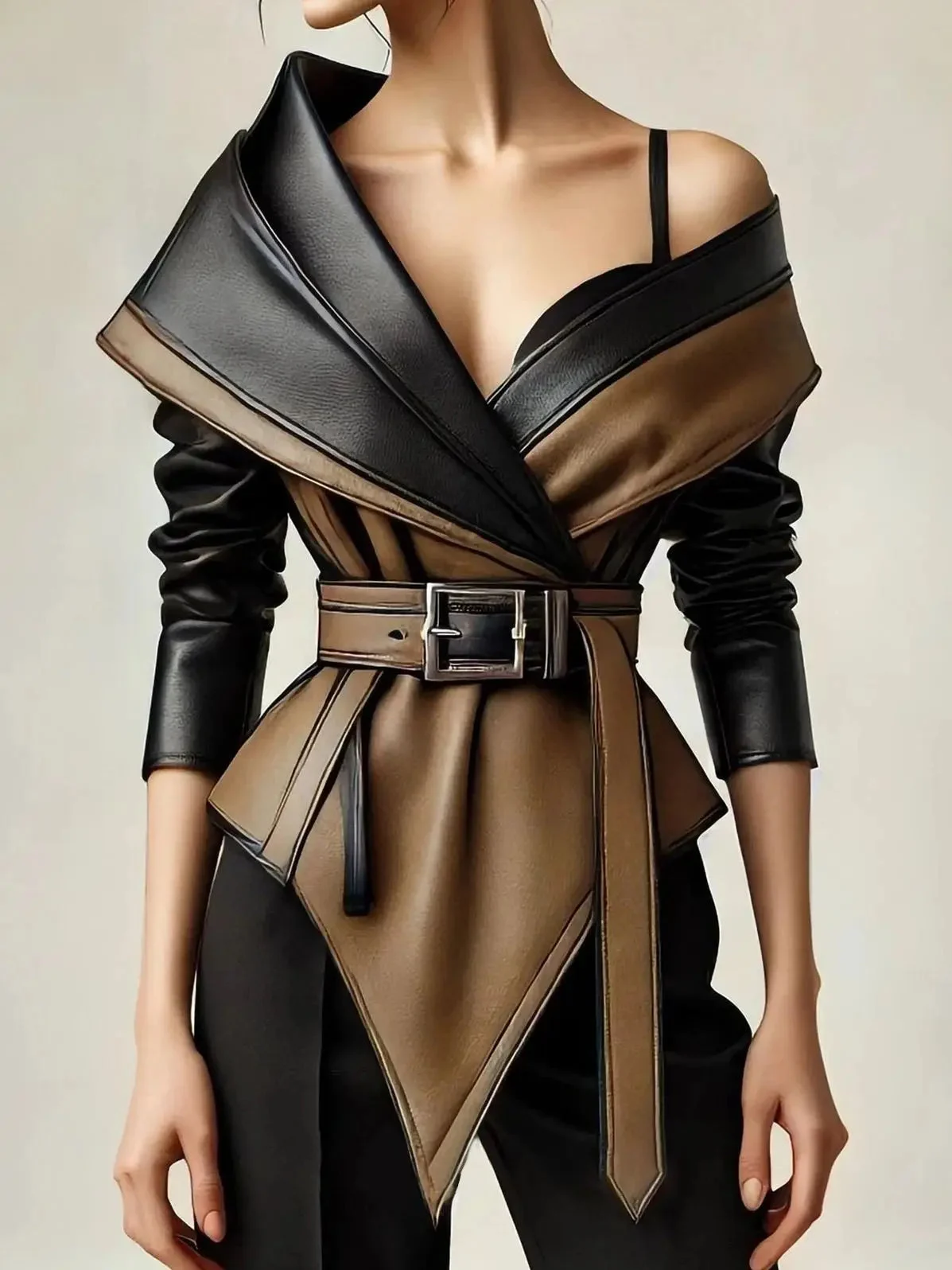
The Mocha Noir Asymmetric Belted Faux Leather Jacket is the version of this style to try first: the warm mocha tone softens an all-black outfit without breaking the dark palette, and the faux leather keeps upkeep reasonable.
Belted Leather Utility Jacket
Utility jackets earn their belt. Pockets, straps, and hardware add visual weight to the torso, so an unstructured utility jacket can look boxy fast. The belt pulls all that detail into a defined shape and stops the pockets from pulling the jacket open. If you carry a phone, keys, and wallet in your jacket pockets, a belted utility style is the practical pick.
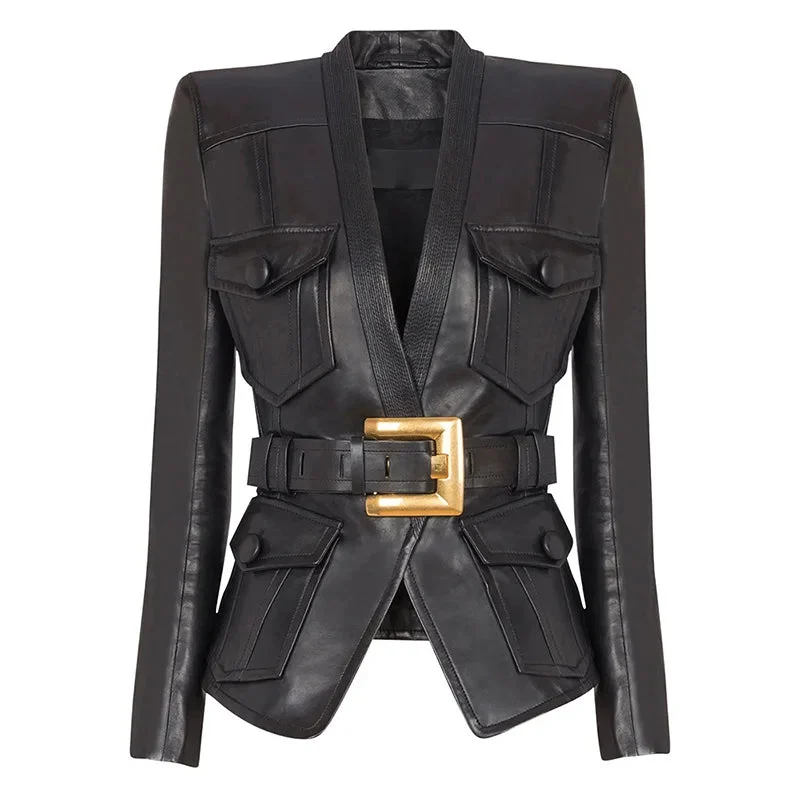
Try the Noir Belted Leather Utility Jacket for this role. Its dark finish works with cargo pants, skinny jeans, and layered skirts alike, and the belt keeps the pocket-heavy front sitting flat instead of gaping.
Classic Women’s Belted Coat
Some days call for something cleaner: one belt, one straight silhouette, no extra hardware. A classic belted coat is the most versatile of the three styles here. It works over a dress for a night out, over jeans for daily wear, and over office layers for a dark but polished look. If you only buy one belted piece, buy this shape.
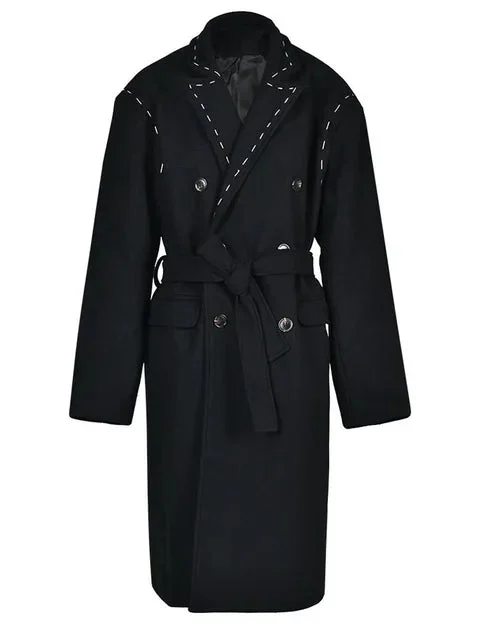
The Women’s Belted Coat covers that classic role in black, so it matches everything already in a goth wardrobe. Wear it open over a corset top for evenings, or belted tight over a sweater for cold days.
How to Style a Belted Jacket: Width, Placement, and Proportion
Belt width is the first decision. A slim belt, roughly 2 to 3 centimetres wide, reads elegant and works best on lighter jackets and dressier outfits. A wide belt, 5 centimetres or more, reads bold and suits heavy faux leather and long coats, where a slim belt would disappear. When in doubt, match the belt to the jacket’s weight: heavy jacket, wider belt.
Placement matters more than most people expect. The natural waist, just above the navel, gives the most defined effect and the longest-looking legs. Belting at the hip creates a relaxed, slouchy line that suits oversized jackets. Never belt across the widest part of a sweater: the belt will ride up and bunch the fabric underneath.
Proportion is the third rule. A belted jacket pairs best with one other strong shape, not three: if the jacket is cropped and belted, keep the bottom half simple; if it is long and belted, keep the layers underneath thin so the belt can actually close.
Fit Checks for Petite, Tall, and Plus-Size Bodies
Petite wearers should check belt placement before anything else. On a shorter torso, a belt sewn too low will sit on the hips and shorten the legs visually. Look for jackets where the belt loops sit at or just above the natural waist, and avoid very wide belts on cropped jackets: they can eat up the visible torso.
Tall wearers have the opposite problem: belts that sit too high, or jackets whose belt loops end up above the waist because the torso length runs short. Check the jacket’s total length, not just the size label, and prefer adjustable belts over fixed sewn-in ones, so the belt can sit at your real waist.
Plus-size wearers often get told to avoid belts entirely, which is bad advice. The right belt defines the waist instead of hiding it; the wrong one digs in. Choose a belt with several holes and a smooth, flat buckle, and make sure the jacket has room through the bust and hips so the belt shapes fabric instead of squeezing it.
Keeping a Faux Leather Belt Looking Sharp
Most belted gothic jackets use faux leather belts, and the number one complaint is cracking. Cracking happens when faux leather dries out, which cold, heat, and sun all accelerate. Wipe the belt with a damp cloth after wet weather, air-dry it away from direct heat, and store the jacket hung up rather than folded, so the belt is not creased for months.
Buckle care is simpler but easy to forget. Metal buckles tarnish where fingers touch them most, and a tarnished buckle drags down the whole jacket. A quick wipe with a dry cloth after wearing, and keeping the jacket out of damp rooms, prevents most of it.
Finally, do not overload belt loops. Hanging keys or a heavy chain from a jacket belt loop stretches the loop and pulls the belt line crooked. Keep chains and keys in pockets or on a bag strap, and let the belt do only its own job: defining your waist.
Frequently Asked Questions
Should you wear a belted jacket open or closed?
Both work, but they give different outfits. Closed and belted, the jacket is the outfit’s shape. Open, the belt hangs loose and the layers underneath set the shape instead. Close it for a polished look; wear it open, belt tied loosely at the back, for a relaxed layered look.
Does a belted jacket suit a straight, rectangular body shape?
Yes, and this is where belts help most. A belt creates a waist line on a straight silhouette instead of waiting for the body to supply one. Choose a medium-width belt at the natural waist and pair it with a straight or slightly flared bottom.
Can you replace the belt on a belted gothic jacket?
Usually, yes, if the belt threads through loops rather than being sewn in. Match the replacement’s width to the loops, and keep the buckle in the same family as the jacket’s hardware: silver with silver, black with black.