Gothic Capes & Cloaks: Everyday Styling, Fit & Care Beyond Halloween
Gothic capes and cloaks work far beyond one night of Halloween. A well-chosen cape adds drama to an everyday outfit, keeps you warm without the bulk of a coat, and layers easily over corsets, dresses, and chunky boots. Choose the right length and weight, and a cape becomes a winter staple, not a costume.
Why a Cape Belongs in an Everyday Goth Wardrobe
Capes solve a familiar problem: coats hide the outfit underneath. A heavy coat covers a corset top or a lace dress. A cape drapes over everything, leaves the silhouette visible, and turns a simple black dress into a full look.
Longtime goth dressers often say a cape is the fastest way to look intentional: throw it over jeans and a band tee and the outfit reads as styled. Choose a cape made for real wear, with arm openings or a closure that keeps it in place.
Cape vs. Cloak vs. Poncho: What Is the Difference?
Cape
A cape is a sleeveless outer garment that fastens at the neck and hangs from the shoulders. It usually has arm slits or an open front so your hands stay free, and ranges from cropped shoulder styles to full-length versions.
Cloak
A cloak is typically longer and heavier than a cape, often hooded, and designed as a full outer layer. Cloaks usually close down the front and offer more wind protection. If you want a cape you can wear through winter, a hooded cloak is often the better pick.
Poncho
A poncho is a single piece of fabric with a head hole, worn over the head rather than fastened at the neck. Ponchos are cozy but harder to layer. For goth styling, capes and cloaks win on drama and versatility.
Three Capes and Cloaks to Start With
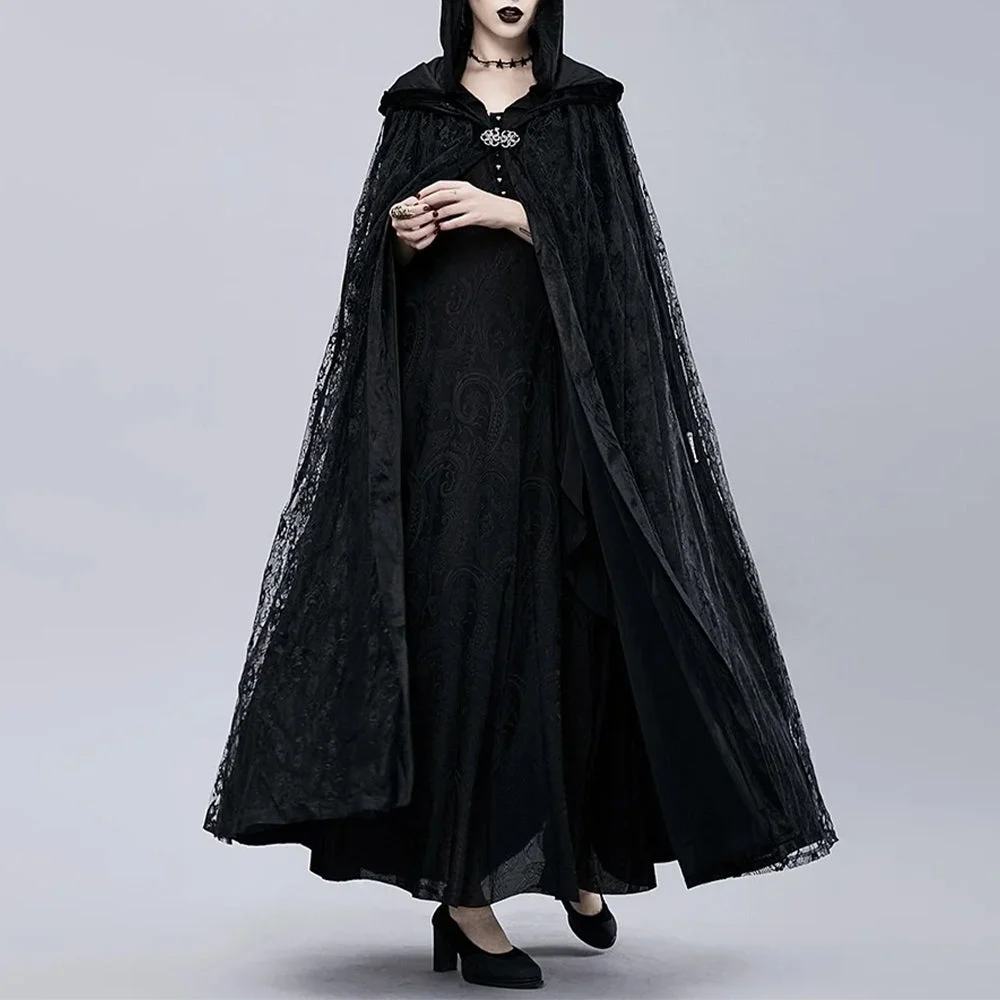
If you are buying your first cape, start with a classic black style that works with everything you already own. The Women’s Gothic Cape is that kind of staple: a clean, dark silhouette that layers over dresses, skirts, and trousers alike.
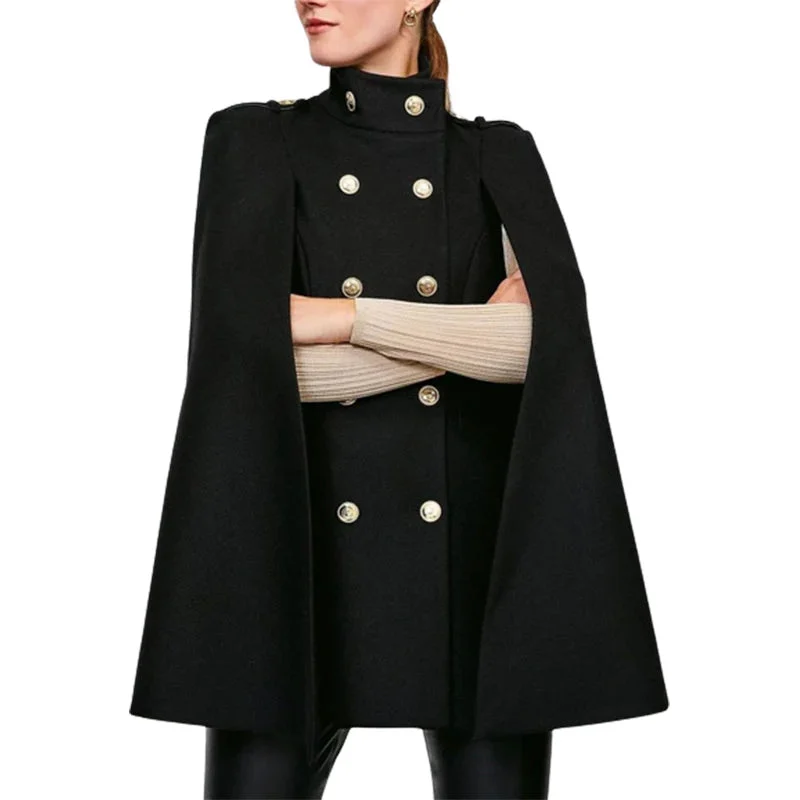
For colder months, weight matters more than length. A winter cape should be thick enough to block wind but light enough to wear indoors without overheating. The Women’s Winter Cape fits that brief, with a structured shape that holds up over knitwear and layered tops.
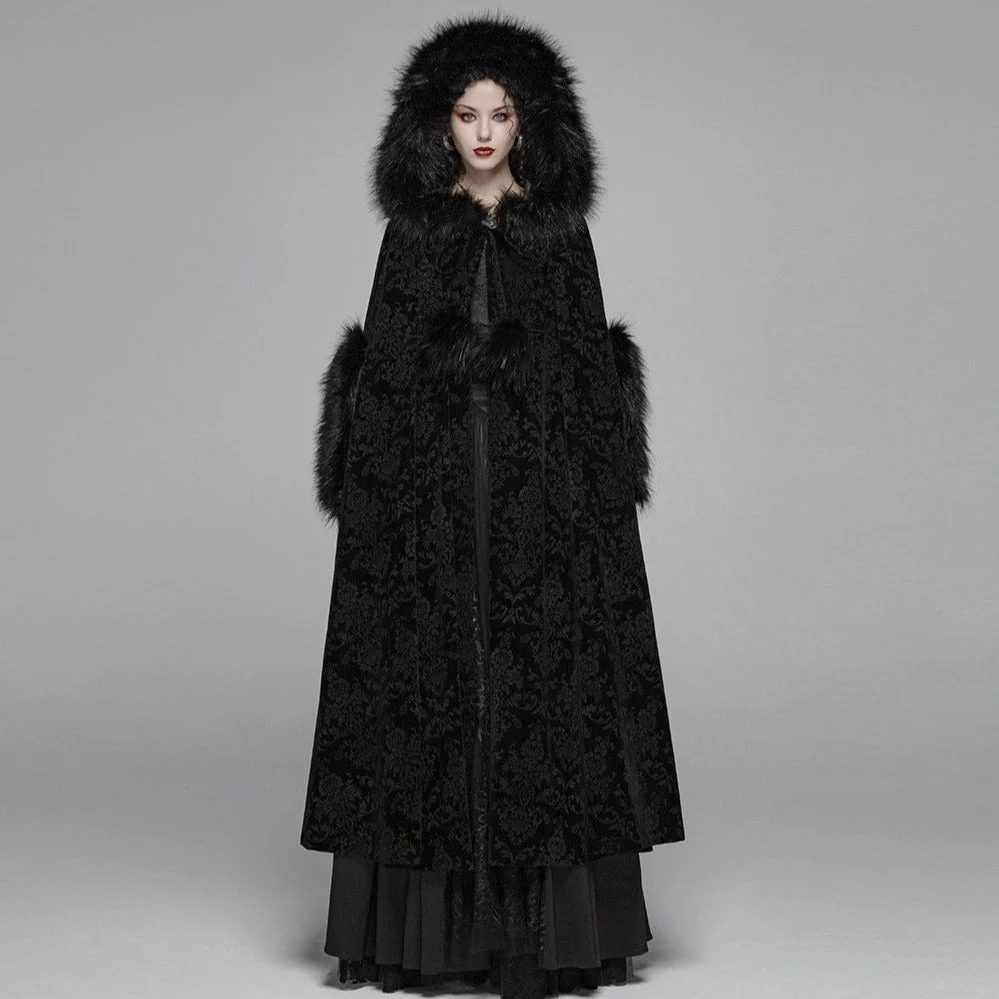
For maximum drama, look to a hooded cloak. The Reversed Snowfall Cloak brings the full gothic fantasy: a hood that frames the face, a long drape that moves as you walk, and enough coverage to serve as a genuine winter outer layer.
Styling Rules That Keep a Cape From Looking Like a Costume
A cape already supplies the drama, so the rest of the outfit should stay grounded.
Keep the base outfit simple
Pair a cape with slim trousers, a plain black dress, or a fitted top and jeans. When the base is simple, the cape reads as fashion. When everything is dramatic at once, the look tips into costume territory.
Watch the proportions
A full-length cape pairs best with fitted bottoms and boots, so your legs anchor the volume up top. A cropped cape works well with high-waisted skirts, since it leaves the waist visible.
Choose footwear with grip and weight
Platform boots are the natural partner for a cape: they ground the flowing silhouette and add height so a long cape does not swallow you. Avoid flimsy flats with a long cloak, since the combination can look unbalanced.
Carry a crossbody, not a handheld bag
Capes complicate bags. A handheld tote slides off your shoulder and fights the drape. A crossbody bag sits under the cape, stays put, and keeps your hands free.
Fit Checks Before You Buy
Shoulder and neck fit
The cape should sit on your shoulders without pulling at the neck closure. If the fastening strains when you raise your arms, the cape is too small, and it will ride up all day.
Arm freedom
Can you reach forward, carry a bag, and hold a phone without the cape sliding off? Arm slits or an open front solve this. A closed cape with no slits looks beautiful standing still and frustrates you the moment you move.
Length for your height
A cape should end at a natural break point: mid-thigh, knee, or ankle. A hem that lands mid-calf can visually shorten your legs. Petite wearers generally suit knee-length capes, while taller wearers can carry full-length cloaks without being overwhelmed.
Weight and lining
A lined cape hangs better and resists wind. An unlined, feather-light cape looks lovely indoors but billows in the slightest breeze and offers no warmth outdoors.
Wearing a Cape in Real Weather
Capes have a reputation for being impractical, and the reputation is half fair. Wind is the real enemy: a strong gust turns a cape into a sail. On windy days, choose a heavier, lined cloak with a front closure, and fasten it securely rather than wearing it open.
Rain is the other concern. Most capes are not waterproof, and wet wool or velvet is heavy and slow to dry. If rain is forecast, carry a compact umbrella, and hang the cape to air out as soon as you get home. Never store a damp cape in a sealed bag: mildew sets in fast.
Cold, on the other hand, is where a good cloak shines. Layer a thermal top, a fitted sweater, and a scarf under the cape, and the trapped air between layers insulates surprisingly well. The hood genuinely protects against wind chill.
Caring for Capes and Cloaks
Brush wool and velvet capes after wearing to remove dust and lint, and spot-clean small marks instead of washing the whole garment. Most structured capes should be dry-cleaned rather than machine washed, since agitation can distort the drape.
Between wears, hang a cape on a wide, sturdy hanger, never a thin wire one, which creates shoulder bumps that spoil the line. Give it breathing room in the closet: crushed between coats, a cape loses its shape. A quick steam restores the drape without flattening textured fabrics.
Frequently Asked Questions
Can you wear a gothic cape every day?
Yes, if you choose the right one. A knee-length, lined cape in a plain dark fabric works as an everyday outer layer over jeans, dresses, and work outfits. Save the full-length hooded cloak for colder days and evenings.
Are cloaks warm enough for winter?
A lined, hooded cloak worn over a sweater is warm enough for most winter days, though it will not match a technical parka in a storm. The key is layering underneath and choosing a heavier fabric.
What is the difference between a cape and a cloak?
A cape is a sleeveless garment that fastens at the neck and is usually lighter and shorter. A cloak is longer, heavier, often hooded, and closes down the front, making it the warmer option of the two.
Final Thoughts
A cape is not a costume piece waiting for October. Worn with a simple base outfit, fitted boots, and a crossbody bag, it is one of the most versatile pieces in a goth wardrobe. Start with a classic black cape, add a winter-weight cloak when the cold arrives, and let the cape do the talking.