How to Buy a Gothic Leather Jacket: Fit, Leather Types & Red Flags
Buying a gothic leather jacket is not like buying any other jacket. The right one lasts a decade and anchors almost every dark outfit you own; the wrong one peels within a season and sits unworn. This guide covers fit, leather types, and hardware red flags before you spend a cent.
Start With the Silhouette, Not the Details
Studs, spikes, and buckles are tempting, but silhouette decides whether a jacket actually gets worn. Gothic leather jackets generally fall into three families: cropped, asymmetric moto jackets; boxier biker jackets built for layering over hoodies; and longer, cleaner blazer-style jackets closer to office goth than to the pit. Pick the family that matches the outfits you already wear, not the one that photographs best.
One rule from long-time goth dressers holds up across forums and reviews: buy for the outfit you wear most, not a fantasy version of yourself. If your daily uniform is jeans and boots, a cropped moto jacket will earn its price; if you layer corsets or thick knitwear underneath, you need a boxier cut.
Real Leather vs. Faux Leather: An Honest Comparison
Real leather ages, softens, and develops character, but costs more, needs conditioning, and weighs more. Faux leather (PU) is cheaper, lighter, and animal-friendly, but its surface eventually cracks and peels, especially at elbows and shoulders. Neither is objectively better. The mistake is paying real-leather prices for faux leather, or expecting a faux jacket to last ten years.
How to Tell What You Are Actually Buying
Check the listing’s material line first, then the price. A jacket listed as “PU leather” or “faux leather” is synthetic by definition, while real leather listings usually name the type, such as lambskin or cowhide. Be suspicious of vague terms like “leather-look” with no further detail: if a seller will not say what the material is, assume it is faux and judge the price accordingly.
Fit: The Five Checks Before You Order
Leather does not stretch the way denim does, so fit matters more here than anywhere else in a goth wardrobe. Run through these five checks against the size chart, not your usual dress size, because leather brands vary wildly.
1. Shoulders First
The shoulder seam should sit exactly on your shoulder bone. Too far out and the jacket looks borrowed; too far in and it pulls when you raise your arms. Shoulder fit is hardest to alter, so match this first.
2. The Zip Test
Zip the jacket fully while wearing the thickest layer you plan to pair it with. If the zip strains or the lapels gape, size up: a jacket that only closes over a thin tee is one you will not wear in winter.
3. Sleeve Length
Sleeves should end at your wrist bone with arms relaxed. Shorter looks accidental; longer bunches at the cuff. Compare against the listed sleeve measurement, not your eye.
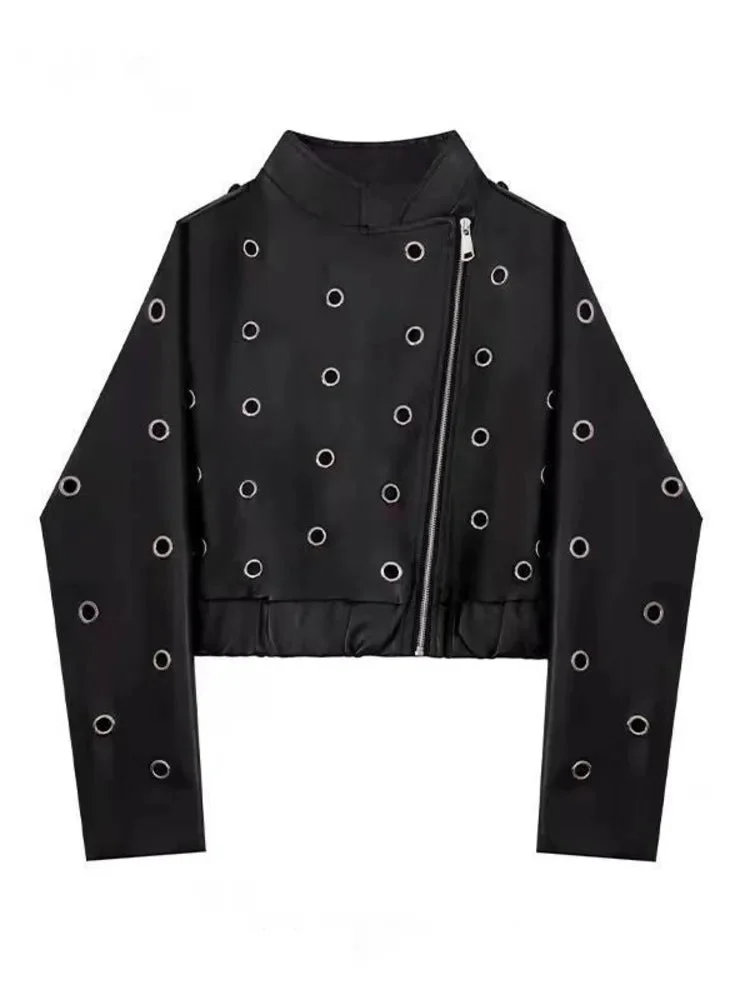
A cropped moto cut like the Women’s Moto Leather Jacket is the classic test case: fitted through the body, cropped at the waist, and heavy on hardware. If you like this silhouette, check the shoulder and waist measurements first, because the fitted cut leaves little room for error.
4. Waist and Hip Length
Cropped jackets should hit at or just above your waistband; longer styles should cover your belt line without swallowing your hips. Length changes the whole proportion of an outfit, so measure a jacket you already love and compare numbers, not photos.
5. Room to Move
Raise both arms overhead and cross them in front of your chest. If the back pulls tight or the shoulders pinch, the cut is too slim: leather softens with wear, but it will not turn a too-small jacket into a comfortable one.
Hardware and Construction Red Flags
Most buyer regret in leather jacket reviews is not about the leather at all. It is about zips that jam, studs that fall off, and linings that tear.
First, zips: chunky metal zips last, while thin plastic ones snag and split under a leather lapel’s weight. Second, studs and spikes should be riveted or screwed through the leather, not glued on, since glued hardware is the first thing to go. Third, a fully lined jacket hangs better and lasts longer than an unlined one. Fourth, stitching should be straight and even, with no loose threads at armpits and pockets.
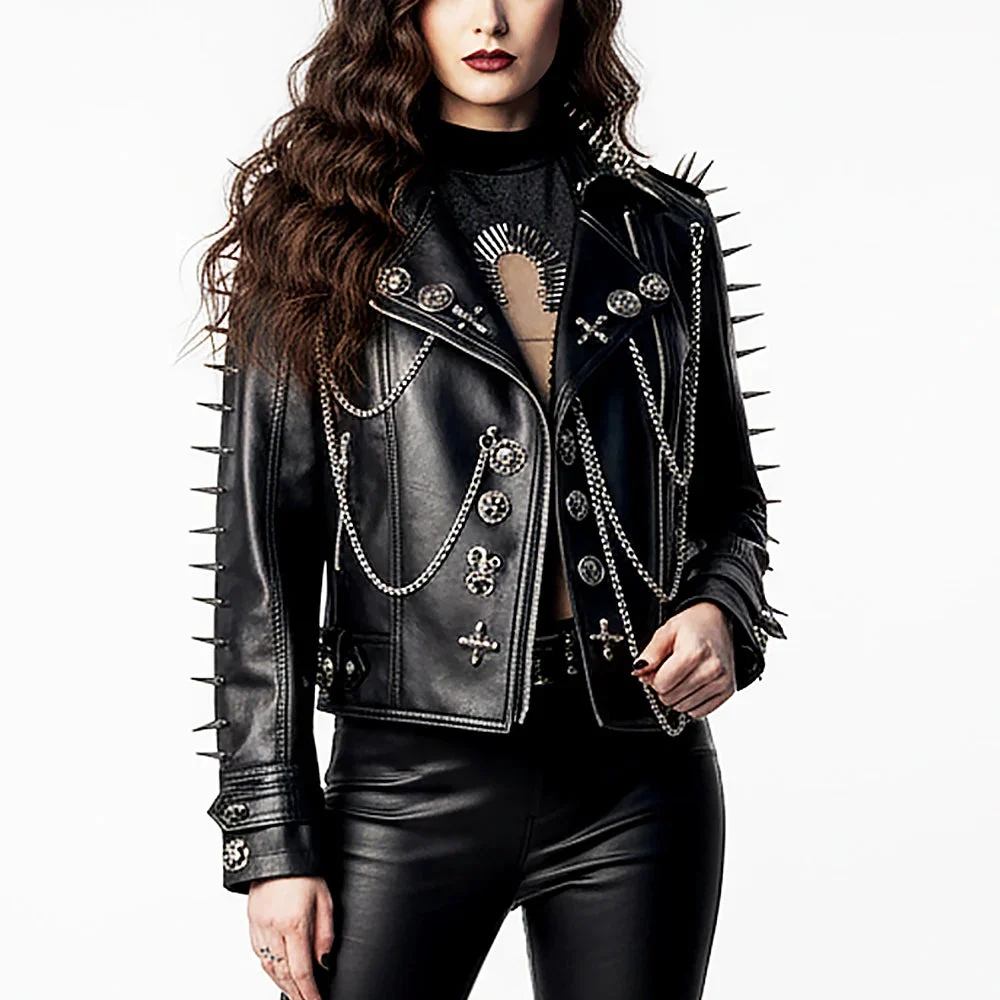
Hardware-heavy styles make these checks even more important. The Raven Spike Gothic Leather Jacket shows why: spikes look best firmly set and evenly spaced, and close-up photos reveal whether the hardware is properly mounted or merely decorative.
Common Sizing Pain Points, Solved
Between sizes? Size up: a slightly roomy jacket layers easily, while a too-tight one cannot be fixed. Buying for a corset underneath? Measure over the corset and expect to go up at least one size. Broad shoulders and a narrow waist? Look for belted or adjustable-waist styles that cinch the middle without pulling the shoulders.
Petite buyers face the opposite problem: standard sleeves and bodies run long, so cropped styles are often the safest bet, and a tailor can shorten sleeves cheaply. Tall buyers should check the listed back length, since many cropped jackets end up more like boleros on a long torso.
What to Pay, and What Is a Waste of Money
For faux leather, a fair price buys decent hardware, a full lining, and clean stitching; paying double does not double the lifespan, because the material itself is the limiting factor. For real leather, price buys thicker hides and better hardware. Either way, the most expensive mistake is buying the wrong size and never wearing it: a mid-priced jacket worn weekly beats a premium one worn twice.
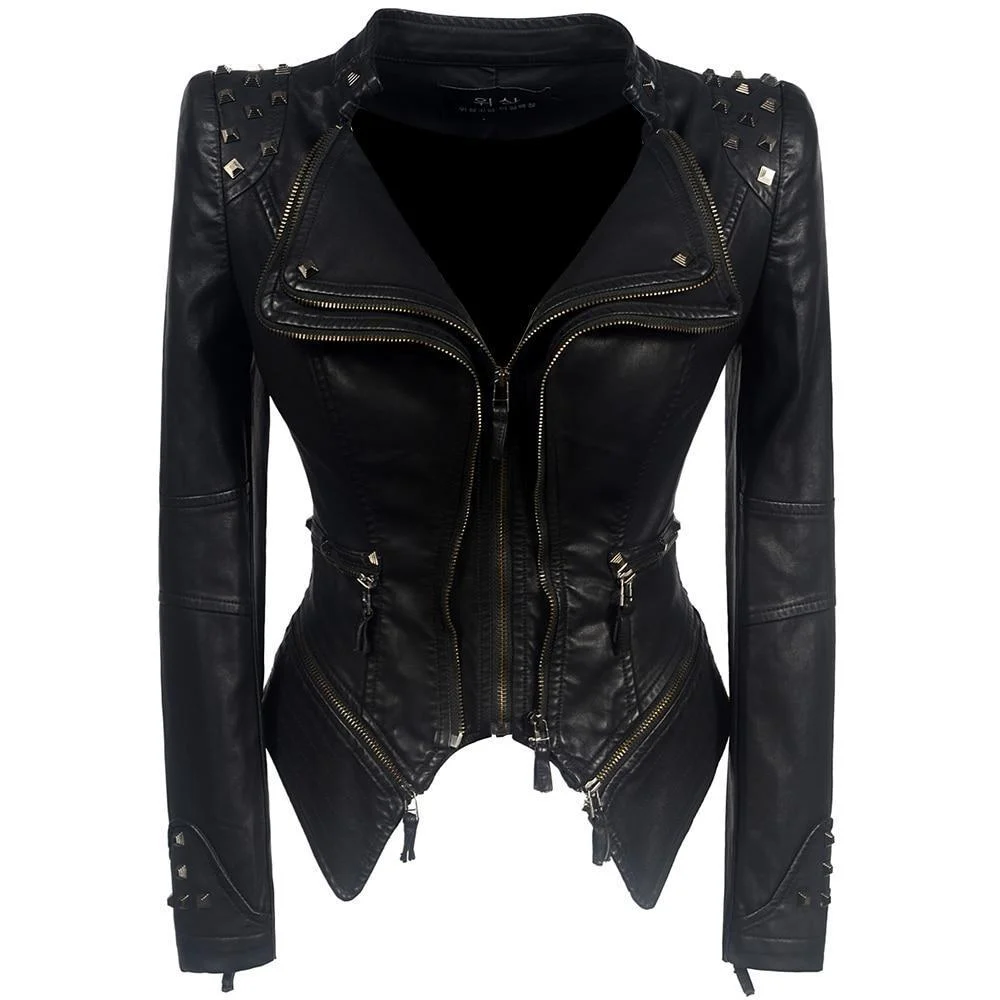
Studded styles are a good value test. The Women’s Studded Leather Jacket pairs the studded biker look with a straightforward fit: if a studded jacket costs far more, the extra money should be visible in leather thickness and hardware quality, not branding.
Breaking In and First Care
A new leather jacket feels stiff. That is normal. Wear it around the house for a few days before judging the fit, since body heat and movement soften it quickly. Do not speed this up with hairdryers or soaking, both common forum mistakes that damage the finish. Condition lightly and store on a wide hanger, never folded.
Frequently Asked Questions
Should I buy real or faux leather for my first gothic jacket?
Buy faux if you are still finding your style or your budget is tight, and buy real when you know exactly which silhouette you wear every week. The worst purchase is an expensive real-leather jacket in a style you abandon after a month.
How much should a gothic leather jacket cost?
Price follows material and construction, not decoration. Faux leather is budget-friendly but shorter-lived, while real leather costs more and lasts far longer. Judge any jacket by its leather type, lining, and hardware, not its stud count.
What size should I order if I am between sizes?
Size up, especially if you layer hoodies or corsets underneath. A slightly roomy jacket still looks intentional; a too-tight one pulls, gaps at the zip, and stays in the closet.