Dark Faire Style: How to Build a Gothic Renaissance Faire Outfit That Lasts All Day
A gothic Renaissance faire outfit works best as a dark base with two or three historical details — an embroidered jacket, a cape and a period hat — instead of a full costume. Choose breathable layers, broken-in boots and one pouch for essentials, and your look will survive a full day of walking, mud and weather while still reading medieval.
Why Goth Works So Well at the Faire
The Renaissance faire is one of the few public places where dark, dramatic clothing looks completely at home. Corsets, capes, tall boots and medieval metalwork are part of the setting, not a disruption of it — which is why the dark fairy and forest witch looks have become some of the fastest-growing faire styles. Goths do not need to invent a new wardrobe for faire day; they need to adapt the one they already own.
The best faire outfits are rarely full period costume. Faire regulars consistently say the same thing: the looks that work are modern pieces styled with historical details. A structured jacket with embroidery, a flowing cape over jeans, a wide-brimmed hat — these signal the theme without the discomfort of a head-to-toe costume that was never designed for eight hours outdoors.
Three Pieces That Carry a Dark Faire Outfit
Build around one statement piece, one layer and one finishing detail. Everything else can come from your existing dark wardrobe.
An Embroidered Jacket as the Statement
The Medieval Fairy jacket is the kind of piece that does the thematic work on its own: embroidered detail and a tailored shape that reads medieval-fantasy without needing a full costume around it. Worn over a plain black top and dark pants or a long skirt, it turns an everyday goth base into a faire outfit in one step. The embroidery catches the eye at market-stall distance, which is exactly where faire photos are taken.
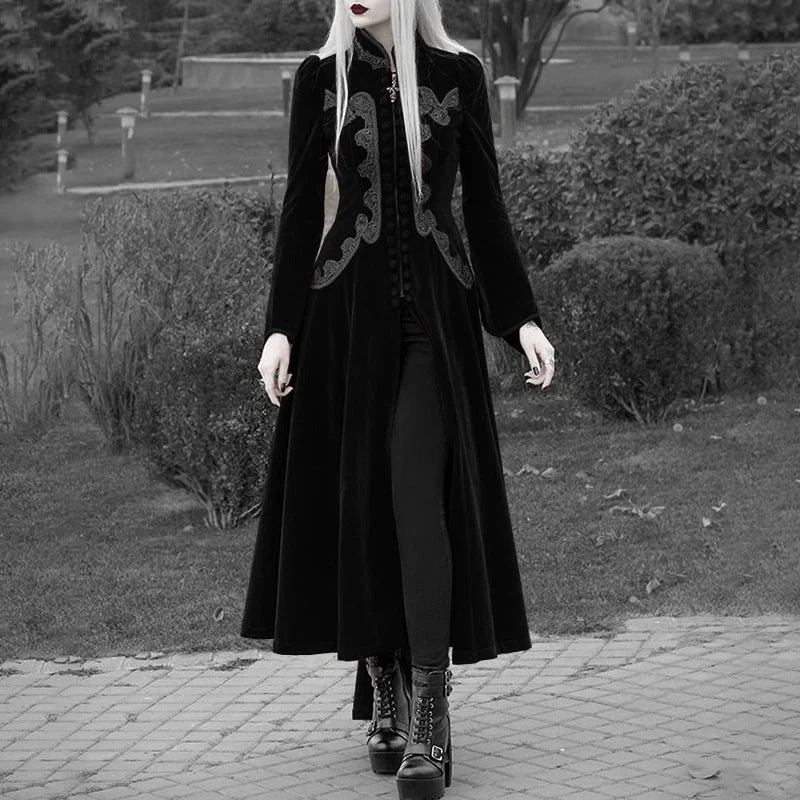
Keep the rest of the outfit quiet so the jacket stays the focus. One embroidered statement plus simple dark layers reads as a character; embroidery plus a patterned skirt plus ornate jewelry plus a dramatic hat reads as a costume shop.
A Cape for Weather, Warmth and Drama
A women’s solid cape is the hardest-working layer at an outdoor faire. It throws on over anything, blocks wind on open fairgrounds, and gives the silhouette that sweeping medieval line no jacket can match. In the morning it is warmth; by midday it can be draped or carried; in the evening it goes back on for the walk to the car. A solid dark color keeps it versatile across outfits, and it photographs beautifully against timber stalls and autumn trees.

Length matters more than decoration here. A cape that clears the ground by a few inches will not drag through mud or catch on benches, while a floor-sweeping one will spend the day collecting dust. Test the length on stairs and uneven ground before faire day, not after.
A Period Hat to Finish the Character
A men’s medieval vintage hat is the fastest finishing piece in faire dressing, and it is practical too: shade for your face during hours in direct sun, and instant period character without another layer of clothing. A dark vintage-style hat works for all genders and pairs with both the embroidered jacket and the cape, tying the outfit together from head to toe.
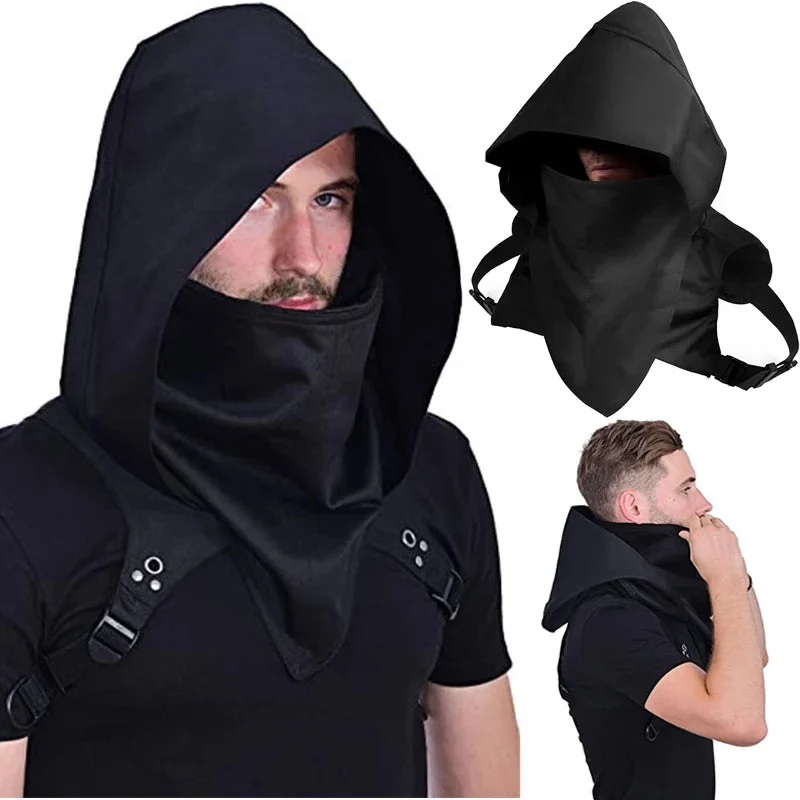
Try the hat with your full outfit before the event, not just in the mirror. A brim that shades your eyes is perfect; one that blocks your view of low stalls or bumps fellow visitors is not. If it needs adjusting, a simple inner band or a pin usually fixes the fit.
Comfort Rules for a Full Day on the Grounds
Faire days are long: six to eight hours of walking, standing in lines, sitting on benches and eating on the move, usually on dirt, gravel or grass. Comfort is not a nice extra — it decides whether you enjoy hour six or count the minutes until you can change.
Footwear comes first. Tall leather boots are the classic choice because they handle terrain and hold the period look, but only if they are already broken in. Never debut new boots at a faire. If your boots are new, wear them around the house for several days first, and carry a backup plan — blister pads at minimum.
Fabric is the second decision. Breathable natural fibers like cotton and linen stay comfortable far longer than heavy synthetics, which trap heat under layers. Check the venue’s weather and plan layers you can add or remove: a cape over a light base handles a cool morning and a warm afternoon far better than one heavy costume layer.
Carry a pouch, not a modern bag. A belt pouch or small satchel holds your phone, money and sunscreen while keeping the look intact, and it keeps your hands free for food, crafts and games. Pack light — everything you carry, you carry for eight hours.
Keep It an Outfit, Not a Costume
The difference between a great dark faire look and a costume is restraint. Pick two or three historical elements — jacket, cape, hat — and let your normal dark clothing do the rest. Earth tones and jewel tones sit naturally in the setting, but an all-black outfit with medieval details reads just as well, and it has the advantage of working for every other goth occasion after faire day.
One practical note: most faires are family events, and some restrict very revealing costumes or realistic-looking weapons. A quick read of the venue’s costume guidelines before you go saves embarrassment at the gate, and it takes two minutes.
Frequently Asked Questions
Can I wear goth clothes to a Renaissance faire?
Absolutely — goth and faire style overlap heavily, and dark fairy and forest witch looks are among the most popular at modern faires. Add one or two medieval details like an embroidered jacket, a cape or a period hat to your dark base, and you will fit the setting without a full costume.
What shoes should I wear to a Renaissance faire?
Broken-in leather boots are the best choice: they handle dirt, gravel and grass, and they hold the period look. Avoid brand-new boots, heels on uneven ground, and modern sneakers if you want the outfit to hold together — comfort matters more than perfection, so broken-in boots beat beautiful-but-painful ones every time.
What if it rains or gets hot at the faire?
Plan layers, not a single heavy outfit. A cape over a breathable base adapts to both: it adds warmth and rain cover when the weather turns, and it comes off when the sun returns. Check the forecast, bring a pouch for small essentials, and remember that a slightly simpler outfit you enjoy all day beats an elaborate one you abandon by noon.
Dark faire style is goth style with a medieval accent: the same black base, the same love of texture and drama, plus a jacket, a cape and a hat that belong to another century. Build it once, wear it to every faire, and let the rest of your wardrobe do what it already does best.