Breaking In a Gothic Leather Jacket: How to Soften Stiff Leather Without Ruining It
Breaking in a gothic leather jacket takes patience, not force. Wear it for short sessions over two weeks, condition real leather lightly once it starts to flex, and avoid heat, alcohol and machine washing. Done right, a stiff new jacket softens at the elbows and shoulders, moulds to your body, and keeps its shape for years.
Why New Leather Jackets Feel So Stiff
A new leather jacket feels like armour for a reason. Fresh hides — and stiff faux leather, or PU — are cut flat, stitched tight and finished with a protective coating. The fibres have never bent where your body bends. That stiffness is not a defect; it is the starting point.
Community wisdom from goth and punk forums is consistent: almost every jacket feels a half-size too small at first. Shoulders feel boxy, the collar stands up on its own, and raising your arms pulls the hem up. If you can zip it closed and sit down without the waistband digging in, the fit is probably right.
Real leather and faux leather break in differently. Real leather softens as its fibres relax and absorb small amounts of oil from wear and conditioning. Faux leather, or PU, softens mainly through repeated bending, but it will never drape the way real hide does.
The Two-Week Wear-In Plan
The safest break-in method is also the simplest: wear the jacket. Short, frequent sessions beat one heroic all-day outing.
Days 1–3: Short Sessions at Home
Wear the jacket around the house for one to two hours at a time, zipped and unzipped. Bend your elbows, reach overhead, sit down and stand up. This teaches the sleeves and shoulders where they need to give. A classic Moto Leather Jacket is ideal for this stage: its biker cut is already shaped for movement, so break-in concentrates on the shoulders and waist.
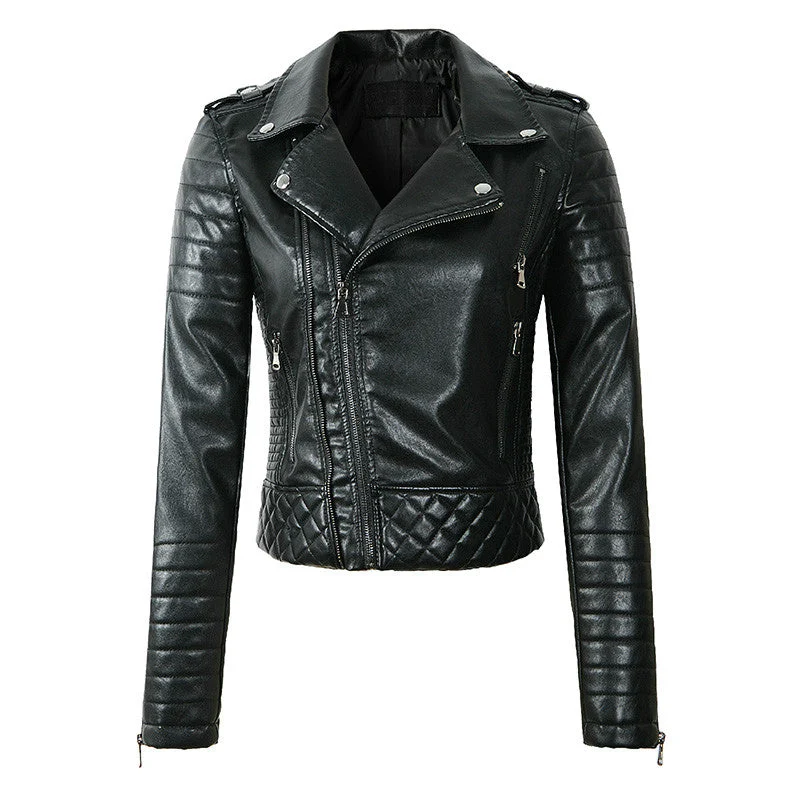
Days 4–10: Real Outings, Still in Doses
Start wearing the jacket out for errands, gigs and short walks — three to four hours at a stretch. This is when most softening happens, especially at the elbows, under the arms and across the back. Avoid heavy rain during this stage: a soaked new jacket dries stiff and can water-spot.
Week Two and Beyond: It Starts to Feel Like Yours
By the second week, the jacket should bend without resistance and the collar should sit where you put it. Now you can wear it all day. If one spot is still stubborn — usually the elbow creases or waistband — keep wearing it rather than attacking that spot.
Conditioning: Help or Harm?
Conditioner is the most argued-over topic in leather care, and the answer depends on the material. For real leather, one light coat after the first week of wear helps fibres relax and prevents the surface from drying out as it flexes. Apply a small amount with a soft cloth, let it absorb overnight, and buff off the excess.
For faux leather, skip traditional leather conditioner entirely. It cannot penetrate PU, so it sits on the surface, attracts dust and can leave a sticky film. A barely damp cloth wipe is enough. Break-in for faux leather comes from wearing it, not from products — and if the surface starts to peel or flake, no conditioner will save it.
One warning applies to both materials: test anything new on a hidden spot first, such as the inside of a hem. Conditioners, oils and waterproofing sprays can darken black leather or leave blotches on coated finishes. A five-minute patch test saves a jacket.
Fit Checks While It Breaks In
Break-in changes how a jacket feels, so re-check the fit after a week rather than judging it on day one. The shoulders should still sit on your shoulder bones. Sleeves should reach your wrist bone with your arms relaxed; leather sleeves rarely lengthen, so a sleeve that is short on day one will stay short.
Cropped styles deserve a special note. A Cropped Leather Jacket rides up more than a full-length one when you raise your arms, and new stiffness exaggerates that lift. Judge a cropped jacket by where the hem sits with your arms down — and pair it with high-waisted bottoms during break-in so the gap stays covered while the leather settles.

Shortcuts to Avoid
The internet is full of fast break-in hacks. Most of them damage jackets, and the worst ones are the most popular.
Heat: Hairdryers, Radiators and Ovens
Heat does soften leather quickly — and then dries it out, cracks the finish and can shrink it. Never use a hairdryer on high, hang a jacket on a radiator, or put it near an oven. If a jacket gets wet, let it air-dry at room temperature away from direct heat.
Alcohol, Oils and Mystery Sprays
Rubbing alcohol, olive oil, coconut oil and hair conditioner are not leather care. Alcohol strips finishes and dries fibres. Kitchen oils go rancid and stain. If a product is not made for leather, keep it off your jacket.
The Washing Machine
Never machine-wash a leather jacket to break it in. Agitation, detergent and spin cycles distort the shape, damage zips and hardware, and can ruin faux leather outright. Spot-clean only, with a damp cloth.
Styling While It Softens
A stiff jacket can still look great during break-in if you style around it. Wear it open over a fitted top so the boxy shape reads as intentional structure. Slim bottoms balance the jacket’s volume, and boots keep the silhouette sharp.
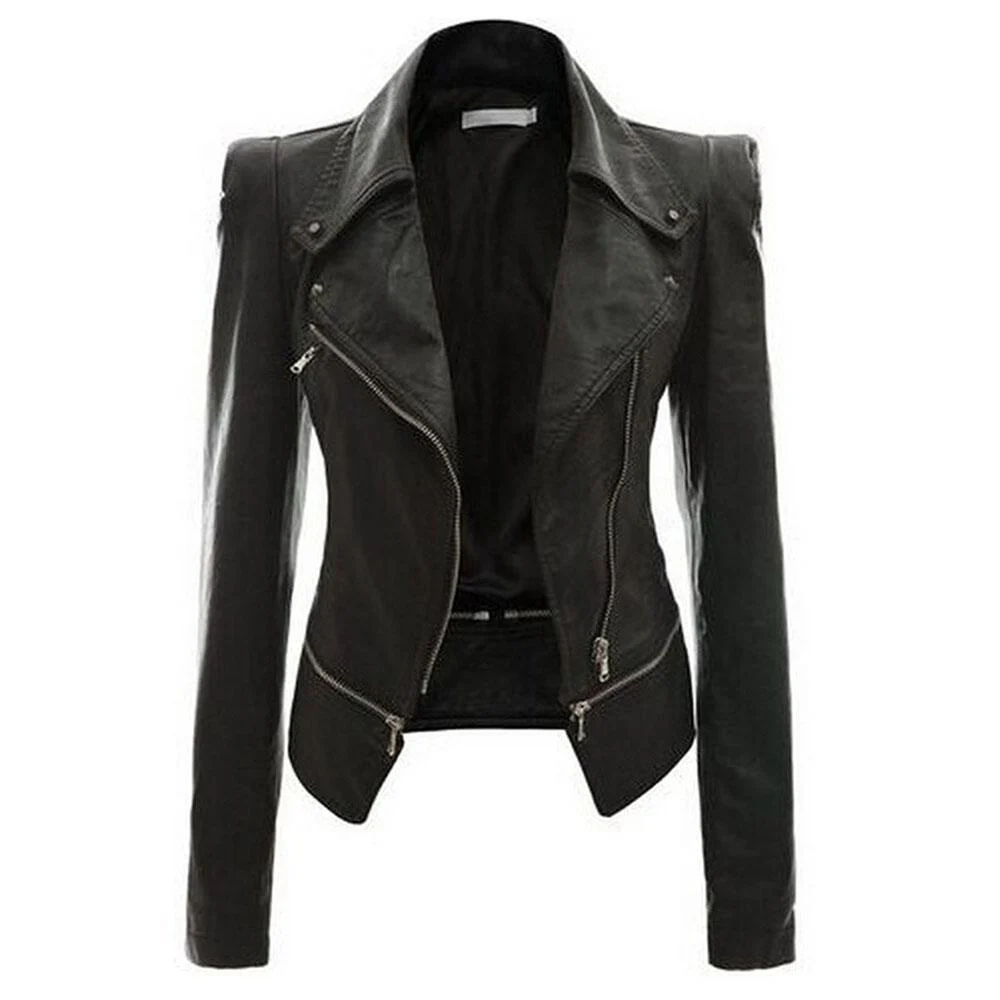
A longer Gothic Leather Jacket with zip details is forgiving during this stage: the extra length covers the waist while the leather settles. Avoid layering a thick hoodie underneath a new jacket — it stretches the seams at their stiffest.
Care After Break-In
Once the jacket feels like yours, maintenance gets simple. Condition real leather once or twice a year, not monthly. Store it on a wide, padded hanger — never folded — in a cool, dry place with air circulation. Plastic garment bags trap moisture and encourage mildew; a cloth cover is better.
Expect the jacket to keep evolving. Creases at the elbows deepen, the collar moulds to your neck, and the leather develops a patina that no new jacket can fake. Two patient weeks now buy you years of a jacket that fits nobody else quite like it fits you.
Frequently Asked Questions
How long does it take to break in a leather jacket?
Most jackets feel noticeably softer after one to two weeks of regular wear, and fully broken in after a month. Thick, heavy hides can take six to eight weeks.
Should I size up to make break-in easier?
No. Size for your measurements, not for stiffness. A jacket that fits correctly will soften into your shape; a jacket that is too big will stay baggy and never drape properly.
Can I break in a faux leather jacket the same way?
Mostly yes, with one change: skip conditioner and rely on wear alone. Faux leather softens through repeated bending, so the same short-session schedule works. But be gentler — PU cracks when forced, and once it peels, it cannot be repaired.