Gothic Boot Care Guide: How to Clean, Condition & Store Leather Boots
Gothic boots take more punishment than any other piece in a dark wardrobe. Mud, rain, salt, concert floors and daily wear dry out the leather, dull the finish and weaken the soles. This guide shows how to clean, condition, waterproof and store leather and leather-look gothic boots, so a favourite pair lasts for years instead of one season.
Why Gothic Boots Need a Care Routine
Platform boots and buckled ankle boots look heavy, but the material is still skin. Leather holds oils that keep it flexible, and every wet pavement and splash of road salt pulls some out. When the oils are gone, the surface turns dull, then stiff, then cracked at the flex points. Once a crack opens, no polish can close it.
Build a Small Boot Care Kit
You need a soft horsehair brush, a stiffer brush for the soles, two clean cotton cloths, a leather cleaner or saddle soap, a conditioner, and a waterproofing spray. A shoe tree or newspaper helps boots hold their shape while they dry. Avoid household cleaners, bleach and dish soap: they strip the natural oils out of leather.
How to Clean Leather Boots Step by Step
Clean boots in order. Product applied over dirt pushes grime deeper into the grain instead of removing it.
Step 1: Brush Off Dry Dirt First
Let mud dry completely first. Scrubbing wet mud into leather grinds grit into the surface. Once the mud is dry, remove the laces and brush the whole boot, paying attention to the seams, where trapped grit abrades leather and stitching. Wash the laces separately in warm soapy water.
Step 2: Wipe With a Barely Damp Cloth
Dampen a cloth, never soak it. Wipe the uppers gently, one panel at a time. For stubborn marks, add a little saddle soap or leather cleaner to the cloth, never directly onto the boot. Saddle soap is strong, so save it for serious dirt. Wipe away residue with a second clean, damp cloth.
Step 3: Remove Salt Stains With Vinegar
Winter road salt leaves white rings that eat into leather. Mix equal parts white vinegar and water, dip a cloth in the mix, and rub the stain gently until the ring fades. Wipe the area with a clean damp cloth afterwards, then let the boot dry fully before conditioning.
Step 4: Dry Away From Heat
Stuff the boots with newspaper or shoe trees and let them air dry at room temperature. Never use a radiator, a hair dryer or direct sunlight. Heat dries leather from the outside in, causing cracks that cannot be reversed. Do not wear the boots until fully dry: damp leather stretches unevenly and weakens the sole.
How to Condition Leather Boots
Cleaning removes dirt, but it also removes some of the oils leather needs. Conditioner puts that moisture back. Apply a thin, even layer to clean, dry leather with a soft cloth, working in small circles. Let it absorb for fifteen minutes, then buff off the excess. A little goes a long way: heavy coats darken the leather and leave a greasy film. Condition every three to six months, or whenever the surface looks dry and pale. Test any new product on a hidden spot, such as the inside ankle, first.
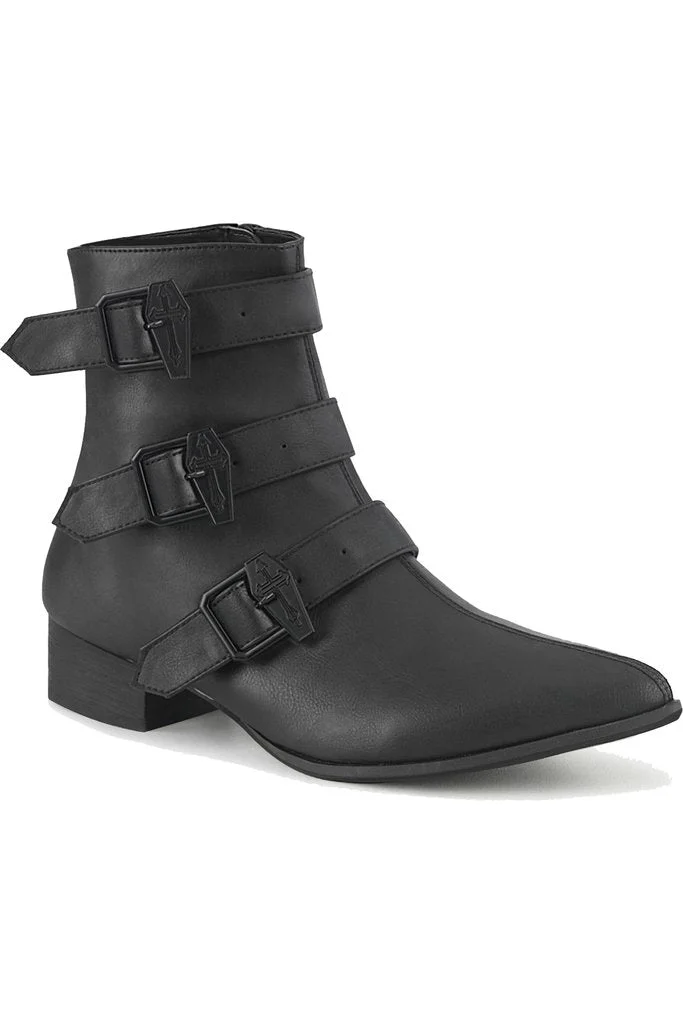
For vegan leather and other leather-look finishes, the rule is lighter: a damp wipe and a protectant spray made for synthetic material is usually enough. A Gothic Danger Boots pair with a smooth black finish and three buckle straps rewards a thin coat of conditioner and a soft buff.
Waterproofing and Looking After Hardware
Conditioner feeds leather, but it does not stop rain. Apply a waterproofing product made for your boot material, and repeat it when water stops beading on the surface. Do this before the wet season, not after the boots are already soaked.
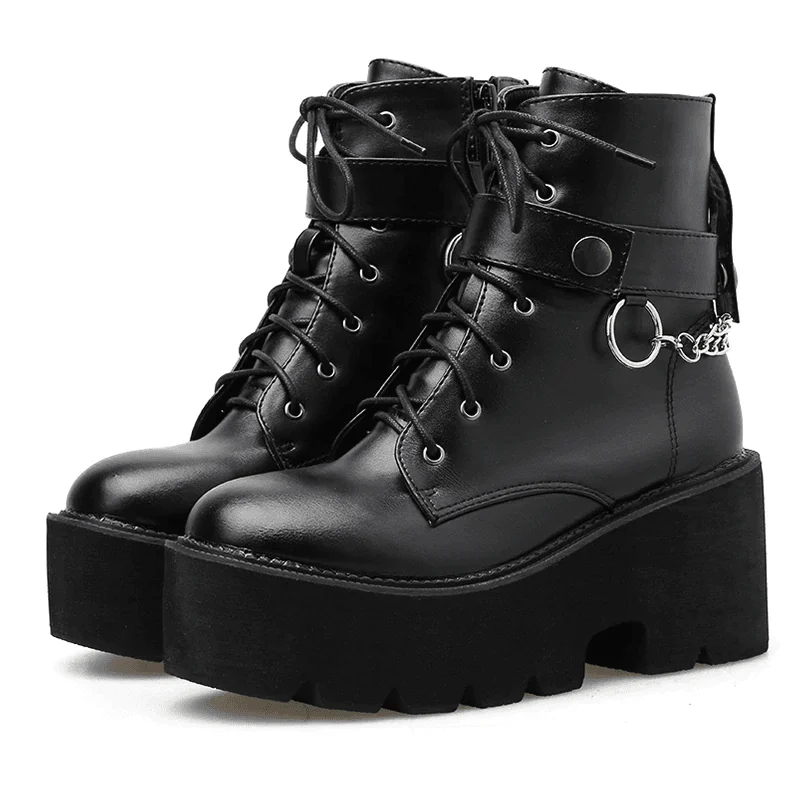
Gothic boots often carry metal that plain boots do not: buckles, chains, rings and eyelets. Wipe metal dry after wet weather, since trapped moisture dulls the finish and can leave rust marks on the leather. The Punk Style Chain Boots show why this matters: a chain with an O-ring at the ankle needs the same wipe-down as the leather, or the metal ages first.
Suede-Look and Embroidered Boots Need Different Care
Not every black boot is smooth leather. Suede-look finishes have a soft, matte surface, and the smooth-leather routine will damage them. Never use cream conditioner, wax polish or saddle soap on suede-look material. Brush it with a suede brush to lift the nap, and use a protector spray made for suede. Water stains need a suede eraser or a specialist cleaner, not a damp cloth.
Embroidered boots need a gentle hand too. The stitching sits on the surface and catches on rough brushes, so brush around embroidered panels with a soft cloth and keep conditioner and polish off the thread. The Forest Witch Boots are a good example: a matte black suede-look lace-up boot with silver rose and pentagram embroidery, where a soft brush and a suede protector replace conditioner.

How to Store Gothic Boots
Keep boots in a cool, dry place away from direct sunlight, which fades black leather and dries it out. Use shoe trees or loosely stuffed newspaper to hold the shape, and keep tall boots upright. Never store boots in a sealed plastic bag: leather needs air, and trapped moisture invites mould. Give boots a rest day between wears.
5 Mistakes That Ruin Gothic Boots
First, soaking them. A soaked boot can warp, shrink and crack as it dries. Second, drying them on a radiator. Direct heat turns supple leather brittle. Third, skipping conditioner after cleaning. Cleaning strips oils, and without conditioner the leather dries out and cracks. Fourth, using household cleaners or baby wipes. Bleach, ammonia and alcohol strip oils and cause irreversible damage. Fifth, polishing dirty boots. Polish seals grime into the grain, so clean first, condition second, and polish last.
Frequently Asked Questions
How often should I clean my gothic boots?
Brush them after every wear, and do a full clean with conditioner after every five or six wears, or after any muddy or wet outing. Boots worn daily in winter need cleaning more often than boots worn once a week in dry weather.
Can I wear leather boots in the rain?
Yes, if they are waterproofed. Apply a waterproofing spray before the wet season and reapply when water stops beading on the surface. After rain, stuff the boots with newspaper and let them dry at room temperature, away from heat.
How do I fix scuffs on black boots?
Brush away loose dirt, then rub a little matching black cream polish into the scuff and buff it out. Deep gouges will not disappear, but polish makes them far less visible. For suede-look boots, use a suede brush and a suede eraser instead of polish.
Boot care is not complicated, but it is consistent. Brush after every wear, clean and condition a few times a year, waterproof before the rain, and store boots upright with air to breathe. A Gothic Danger Boots pair, Punk Style Chain Boots, or Forest Witch Boots all last far longer when the routine above becomes a habit.