How to Thrift Gothic Clothes: Secondhand Dark Style That Works
Thrift stores are one of the best places to build a gothic wardrobe. Secondhand racks are full of black velvet, lace, leather and vintage cuts that fit goth style perfectly. This guide shows where to hunt, what to look for, how to check quality, and which pieces are smarter to buy new.
Why Thrift Stores Are a Goth Goldmine
Goth fashion runs on texture, silhouette and attitude, not brand names. A black velvet top from 1998 looks just as dark as one made last week. Thrift stores, charity shops and resale apps are full of exactly what goth outfits need: long black skirts, lace blouses, leather jackets, velvet dresses and dramatic coats.
There is a second reason experienced goths thrift so much. One-of-a-kind finds are the point. When everyone buys the same new collection, outfits start to look identical, while a thrifted piece is usually the only one of its kind in the room.
Where to Hunt Secondhand Gothic Clothes
Start with local thrift stores and charity shops. Go often, because inventory turns over fast and the good pieces disappear within days. Check every section, not just your usual one. The menswear section often hides oversized shirts and long coats that work perfectly as goth layers, and the formalwear section often hides black gowns and velvet dresses that need only a belt and boots to look gothic.
Online, Depop and Vinted are the two resale apps goths mention most. Search by garment, colour and fabric instead of by style name: try “black velvet blouse”, “lace maxi skirt” or “leather biker jacket” rather than only “gothic”. Sellers often list a perfect piece without ever calling it goth.
What to Look For on the Rack
Walk in with a short list, or you will drown in black fabric.
Textures that read goth instantly
Lace, velvet, leather, mesh and brocade define the style. A lace blouse can turn plain black jeans into an outfit, and a velvet top adds depth flat cotton never will. When you spot one of these fabrics in black, deep burgundy or dark purple, pick it up even if the cut looks plain.
Silhouettes with drama
Look for long, flowing skirts, maxi dresses, floor-length coats and oversized blazers. Drama comes from length and volume. A long black skirt in heavy fabric is a romantic goth staple, and an oversized blazer can be belted or studded into a statement piece.
Hardware and details
Buckles, chains, studs, zippers and O-rings turn a basic garment into a goth one. Check the accessories aisle too: wide leather belts, studded belts and chunky silver jewellery are regularly found for a few dollars. Dark boots are the other high-value find — ankle boots, knee-high styles, anything with buckles or a thick sole.
The 5-Minute Quality Check
Secondhand does not mean second-rate, but it does mean you inspect before you buy. Hold each piece up to the light and look for stains, especially under the arms and around the collar.
Test every zipper and button. A stuck zipper on a leather jacket is an expensive repair, while a missing button is a two-minute fix. Check the seams and lining too: pull gently at the armpits and hem, because loose stitching there means the garment is near the end of its life. Then smell it — musty storage smell usually washes out, but smoke and mildew often do not.
Finally, know your measurements. Many thrift stores have no fitting room, so bring a tape measure and know your waist, chest and hip numbers. Vintage sizing runs small. One more rule: if you love it and it fits, buy it. Thrift stock is one of one, and the jacket you leave behind will not be there tomorrow.
DIY: Turn a Plain Find Into a Goth Staple
The best thrifted goth pieces are often the ones you finish yourself. Low prices make secondhand clothes the perfect canvas for customisation, and the DIY spirit is part of goth culture — trad goth was built on safety pins, ripped fabric and hand-dyed black.
Dyeing is the easiest transformation. A cotton, wool or linen dress can be dyed black or deep burgundy at home, and natural fibres take dye far better than polyester. Distressing is the second classic move: sandpaper or scissors add rips and frayed edges to denim and plain tees, and fishnet layered under a strategic cut adds texture.
What to Thrift vs What to Buy New
Not everything belongs on the secondhand list. Some pieces are worth buying new, because fit, hygiene and construction matter more than price.
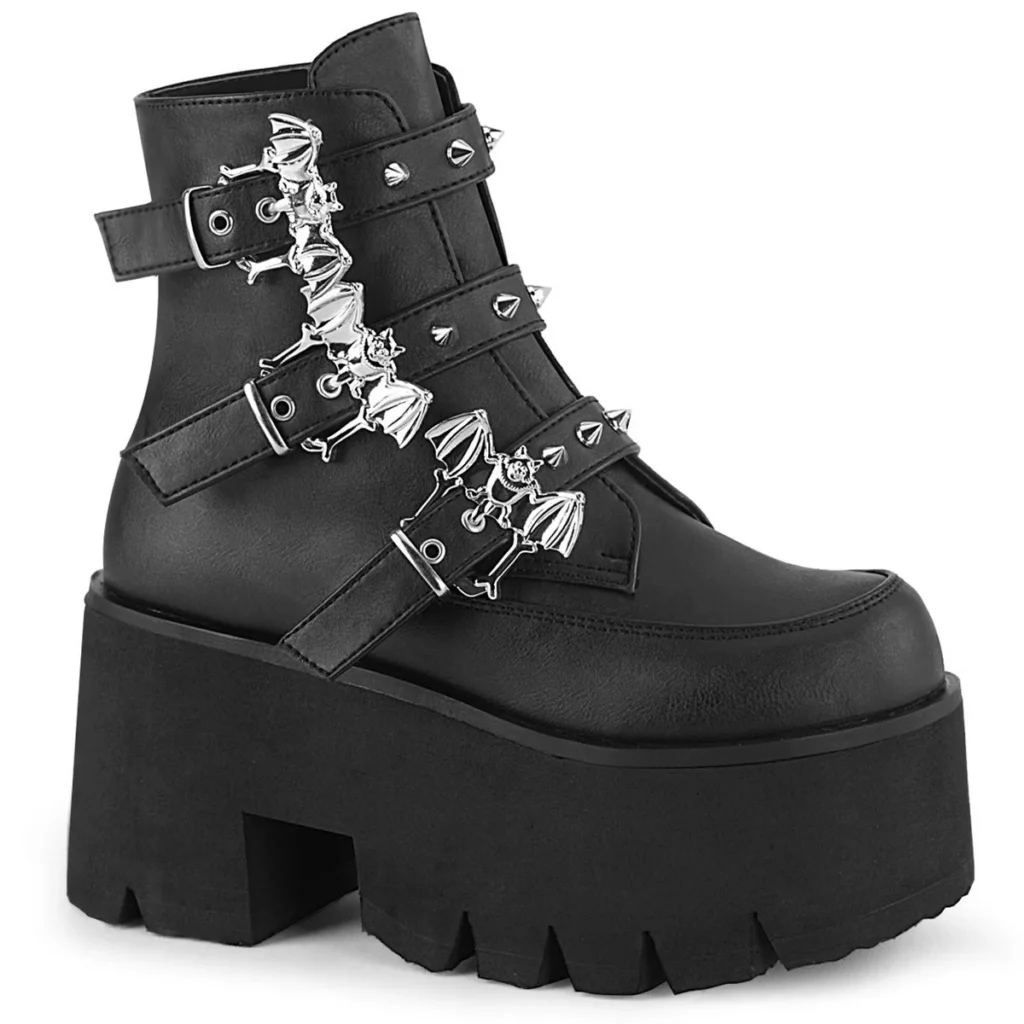
Boots are the clearest example. Thrifted boots can hide worn insoles, cracked soles and stretched shafts that no cleaning fixes. A new pair with a solid platform will last years and carry dozens of thrifted outfits. The Bat Love Platform Boots show why: black faux leather, three buckle straps with silver bat charms, cone studs and a chunky block platform.
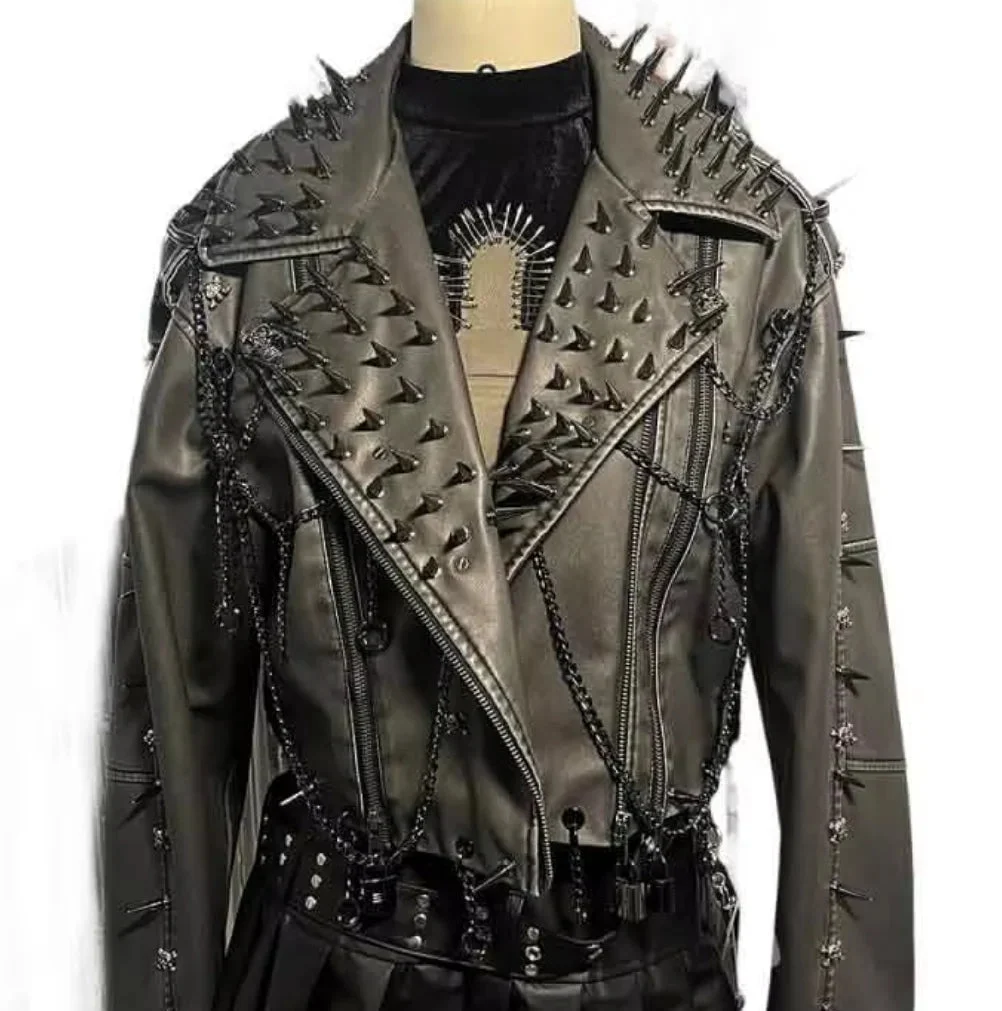
Leather jackets are the second buy-new candidate. A good one needs intact zippers, even stitching and hardware that stays put, and thrifted jackets often fail on at least one of those. The Raven Spike Gothic Biker Jacket is worth investing in: black faux leather covered in cone spikes across the shoulders and lapels, chain details and an asymmetric zip.
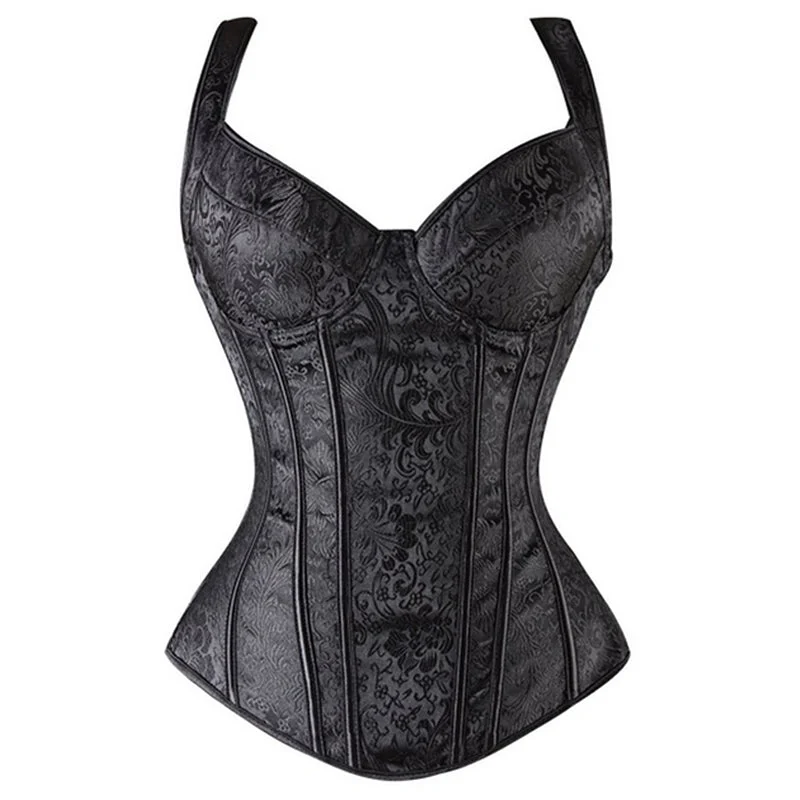
Corsets are the third. Fit and construction decide whether a corset looks sharp or sloppy. A new corset gives you a reliable centrepiece to layer over thrifted skirts and dresses. The Gothic Vampire Corset is a black brocade bustier with a sweetheart neckline and lace-up back.
The rule of thumb: thrift the layers, the textures and the accessories. Buy new the pieces that take the most wear and define the silhouette — boots, jacket, corset.
How to Wash and Care for Thrifted Gothic Clothes
Always wash thrifted clothes before wearing them. Use cold water for sturdy cotton and denim, and hand wash lace, velvet and anything with hardware. For leather and faux leather, wipe down with a damp cloth and condition lightly — never machine wash them.
FAQ
Where is the best place to thrift gothic clothes?
Local thrift stores and charity shops are the best starting point, especially their formalwear and menswear sections. Online, Depop and Vinted let you search by fabric and garment type.
Can you build a full goth outfit from thrift stores?
Yes. Long black skirts, lace tops, velvet pieces, leather jackets and dark boots all appear regularly on secondhand racks. Most goths mix thrifted layers with a few new anchor pieces — boots, a jacket or a corset.
What should you never buy secondhand?
Skip boots with cracked soles or worn insoles, corsets with bent boning, and anything with mildew or smoke smell that survives a wash. Intimate layers and heavily worn shoes are also better bought new.
Thrifting goth is a skill, and like any skill it improves with practice. Go often, keep a short hunting list, check quality before you buy, and let a few strong new pieces — like the Bat Love Platform Boots, the Raven Spike Gothic Biker Jacket and the Gothic Vampire Corset — carry your secondhand finds. The darkest wardrobes are rarely the most expensive ones.