60s Goth Roots: How 1960s Psychedelia Built Gothic Fashion
Gothic fashion did not appear out of nowhere in 1979. Its sound, shadows and silhouette were already forming in the 1960s, in Nico’s haunted harmonium, The Doors’ dark poetry and the velvet coats and flared trousers of Swinging London. This guide traces those roots and shows three pieces that bring 60s goth into 2026.
Goth Did Not Begin in 1979
Ask a goth fan where the subculture started and most will name the late 1970s: Bauhaus, Siouxsie and the Banshees, Joy Division, The Cure. That answer is true, but incomplete. Goth did not materialise out of nowhere: as John Robb writes in The Art of Darkness, the embrace of the dark and the gothic had been with us for millennia, and the 1960s supplied some of its most important building blocks.
The decade gave goth three things it still runs on: a sound built on drone and darkness, a visual language of black velvet and candlelight from Hammer horror films, and a silhouette of flared trousers, Chelsea boots and long coats. Knowing where the look comes from keeps it from reading as a costume.
The Sound That Went Dark: Nico, The Doors and The Velvet Underground
Goth is, at its core, a music subculture: the rule the scene repeats to every newcomer. That is why the 1960s matter: the music went dark a full decade before the fashion caught up.
The clearest starting point is Nico. The German singer joined The Velvet Underground for their debut album The Velvet Underground & Nico, released in March 1967, then recorded her solo album The Marble Index in 1968. Her first solo record Chelsea Girl was gentle folk; The Marble Index was harmonium drones and atonal vocals about cold, fear and loss. Far Out Magazine has called its track “Facing the Wind” arguably the first goth rock song ever recorded.
Nico was not alone. The Velvet Underground’s debut mixed art rock, proto-punk and psychedelic rock, and it went on to influence punk, post-punk and gothic rock directly. The Doors brought Jim Morrison’s dark romantic poetry and a theatrical stage presence to the charts, and after 1968 even John Cale moved toward a darker sound. The ingredients were all there: the drone, the darkness, the drama.
The Look: Velvet, Flares and Chelsea Boots
The 1960s changed how people dressed more than any decade before it. Three pieces defined its dark end.
Velvet. Velvet was the fabric of the late-60s Peacock Revolution, when men’s fashion broke away from grey suits for bold colour and rich texture. Velvet jackets and coats turned up on Carnaby Street and on stage, worn by rock stars who wanted to look like romantic poets. Velvet looks black in shadow and deep purple or blue in the light, which is exactly why goth kept it.
Flared trousers. From 1967 onwards, hippie fashion moved toward flowing shapes, and flared trousers and bell-bottom jeans became its signature. The flare gives a long, sweeping line from hip to floor, and that drama is why goth later adopted flares, wide-leg trousers and long skirts.
Chelsea boots. The Chelsea boot is older than rock music: the design was created in the Victorian era by Queen Victoria’s shoemaker, Joseph Sparkes-Hall. It became a 1960s icon when The Beatles had a version made with Cuban heels and pointed toes by London shoemaker Anello & Davide in 1961. The “Beatle boot” was worn by the band, the Rolling Stones and the whole mod scene: a 60s artifact that is also a modern goth staple.
Three 60s Pieces to Wear Now
Each piece carries a different part of the 1960s. Wear one at a time and the look stays modern; wear all three together and you have a full 60s goth outfit.
The Velvet Coat
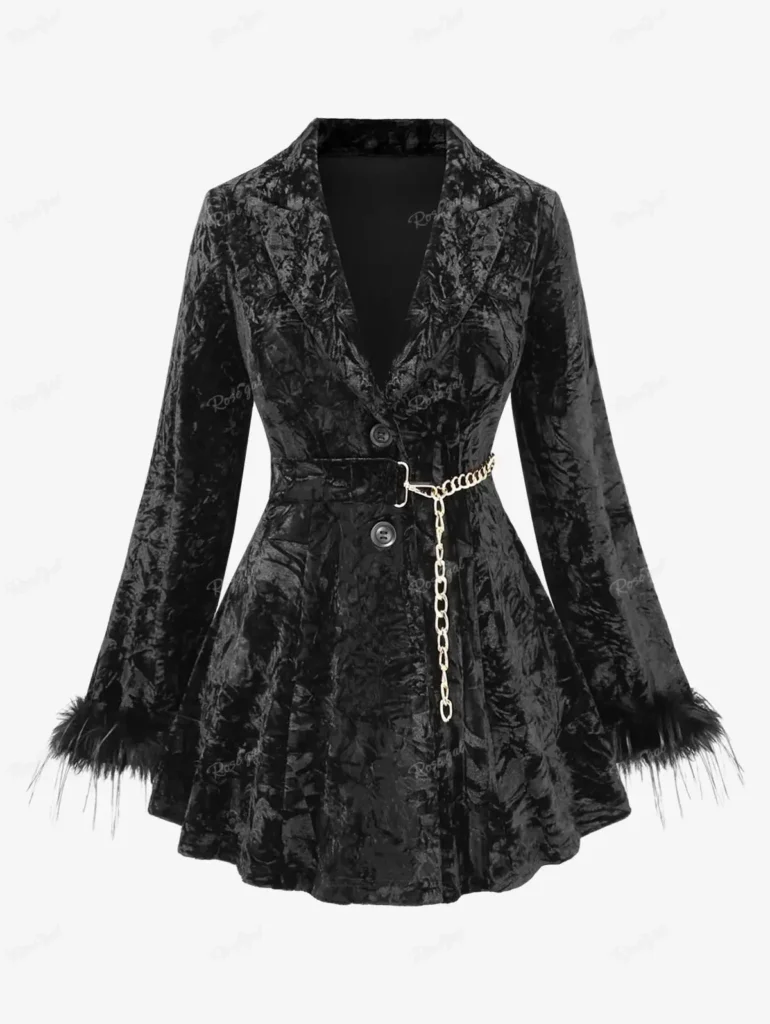
The Women’s Velvet Coat is black crushed velvet with a sharp lapel collar, a button front and a flared, skirted hem. A gold-tone chain belt cinches the waist, and the cuffs carry a soft feather trim. It is made from a cotton and polyester blend and comes in sizes M to 4XL.
Wear it open over black jeans and a plain top by day, or buttoned up over a long dress in the evening. The chain belt stops it reading as a plain coat: it adds the jewellery-like flash 60s rock stars wore on stage.
Leather Flare Pants
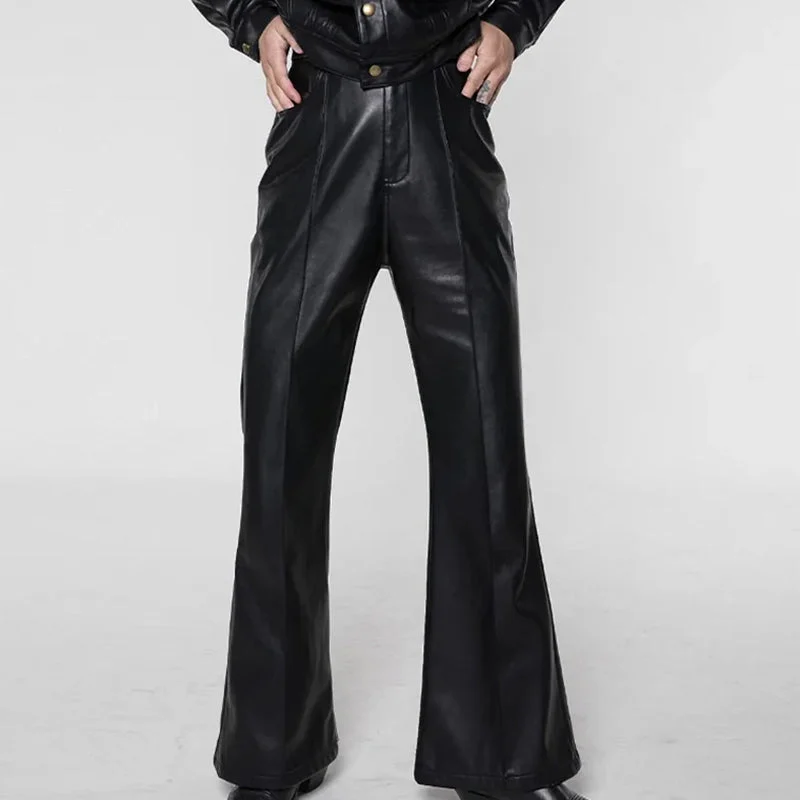
The Leather Flare Pants are black faux leather with a clean front, a button closure and a wide flare that starts at the knee and sweeps to the floor, with a long centre seam down each leg. They are the late-60s silhouette in its darkest form: the hippie flare, rebuilt in leather.
Flares work best with a close-fitting top and a boot with some height underneath, which is where the next piece comes in.
The Chelsea Platforms
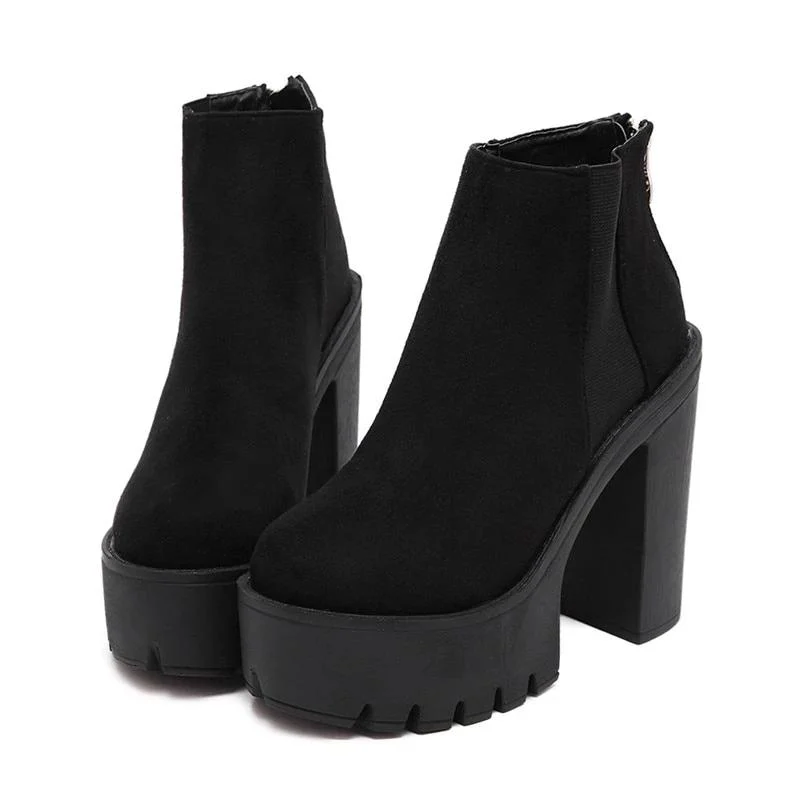
The Chelsea Platforms are black faux suede ankle boots with a chunky block heel and a thick, lugged platform sole: a 13 cm heel with a 5 cm platform, and a back zipper for easy pull-on. They take the 1961 Beatle boot and give it a modern goth lift: same ankle shape, same clean line, much more height.
These tie the outfit together: the platform lifts the flare off the floor, and the suede softens the shine of the leather. Wear them with the flare pants, a skirt and tights, or skinny jeans.
Three Ways to Wear 60s Goth in 2026
The Mod: sharp and tailored
The mod route: Chelsea Platforms, slim black trousers or a tailored jacket, and a plain black top. Keep the lines clean and the colours to black with one accent, as the Beatles and the mods wore it. The most wearable version of 60s goth.
The Psychedelic: velvet and flare
The late-60s route: the Women’s Velvet Coat over the Leather Flare Pants, with the Chelsea Platforms underneath. The velvet gives texture, the flare gives movement, the boots give height. Add one silver ring and stop there: one statement at a time, or the look turns into a costume.
The Dark Romantic: Nico after midnight
The Nico route: all black, long layers, and a coat that moves. The velvet coat over a long black dress, the Chelsea Platforms, pale skin and dark lips. This look connects the 1960s to the goth clubs of the 1980s in one straight line.
FAQ
Is goth really rooted in the 1960s?
Yes, in its music. Gothic rock as a named genre began in the late 1970s, but its sound was already forming in the 1960s, and the fashion followed the same path.
What is the easiest 60s goth piece to start with?
Chelsea boots. They are the most wearable piece of the decade, they work with jeans, skirts and flares, and the platform version adds height without changing the classic ankle-boot shape. Start with the boots.
How do I wear 60s goth without looking like a costume?
Wear one 60s piece at a time and keep the rest modern. A velvet coat with plain black jeans reads as fashion; the same coat with flares, a ruffled shirt and a top hat reads as a costume. One statement, everything else quiet.