Wallet Chains: The Ultimate Gothic & Punk Guide to Wearing, Choosing, and Styling Them
A wallet chain is a metal chain that secures your wallet to your belt loop — part security, part statement. Born with 1950s bikers, it became a punk and gothic staple. Hook one end to your wallet’s grommet, drop the wallet in your back pocket, and clip the other end to a belt loop. Choose 18–24 inches with a clasp.
What a Wallet Chain Actually Is (and Where It Came From)
The design predates the fashion: in the 1950s, bikers and truckers chained their wallets so they wouldn’t lose them climbing on and off bikes and rigs. Punk adopted it in the 70s and 80s as rebellion hardware; goth, grunge, and metal scenes each made it their own. Rock legends and pop idols have all worn them — reinvented endlessly with skulls, bullets, crosses, and cogs.
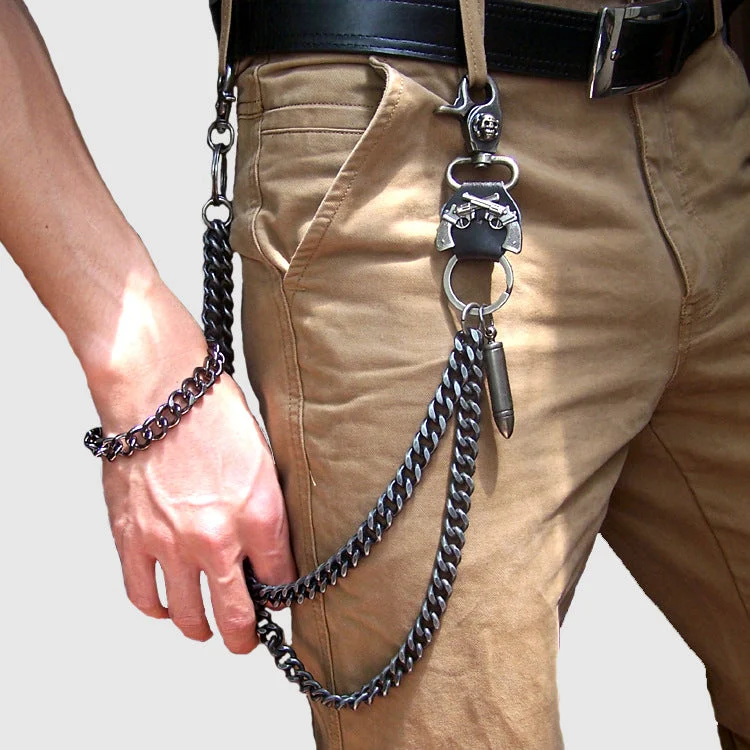
The Bullet Wallet Chain carries that lineage forward: bullet and skull-ghost links in the classic biker-chain format, the exact silhouette that started the whole trend.
How to Wear a Wallet Chain: The 3-Step Method
Wearing one is simple, but the details matter — most people who give up on wallet chains got the setup wrong, not the chain.
- Hook one end to your wallet. Open the clasp and clip it through the grommet — the small metal ring on the corner of the wallet. Biker-style wallets usually have one built in; if yours doesn’t, use a D-ring or a keychain loop.
- Wallet goes in your back pocket, same side as your dominant hand. Right-handed? Right back pocket. The chain should exit from the grommet side of the pocket, facing outward, so it drapes cleanly instead of twisting.
- Clip the other end to a belt loop. Use the loop closest to your front pocket on the same side. That gives the chain a tidy diagonal drape along your thigh — visible, but not swinging wildly enough to catch on things.
Pro tip from experienced wearers: chain length matters more than the design. Too long and it snags on chair legs, car doors, and turnstiles. Too short and it yanks every time you sit. Most wallet chains run 18–24 inches. Measure from your belt loop to the middle of your back pocket, then add about two inches for drape.
The Clasp Problem: Why Cheap Wallet Chains Break
If wallet-chain listings have a number-one complaint, it’s this: the clasp pops open and the wallet drops anyway. Most failures trace back to weak spring-ring clasps and unsoldered links — the two corners cheap chains cut first.
Spring rings are the thin sliding rings on bargain chains. They deform under a real tug and lose tension over time. A lobster-claw clasp — the hinged, spring-loaded hook — is stronger, easier to operate one-handed, and distributes weight better across the belt loop. Look for soldered links too: on unsoldered chains, one stressed link opens and the whole thing unravels.
Test before you trust: clip the chain, hold the wallet, and give it a firm downward tug. If the clasp flexes or the links stretch, that chain is decoration, not security. A real chain holds.
Picking the Right Length and Material
Length is the most common sizing regret. Under 5’9″, a 20-inch chain usually sits right; over 6 feet, 22–24 inches works better. When in doubt, go slightly longer — you can always loop it, but a too-short chain pulls your belt loop sideways all day.
Material decides lifespan. Stainless steel is the workhorse — it resists sweat, rain, and daily friction without flaking. Plated chains look sharp new, but the finish wears at contact points — exactly where wallet chains take the most abuse. Brass develops a dark patina that many goths love; just know it’s a living finish, not a permanent shine.
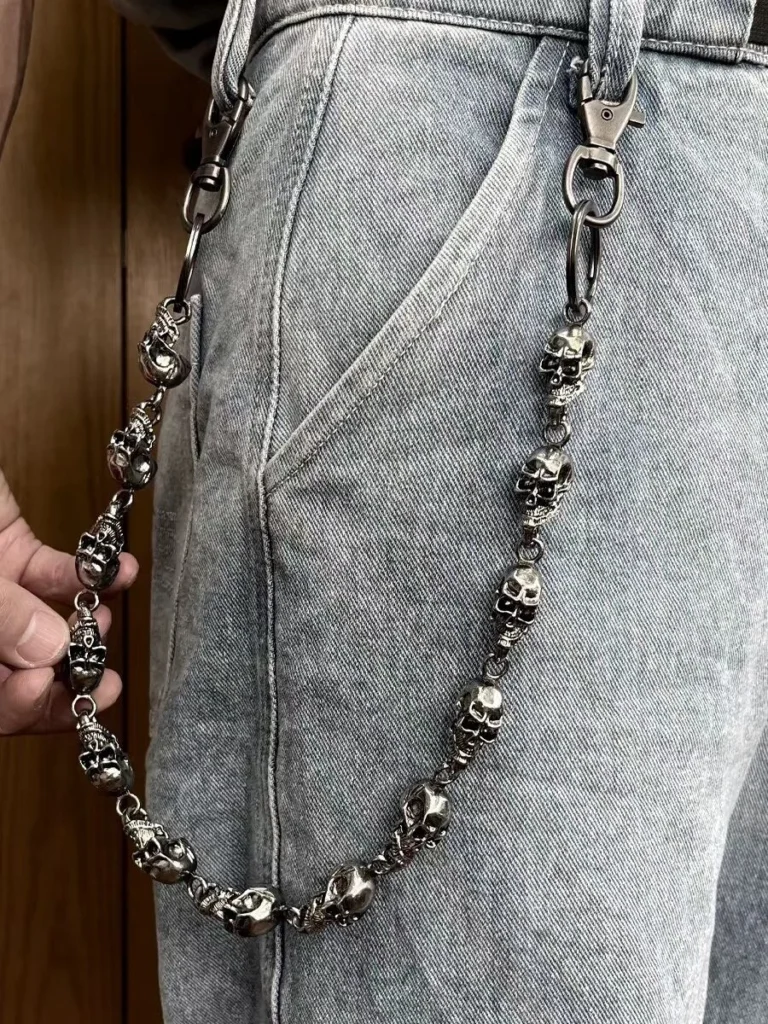
The Skull Wallet Chain is built for the metal crowd: chunky skull links with enough weight to feel secure, in the classic 20+ inch range that drapes properly.
Styling: Gothic vs. Punk Wallet Chain Looks
Punk chains go heavy: thick curb links, bullet casings, spikes, raw hardware. They read as armor — pair them with ripped jeans, a studded belt, and boots. Gothic chains go detailed: skulls, crosses, cogs, blackened finishes. They read as jewelry — pair them with tailored black trousers, a velvet blazer, or a long coat.
Women wear wallet chains too, and the look has grown well past the men’s section: clip one to high-waisted jeans, a mini skirt’s belt loop, or a handbag strap for the same hardware accent. The silhouette works anywhere a belt loop does.
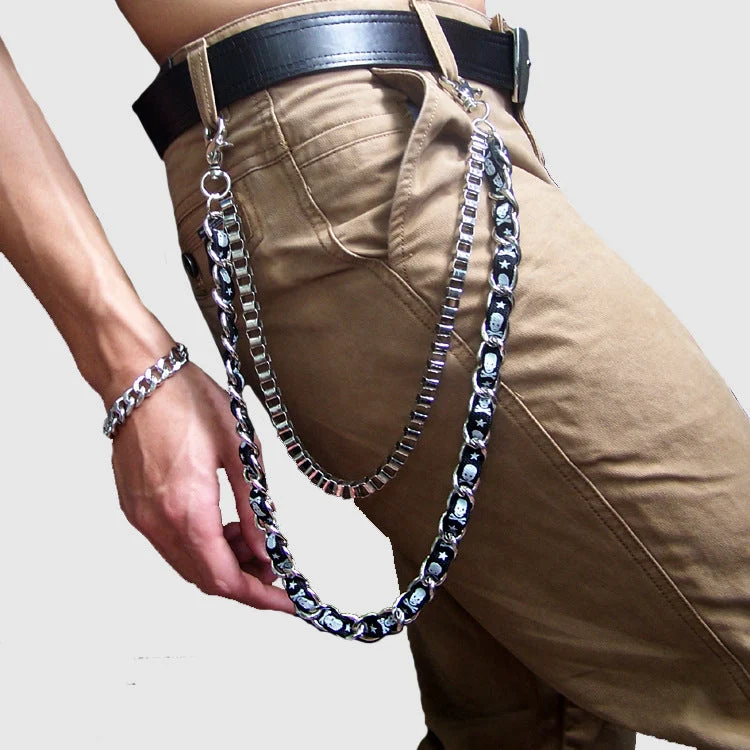
For maximum pirate-rock attitude, the Rock Pirate Belt Chain brings the swashbuckling hardware — chunky links that work as a belt chain, wallet chain, or pants chain depending on how you clip it.
5 Mistakes That Ruin the Look (or the Chain)
- Clipping to dress-pants belt loops. Heavy chains wear through thin fabric loops over time. Denim handles it — jeans stitching was built for hardware. On dress trousers, clip to the belt itself instead.
- Wearing it too long in crowds. Excess chain catches on everything at gigs and festivals. In a packed venue, 18–20 inches beats 24.
- Sitting on your wallet. A back-pocket wallet tilts your pelvis and can compress the sciatic nerve — doctors literally call it “fat wallet syndrome.” Try front-pocket carry: clip the chain to a front belt loop and drop the wallet in the front pocket. The chain still does its job; your spine thanks you.
- Ignoring the clasp test. Covered above: tug it before the first outing, not after the first loss.
- Letting it drag. If the chain pools past your knee, it’s too long for daily wear. Shorten it or save it for the stage.
Frequently Asked Questions
Do wallet chains actually stop pickpockets?
Marginally. A determined thief can defeat most chains — but the chain tugs every time the wallet moves, so you feel it instantly. That feedback prevents accidental loss at bars, concerts, and festivals far better than it stops professionals.
Will a wallet chain damage my belt loops?
On sturdy denim, no — the stitching handles it. On thin dress-pants loops, a heavy chain can wear through over time, so clip to the belt instead. Lobster-claw clasps distribute weight better than spring rings.
What length wallet chain should I get?
18–24 inches covers most people. Measure from your belt loop to the middle of your back pocket and add two inches for drape. Shorter for crowded gigs, longer if you’re tall.
Final Thoughts
The wallet chain survived seventy years because it does two jobs at once: it keeps your wallet where it belongs and it says something about you. Buy for the clasp first, the length second, the skulls third — and it’ll outlast every trend cycle.