Gothic Plaid & Stripes: Wear Patterns the Dark Way
Plaid and stripes can look fully gothic, not preppy or costumey, when one pattern leads the outfit and everything else stays dark and plain. Choose a dark-based check or stripe, keep the rest of the outfit solid black, and let texture, not extra color, do the work.
Why Plaid Belongs in Gothic Fashion
Plaid is not a borrowed preppy print. In punk, tartan was a deliberate act of rebellion: a formal, heritage cloth worn ripped, safety-pinned, and paired with leather and boots. Gothic fashion inherited that attitude and darkened the palette — Black Watch greens, charcoal greys, and deep reds read moody rather than cheerful, which is why plaid survives in goth wardrobes long after brighter checks fade.
That history also explains the most common fear around plaid: that it will look like a costume. The costume effect rarely comes from the pattern itself. It comes from stacking too many themed pieces at once until the outfit reads as a uniform. One strong pattern piece with otherwise ordinary dark clothes avoids that trap.
The One-Pattern Rule
Start with the rule experienced goth and punk dressers repeat most: one pattern per outfit. If the coat is plaid, the top, trousers, and boots stay solid. This single decision solves most pattern anxiety, because the eye has one place to land.
A useful test is the squint test: step back and squint. If one shape dominates, the outfit works. If two patterns compete, remove one. Gothic styling already has plenty of flavor from leather, velvet, and hardware.
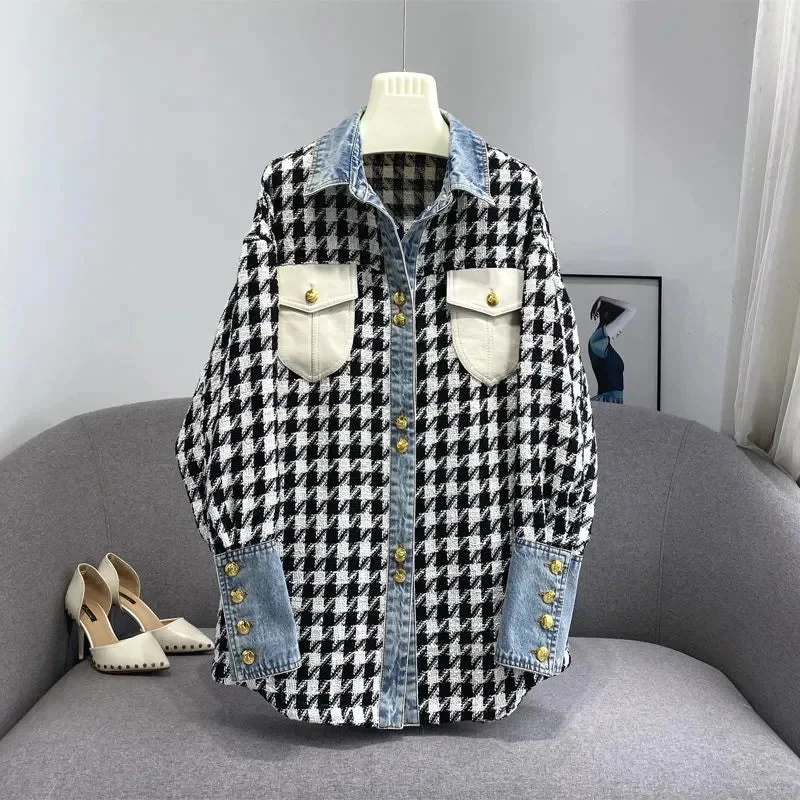
Start Casual: The Plaid Denim Coat
The easiest entry point is a plaid coat worn like denim: open and slightly oversized. A plaid denim coat over a plain black tee, black skinny jeans, and boots reads as a jacket first and a pattern second — exactly what beginners need.
Keep the layers underneath dark and matte, so the pattern can breathe. If the check has a bold red line, echo it once — a dark red lip or a burgundy boot lace. Echoing it three times turns it into a theme.
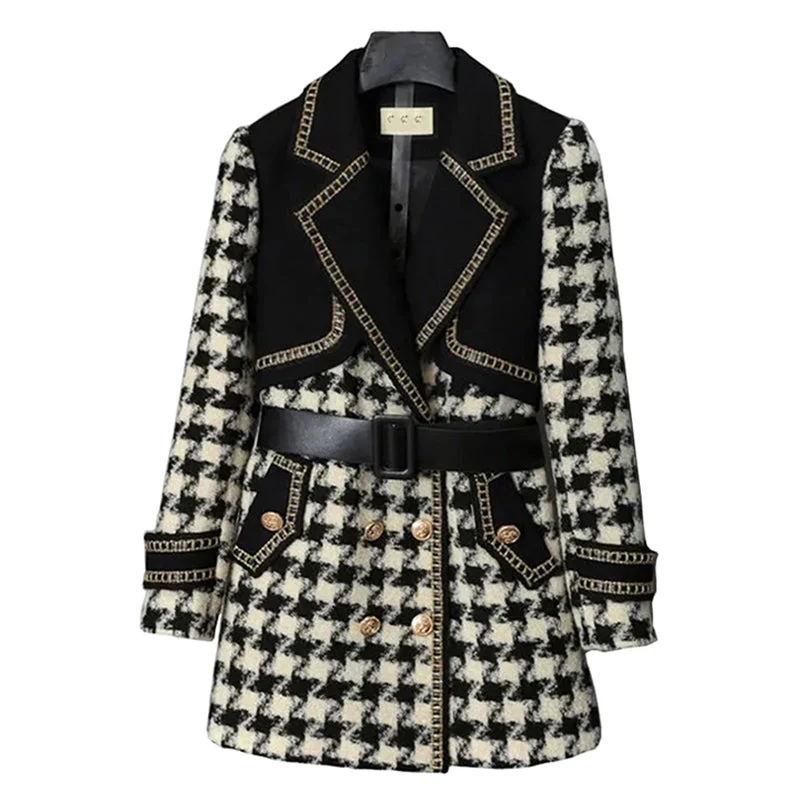
Go Polished: The Plaid Trench Coat
For a sharper look, a trench cut does the same job with more structure. A plaid trench coat over an all-black base — turtleneck, straight trousers, heeled boots — reads as tailored goth rather than punk, and the belt defines the waist so the pattern never overwhelms the wearer.
Trench styling rewards restraint elsewhere: skip the patterned scarf, checked bag, and tartan shoes. The same formula anchors the gothic autumn layering guide — a dark base plus one textured layer.
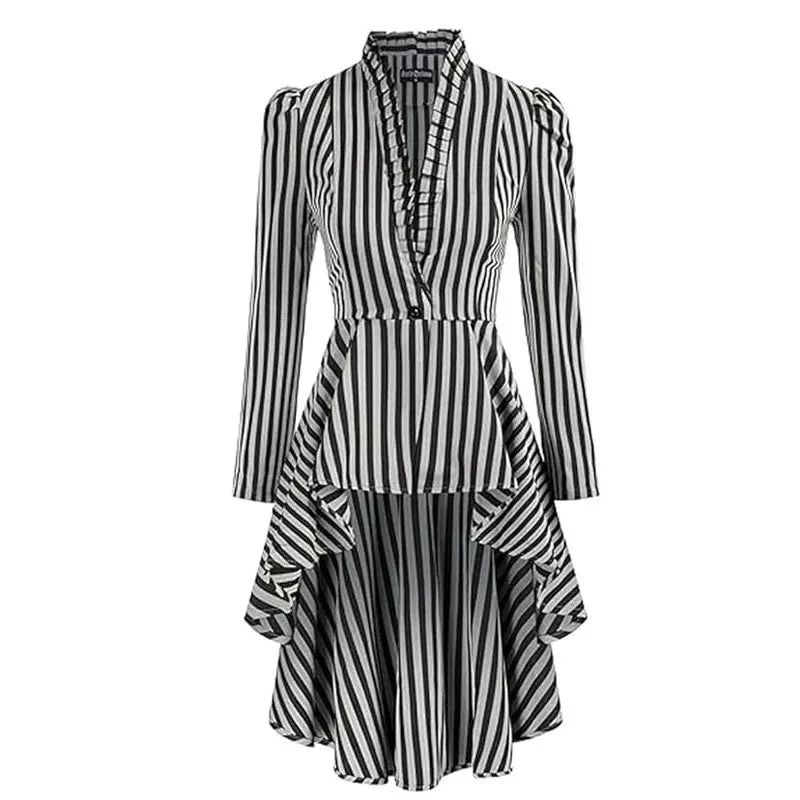
Stripes: The Quiet Pattern
Stripes are plaid for people who want pattern without commitment. A pinstripe or bold vertical stripe adds structure without the visual noise of a check, making stripes the safest pattern for work and formal occasions. Vertical stripes lengthen; horizontal stripes widen — choose the direction that matches the silhouette you want.
A tailcoat cut shows stripes at their most dramatic. A striped tailcoat overcoat with slim black trousers and boots gains movement from its long back panels, and the regular, restrained stripe reads as tailoring rather than decoration.
Mixing Patterns Without a Mess
Mixing two patterns follows a strict scale rule: pair a large pattern with a small one, never two of the same size. A large plaid coat over a fine pinstripe trouser works because the scales are far apart; two medium checks at the same scale fight each other and look accidental.
Color is the second control. Mixed patterns need a shared color, usually black, running through both. If they share no color, they read as two separate outfits. When in doubt, do not mix: one pattern done well beats two done nervously.
Pull Colors From the Pattern
The easiest color rule is to build from colors already inside the check. Look at the sett, the repeating unit of the tartan, and pick one accent from it. Black, charcoal, and cream are almost always safe, because they recede and let the pattern lead; strong colors absent from the pattern tend to fight it.
This rule also prevents a common shopping mistake: buying plaid and then hunting for clothes to match it. If your wardrobe is mostly black with one burgundy accent, choose a plaid containing that accent, so the new piece slots into outfits you already wear.
Five Mistakes to Avoid
First, matching every accessory to the same tartan — a plaid coat, scarf, and bag is a costume, not an outfit. Second, wearing plaid too bright for the rest of the look: neon or pastel checks look stranded without an equally bold wardrobe. Third, ignoring scale: a huge check on a petite frame, or a tiny check lost on a long coat, both miss. Check the mirror at full length, not just up close.
Fourth, pairing plaid with loud hardware without a plain buffer. The gothic biker jacket guide shows hardware works best as a single lead piece; if the coat is the pattern, let the hardware be quiet. Fifth, buying cheap printed plaid where the check does not match at the seams — on a well-made piece it lines up across pockets and closures, on a cheap print it jogs and breaks.
Keeping Patterns Crisp
Patterned clothes show care mistakes faster than solids, because a faded check is obvious. Wash plaid cold and inside out, skip the dryer when the label allows it, and never use bleach — it attacks one color in the sett and leaves the pattern patchy.
Press from the reverse side, hang coats on wide hangers, and brush wool plaid between wears instead of washing it constantly. These small habits keep a dark plaid sharp after dozens of wears, while neglected pieces fade into a grey blur.
Frequently Asked Questions
Can goths wear plaid without looking preppy?
Yes. Choose a dark-based plaid, wear it with solid black layers, and add one gothic texture such as leather boots or a velvet top. The preppy look comes from bright checks paired with khakis and loafers, not from the pattern itself.
Can you mix plaid and stripes?
Yes, if the scales differ greatly and both patterns share black. Pair a large plaid with a fine pinstripe, not two medium patterns. If the combination looks busy in the mirror, remove one pattern and keep the stronger piece.
Does plaid only work in autumn and winter?
No. The pattern is year-round; the cloth weight is seasonal. Heavy wool plaid suits cold months, while light cotton checks and open plaid coats work in spring and autumn. Choose the fabric for the weather, not the pattern for the season.
Start With One Pattern
The dark way to wear patterns is simple: one pattern, dark companions, and texture instead of extra color. Try a plaid coat over your usual all-black base this week, and notice how little else needs to change. The gothic hooded jacket guide uses the same principle — one strong outer layer, everything else quiet — and it works for patterns just as well as for hoods. Pattern is not the opposite of goth. Worn dark and worn once, it is one of its oldest signatures.