70s Goth Roots: How 1970s Punk Built Gothic Fashion
Gothic fashion was not born in a castle. It began in 1970s punk clubs, in torn jeans, black leather jackets and heavy boots. This guide traces how punk’s do-it-yourself uniform turned into goth — from New York in 1974 and London in 1976 to Bauhaus in 1979 — and the three pieces that still carry those roots.
Goth Started in Punk, Not in a Castle
New York, 1974: torn jeans and leather jackets
Punk rock coalesced in New York around 1974, London following in 1976. The look rejected mainstream excess: cheap, black, second-hand, customized by hand. The Ramones wore the uniform that defined American punk: plain T-shirt, tight jeans, black leather jacket. Richard Hell of Television spiked his hair and pinned his T-shirts together with safety pins — a look Malcolm McLaren carried to London. Ripped jeans below the knee were another New York habit, borrowed from the Ramones and the New York Dolls.
London, 1976: Westwood, McLaren and the King’s Road
In London the look got a shop. Vivienne Westwood and Malcolm McLaren ran their boutique at 430 King’s Road — Let It Rock, then Too Fast to Live, then Sex from 1974 — and McLaren managed the Sex Pistols. The shop sold black leather and rubber, bondage trousers and slogan T-shirts. Safety pins became the symbol: a cheap fastener turned into jewellery, repair and provocation at once. By 1977 punk was on the front pages, and its uniform was fixed in the public mind.
The 70s Punk Uniform: Four Pieces That Became Goth
Strip punk down to its wardrobe and four pieces do almost all the work. Each one survived the 1970s, crossed into goth, and still reads as goth today.
The leather jacket
The black leather jacket is dark fashion’s most durable item. In the 1970s it meant the biker and the rocker; punks made it their own by painting and studding it and wearing it over everything. A biker cut with buckles and laces is the closest thing punk had to a uniform, and it changed least on the way into goth.
Ripped jeans
Rips were not damage, they were the design. Punks tore jeans at the knee and held the tears open with safety pins or let them fray — a perfect pair looked like the establishment. Light-wash denim with heavy, frayed rips is the 1970s version, and it still works because the contrast — pale denim, dark top, black boots — is the whole outfit.
Heavy boots
Boots finished the silhouette. Dr. Martens and military surplus boots were cheap and hard-wearing, and punks laced them high and wore them with everything. The boot grounded a mostly black outfit and made the wearer look ready for the pit. Goth kept the boot and made it taller, turning a work boot into a statement.
The DIY detail
The fourth piece is not a garment, it is a method. Safety pins, patches, paint and studs let anyone turn a plain jacket or jeans into a personal statement for almost no money. It was never about buying the right label, but about altering what you already owned.
From Punk to Goth: How the Sound Turned Dark
Goth grew directly out of British post-punk in the late 1970s. The bands that made the turn are names every goth still knows: Siouxsie and the Banshees, Joy Division, Bauhaus and the Cure, who slowed punk’s energy into minor chords and lyrics about romanticism, mortality and the supernatural. The record most often named the first gothic rock record is Bauhaus’s debut single “Bela Lugosi’s Dead”, released in August 1979: nine minutes of skeletal drums and Peter Murphy’s baritone, singing about the actor who played Dracula. The label stuck in 1981, when Sounds writer Steve Keaton called UK Decay “punk gothique”. By the early 1980s London’s Batcave club gave the scene a home, and the look followed: leather and rips stayed, but velvet, lace and corsetry joined the wardrobe.
The Jacket: Men’s Punk Jacket
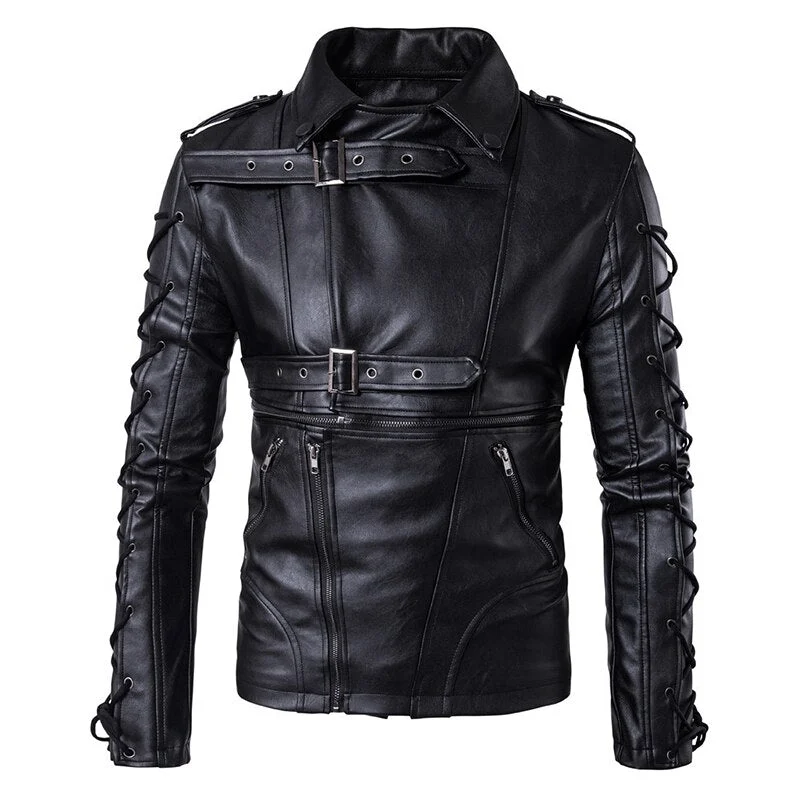
Start with the jacket — it does the most work. The Men’s Punk Jacket is a black faux leather and suede biker jacket with a stand collar, buckle straps across the chest, lace-up sleeves and zip pockets. The buckles and laces are the punk part; the clean biker cut keeps it wearable over a plain black tee. Wear it open over a band tee, or zipped up with the collar popped.
The Jeans: Men’s Ripped Jeans
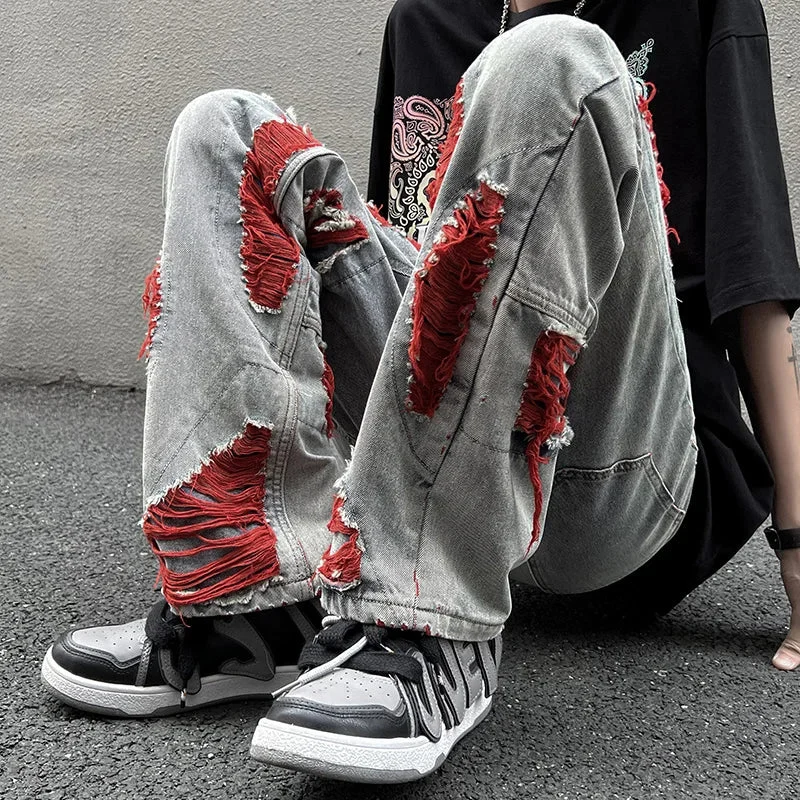
Jeans are where the DIY ethic shows. The Men’s Ripped Jeans are a loose, light-wash denim with heavy frayed rips at the knees and thighs, backed with red thread so the damage reads as design, not accident. Pair them with the punk jacket and black boots: pale denim against black leather is the contrast that made the 1970s punk look. Keep the top plain — the jeans already carry all the detail.
The Boots: Militant Goth Combat Boots
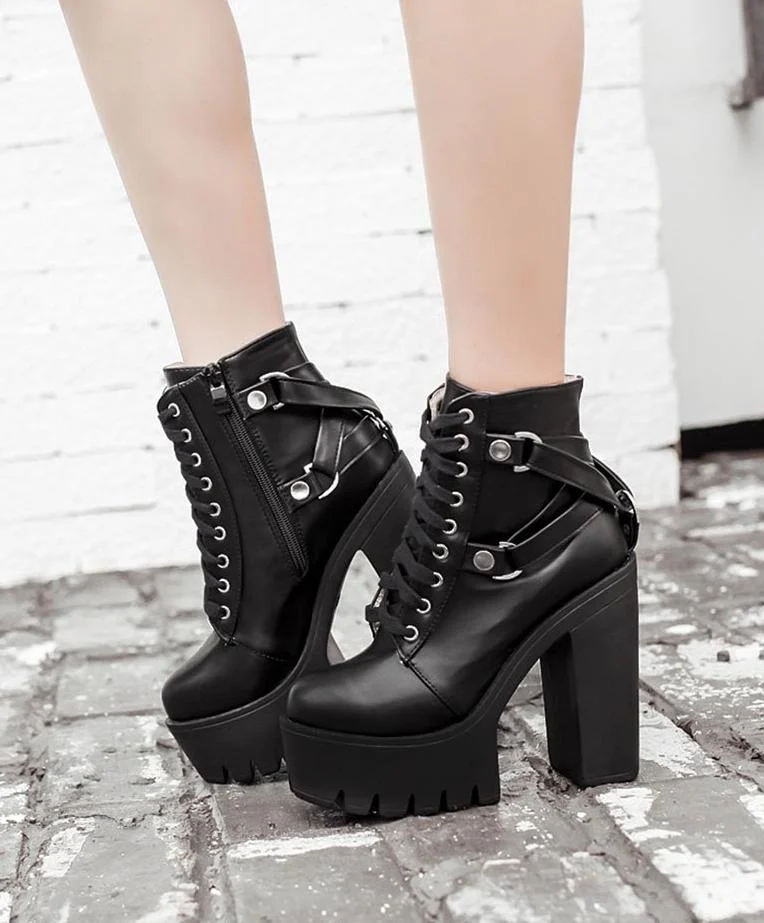
Boots are where punk’s workwear roots meet goth’s love of height. The Militant Goth Combat Boots are black lace-up platforms with a chunky block heel, a side zip and buckle straps — a combat boot front with the platform sole goth made its own. They add height and weight, which is exactly what loose ripped jeans need. Wear them with the jeans cuffed just above the boot so the laces and buckles stay visible.
How to Wear 70s Punk Roots in 2026
One DIY detail per outfit
The rule that keeps a 1970s-inspired outfit from looking like a costume is the one that governs skulls and pentagrams: one statement at a time. Pick the ripped jeans or the buckled jacket or the platform boots, and keep the rest plain black.
Keep the palette black, the fit modern
Black connects 1976 to 2026, so keep the base black and let one piece break it — the pale wash of the jeans, or the red thread in the rips. The Men’s Punk Jacket over the Men’s Ripped Jeans with the platform boots underneath is a complete outfit — add a plain tee and you are done.
Frequently Asked Questions
Is 70s punk the same as goth?
No. Punk came first — New York around 1974, London in 1976 — and goth grew out of it in the late 1970s, when Bauhaus, Siouxsie and the Banshees and Joy Division made the sound darker. Punk is the parent, goth the child: they share leather, rips and black, but goth added romanticism and horror imagery.
Can I wear a 70s punk outfit without looking like I am in costume?
Yes, if you keep it to one era detail at a time. A buckled leather jacket with plain black jeans reads as goth; the same jacket with ripped jeans and spiked hair reads as a Halloween costume. Modern fits help too — the pieces here are cut for today, so they look like clothes, not fancy dress.
What is the easiest way to start with the 70s punk look?
Start with the jacket. A black leather biker jacket works with everything you already own, and it changed least between 1976 and today. Add the Militant Goth Combat Boots next, then the ripped jeans once you are comfortable with the look.