Gothic Boleros & Shrugs: Layering, Fit & Styling Guide
A gothic bolero or shrug is a short, open-front layer that finishes an outfit without hiding it: it adds sleeves, structure, and edge over a dress, corset top, or band tee. Choose a shoulder-true fit, layer it over — never under — bulk, treat buckles gently, and one bolero can carry dozens of dark outfits.
What Makes a Bolero Different From a Jacket?
A bolero ends at or above the waist, has no front closure to fasten, and is worn open by design. That is the whole point. A jacket closes an outfit; a bolero frames it. Because it never buttons over your stomach, it works over fitted corset tops, slip dresses, and tucked-in tees that a full jacket would swallow. It also adds arm coverage and a finished shoulder line to sleeveless outfits, which is why it is a favourite for weddings, club nights, and concerts where you want to look dressed up without overheating.
Shoppers new to the style often make one mistake: buying it like a jacket. Do not size up for room to close it, because there is nothing to close. Instead, judge a bolero by three points: the shoulder seam should sit on your actual shoulder bone, the open fronts should hang straight without pulling inward, and the hem should end where you want it — at the natural waist for a classic bolero, or just below the bust for a cropped shrug.
Three Gothic Bolero Styles Worth Knowing
1. Buckle-Strap Cropped Bolero: The Everyday Edge
The Noir Buckle Strap Cropped Bolero Jacket is the workhorse of the three. Buckle straps across the front and shoulders give it a punk edge, while the cropped cut keeps it light enough for daily wear. It pairs best with high-waisted bottoms — a long skirt, wide-leg trousers, or leather pants — because the short hem shows off the waistband instead of competing with it.
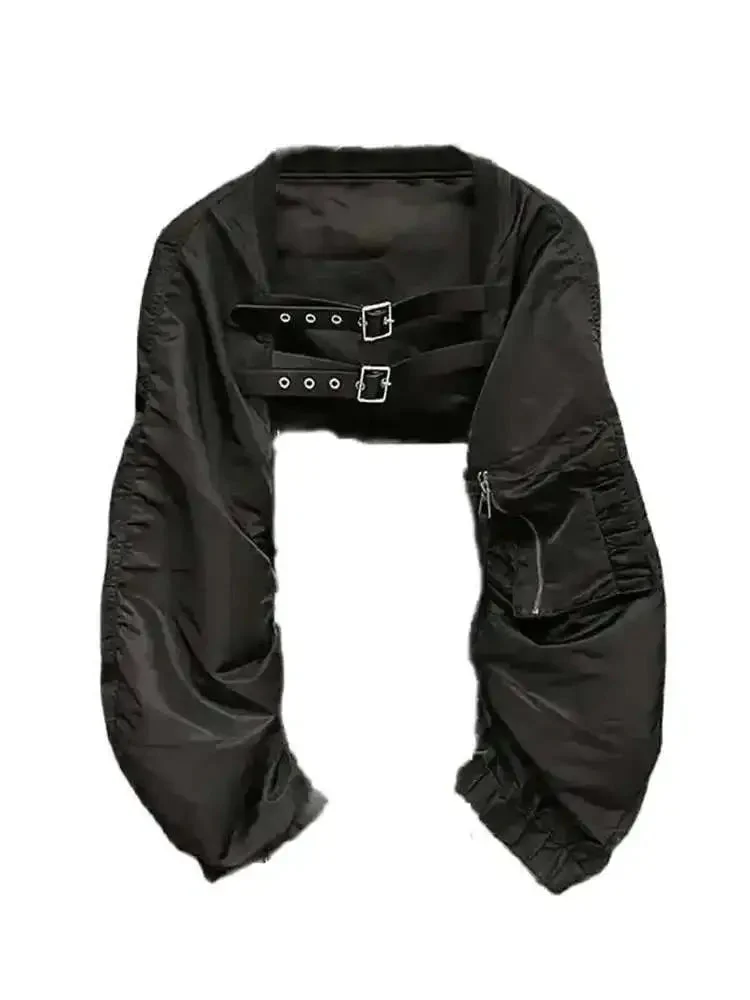
Wear it over a plain black tee and jeans when you want a dark outfit that still reads casual, or over a slip dress to sharpen a soft silhouette. The most common complaint about buckle-strap styles in customer reviews is buckles that loosen or snag on knitwear, so fasten the straps before washing and keep the bolero away from chunky knits in the same bag.
2. Military-Button Bolero: The Structured Statement
The Noir Military Button Gothic Bolero Jacket borrows its authority from uniform tailoring: rows of buttons, a firm shoulder, and a clean, upright line. This is the bolero to reach for when the occasion is dressier — a dinner, a formal goth event, or a corp-goth workday where you want structure without a full blazer.
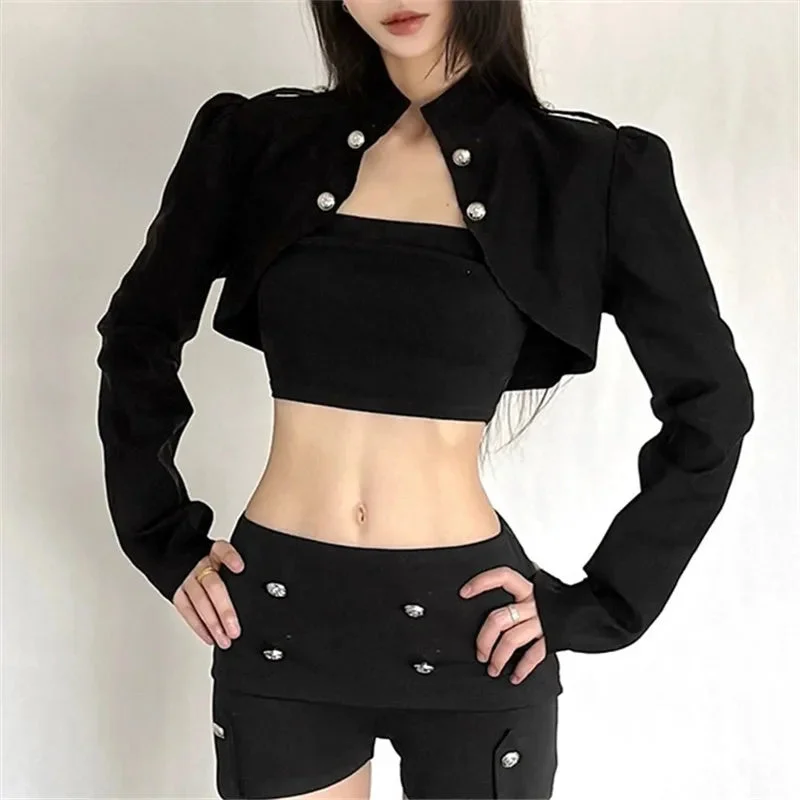
Because the military style is more tailored, fit matters even more. If you are between sizes, size up rather than down: a too-tight military bolero pulls across the upper back and makes the button rows gape, while a roomier one still holds its shape. Pair it with slim bottoms — a pencil skirt or skinny trousers — to balance the strong shoulders, and keep the rest of the outfit simple so the buttons stay the focal point.
3. Cropped Shrug: The Softest Layer
The Obsidian Cropped Gothic Shrug Jacket is the gentlest of the three: a soft, short layer that drapes rather than structures. Shrugs suit people who find boleros too stiff, or who want arm coverage over a sleeveless dress without adding visual weight.
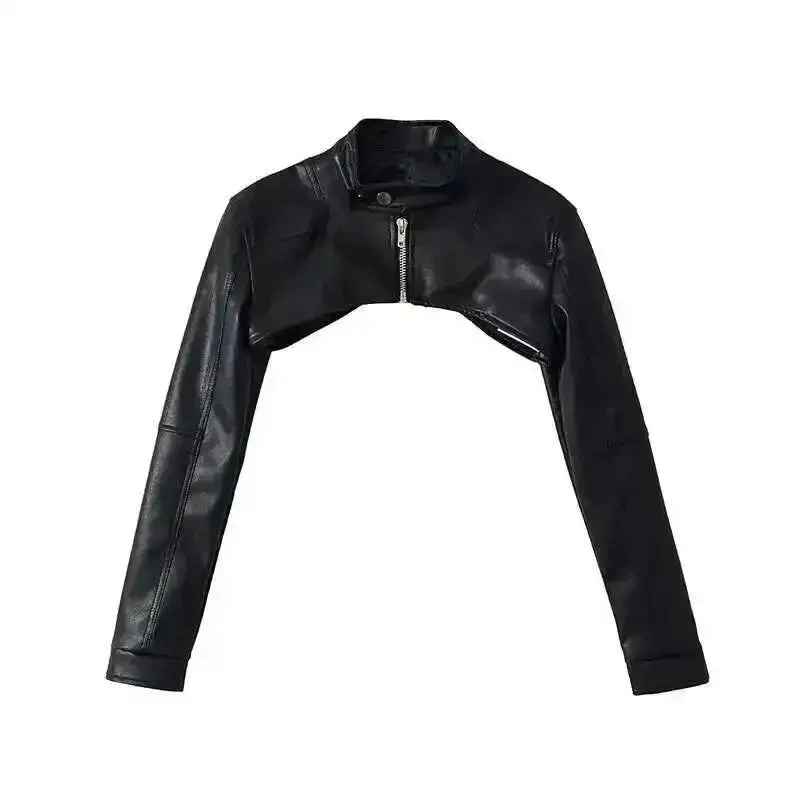
Style a shrug over a corset top for a romantic goth look, or over a long dress when the evening cools down. The trade-off of a soft shrug is that it offers no structure, so it works best when something else in the outfit provides shape — a fitted bodice, a defined waistband, or a strong boot. If everything in the outfit is soft and draped, the whole look can blur; anchor it with one structured piece and the shrug does its job beautifully.
Bolero Fit: The Three Checks That Prevent Returns
Online reviews of boleros repeat the same three fit complaints, and all three are avoidable. First, shoulders that are too wide: the seam should end at your shoulder bone, not halfway down your arm. Second, fronts that swing inward and cover the outfit: this usually means the bolero is too small across the back, so size up. Third, sleeves that are too short: raise your arms overhead, and the cuff should still reach your wrist bone.
Between sizes? The rule depends on the style. For structured, buttoned boleros, size up — tight tailoring only gets tighter over a corset or a thick top. For soft shrugs and stretch boleros, size down if you want a neat, close layer, since soft fabric relaxes with wear. And always try a bolero on over the outfit you plan to wear it with. A bolero that fits perfectly over a thin camisole may strain over a corset, and that is the most common reason for an otherwise avoidable return.
Layering Formulas That Work Every Time
Over a slip dress: shrug plus boots for a romantic evening look. Over a corset top and long skirt: buckle-strap bolero for a headliner concert outfit. Over a band tee and jeans: any bolero for instant polish on a casual day. Over a work dress: military-button bolero for corp goth that reads professional in the office and unmistakably dark after hours.
Two layering rules keep every formula working. First, keep bulk out from under the bolero: one thin base layer, not a sweater plus a top plus a corset. Boleros are short, so bulk underneath pushes the fronts outward and ruins the line.
Care: Keep Buckles, Buttons, and Fabric Looking New
Most bolero damage is preventable. Buckles and buttons snag in the wash, so always fasten them, turn the bolero inside out, and use a laundry bag on a cold, gentle cycle — or hand wash if the care label says so. Never tumble dry a faux-leather bolero: heat cracks the surface and warps the shape. Lay it flat or hang it on a wide, padded hanger away from direct sunlight, which fades black fabric faster than most people expect.
Store boleros hanging, not folded in a drawer. Wipe faux leather with a damp cloth after a night out to remove sweat and dust, and check stitching around buckles and buttonholes every few wears — a loose thread caught early is a thirty-second repair, while a torn buckle strap is a ruined evening.
FAQ: Gothic Boleros & Shrugs
Can you wear a bolero with a dress?
Yes — that is its best use. A bolero adds sleeves and structure to a sleeveless dress without covering the dress itself, making it ideal for weddings, formal events, and cool evenings.
Should a bolero be tight or loose?
Neither: the shoulder seam should sit on your shoulder bone and the open fronts should hang straight. Structured boleros should be sized up between sizes; soft shrugs can be sized down for a closer fit.
Are boleros only for formal outfits?
No. A buckle-strap bolero over a tee and jeans is an everyday dark look, and a shrug over a casual dress works for daytime. The formality comes from the styling, not the bolero itself.