Gothic Bracelets: How to Stack Skull Bracelets Without the Clatter, Tarnish or Snags
Stacking gothic bracelets looks effortless when it works — and noisy, tangled, and uncomfortable when it does not. The fix is simple: pick one anchor, vary the texture, leave breathing room, and size each piece to your actual wrist. Here is how to stack skull bracelets without the clatter, snags, or sore skin.
Why Skull Bracelet Stacks Go Wrong
A skull bracelet is small but carries a lot of attitude — which is why stacking goes wrong so often. Three heavy metals clang with every keystroke, a tight leather wrap cuts circulation by lunchtime, and a bracelet perfect in a photo slides over your hand when you reach for something.
The usual complaints are bracelets jangling at work, clasps popping open, and stacks snagging on cuffs. The cause is almost always the same: pieces chosen one at a time, with no plan for how they sit together. Build a stack like an outfit, not a drawer of singles.
The Three Skull Bracelet Styles to Build Around
Most gothic bracelets fall into three families — knowing which one each piece belongs to makes stacking far easier.
Leather Skull Bracelets: The Quiet Anchor
Leather is the softest, quietest option, making it the best stack anchor. It sits flat, grips gently, and muffles neighboring metal, so an all-metal stack reads as styled, not armored. Choose smooth edges and a one-handed clasp — fiddly buckles are the first regret of daily wear.
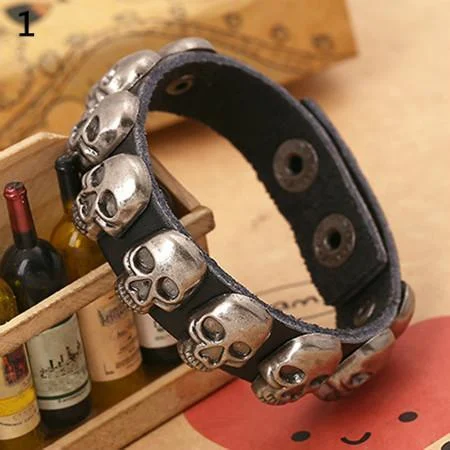
The Leather Skull Bracelet fits this role: its faux-leather band grounds the skull charm and sits on skin all day without digging in. Wear it near your hand for visibility, or push it up as the base layer.
Chain Link Skull Bracelets: The Structure Piece
Chains add movement and shine, but they are the noisiest stack members. A link bracelet should be the single metal statement in an everyday stack, not one of three competing chains. Chunky links catch on knitwear; finer links drape better and tangle less.
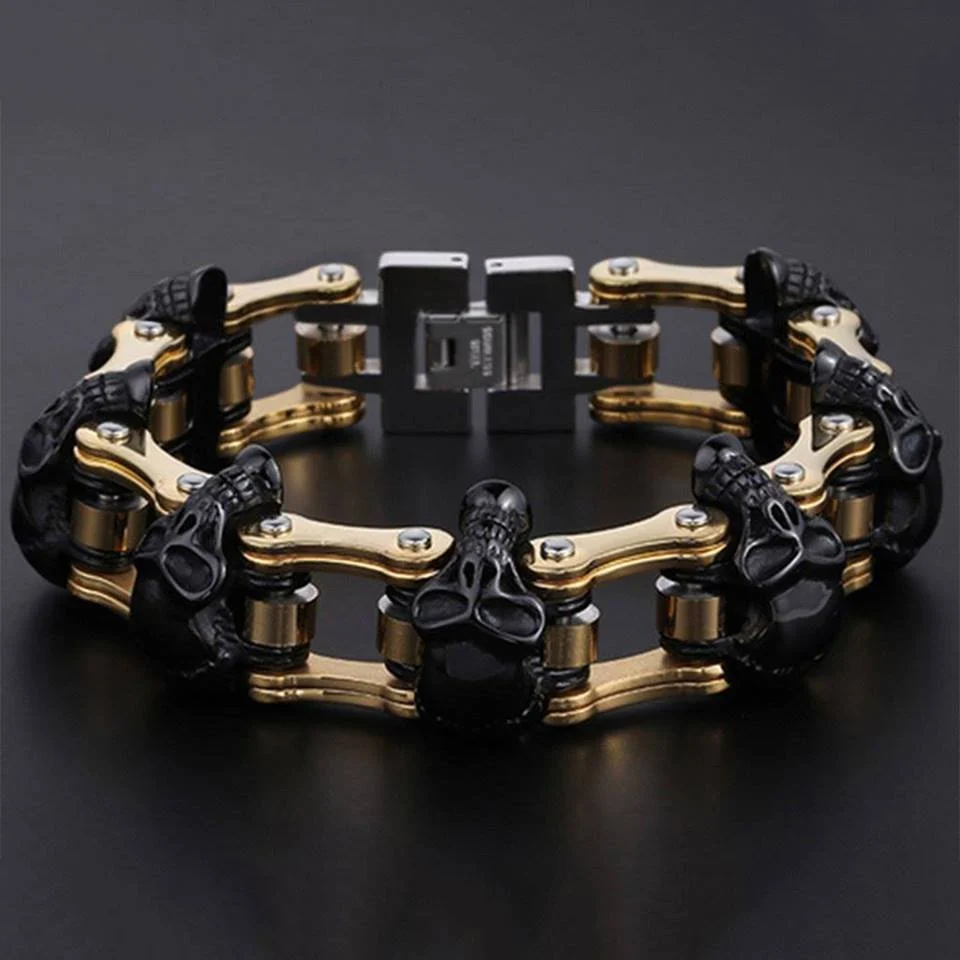
The Link Skull Bracelet is a good middle ground — bold across a room, yet tight-linked enough not to snag sleeves. If your stack already has a chain, keep other metals thin.
Rhinestone Skull Bracelets: The Sparkle Accent
Rhinestones are the wildcard: beautiful under concert lights, but the most fragile and easiest to overdo in daylight. Treat one as the accent, not the base — one per wrist — and keep it off rough surfaces that chip settings.
The Rhinestone Skull Bracelet earns its place by contrasting with leather and plain metal. Beside matte leather the sparkle reads as intentional; beside two shiny pieces the wrist blurs.
The Stack Formula: Anchor, Texture, Space
Start with one anchor — usually the leather or widest piece — add one contrasting texture, like chain next to leather, then check the space: one fingertip should slide under the stack. If it cannot, the stack is too tight and will hurt by evening.
Three is the sweet spot for most wrists: two thin pieces can look sparse, four or more start to clatter. For a bigger look, make extras very thin — a slim cord adds weight without noise — and keep the heaviest piece in the middle.
How to Size a Bracelet Before You Buy
Sizing causes more bracelet returns than any other jewelry problem, and it is almost entirely avoidable. Wrap a tape — or paper strip — snugly around your wrist bone, then add ease: about 1 centimeter for a fitted look, 1.5 to 2 for a relaxed drape, up to 2.5 for a chunky chain that should move freely.
Measure both wrists if you switch sides; the dominant wrist is usually larger. With no size options, check the clasp — a lobster clasp on an extender chain forgives many sins, a fixed bangle none. Leather stretches slightly, metal does not: buy leather snug, metal with room.
Mixing Materials Without Making a Mess
The old rule says never mix metals. Goth fashion largely ignores it, and it works if you mix deliberately: pick one dominant finish, usually silver-tone steel, and let the second appear only once. Blackened plus bright steel is a classic pairing; gold-tone plus steel needs more care, as the warm-cool contrast is stronger.
Leather is the peacemaker: a band between two metals stops clanking and rests the eye. Three loud finishes at once — bright silver, blackened steel, rhinestone sparkle — looks accidental, not styled.
Fixing the Five Most Common Stack Problems
Constant jangling. Separate metals with a leather or fabric band and remove one chain — two chains always make more noise than one chain plus one quiet piece.
Snagging on sleeves. Wear the smoothest piece outermost and chunky links on the inner wrist; roll knit cuffs above the stack instead of letting fabric bunch over it.
Clasps popping open. Usually the bracelet is too tight and the clasp is under tension. Add ease or switch wrists, and check spring-ring clasps monthly — they weaken faster than lobster clasps.
Irritated skin. Mystery metals are the usual culprit. Stainless steel and leather are the safest daily choices for sensitive skin; if a piece irritates you, wear it over a sleeve or save it for occasional wear.
One bracelet sliding off. A piece that slides over your hand is at least a centimeter too big — stack it between two fitted pieces or exchange it for a smaller size.
Styling Your Stack for Work, Concerts, and Nights Out
At work, quiet wins: one leather anchor plus one thin chain reads as personal style. In conservative workplaces, keep skulls small and the stack under a slidable cuff.
At a concert, go bigger: the rhinestone piece earns its keep, noise vanishes into the music, and sparkle shows under stage lights. Check every clasp first — a lost bracelet in a pit is gone.
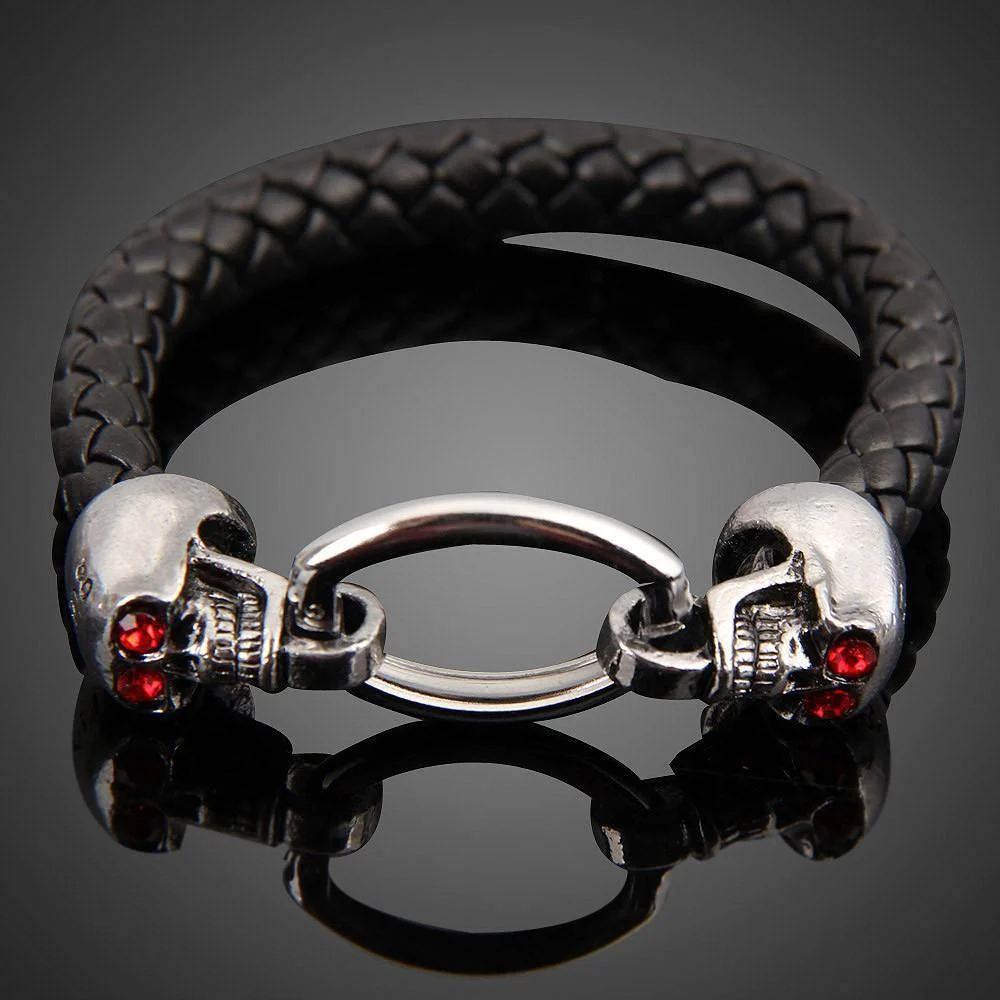
For a night out, let one piece star: rhinestone beside plain leather looks deliberate, while three statements fight for attention. Echo your other jewelry once — the same metal tone as your rings — and the outfit ties together.
One-Minute Care That Keeps a Stack Looking New
Stacks wear faster than singles because pieces rub together. Wipe metal weekly, keep leather from water and perfume, and store the stack flat or hanging, not tangled. Remove bracelets before showering, swimming, or sleeping — water and night pressure loosen settings and stretch leather.
Frequently Asked Questions About Gothic Bracelet Stacks
How many gothic bracelets should I stack at once?
Three pieces: anchor, contrasting texture, accent. Start with two; add a third only once the pair feels comfortable all day.
Can I stack skull bracelets with a watch?
Yes — treat the watch as the anchor, stack two slimmer bracelets beside it, and keep metal off the watch face.
Do leather skull bracelets stretch over time?
Yes, slightly — buy leather snug. If it loosens, move it to your smaller wrist or stack it between fitted pieces.
The Bottom Line
A great stack is not about owning the most pieces, but pieces that behave well together: anchor with leather, add one chain, finish with one accent, size to your wrist, and let quiet materials keep it comfortable. Get that right, and it looks intentional daily.