Gothic Jewelry Care: How to Keep Skull Rings, Steel Bracelets and Stone Bracelets Looking New
Gothic jewelry care is simple once you know the material: clean stainless steel gently, keep leather dry, protect stone from chemicals, and store each piece separately. This guide shows how to stop tarnish, fading, and scratches, so skull rings and bracelets stay dark and detailed for years.
Why Gothic Jewelry Ages Faster Than Plain Jewelry
Most gothic pieces work harder than a plain band. Deep skull carvings trap soap, sweat, and lotion, and chains rub against sleeves, desks, and bag straps all day. That does not mean the jewelry is poor quality. It means detailed jewelry needs a little more attention than a smooth ring.
Buyers often love a piece on day one, then complain weeks later that it looks dull. Usually the metal did not fail: water, perfume, or tangled storage slowly dulled the finish. A five-minute routine prevents nearly all of it.
Know Your Material Before You Clean Anything
The biggest cleaning mistake is treating every piece the same way: a method that revives steel can ruin stone, and a soak that helps a chain can stain leather. Check the material before it touches water or polish.
Stainless Steel: Tough, Not Invincible
Stainless steel is the workhorse of gothic jewelry because it resists rust and holds sharp detail. It still collects skin oil, soap, and dust, which makes it look grey, and it can scratch against harder metals or keys. Steel is low-maintenance, not no-maintenance.
Leather and Mixed Materials: Water Is the Enemy
Leather cords and straps absorb water, sweat, and perfume. Once soaked, leather stiffens, darkens unevenly, or smells musty. Metal charms need different care from the strap, so clean the two parts separately.
Natural Stone: Beautiful and Easy to Damage
Stone beads look dramatic, but many stones are softer than people expect. Harsh cleaners, ultrasonic machines, and long soaks can dull the surface or loosen stringing. Use a dry cloth most of the time, and a lightly damp one only when needed.
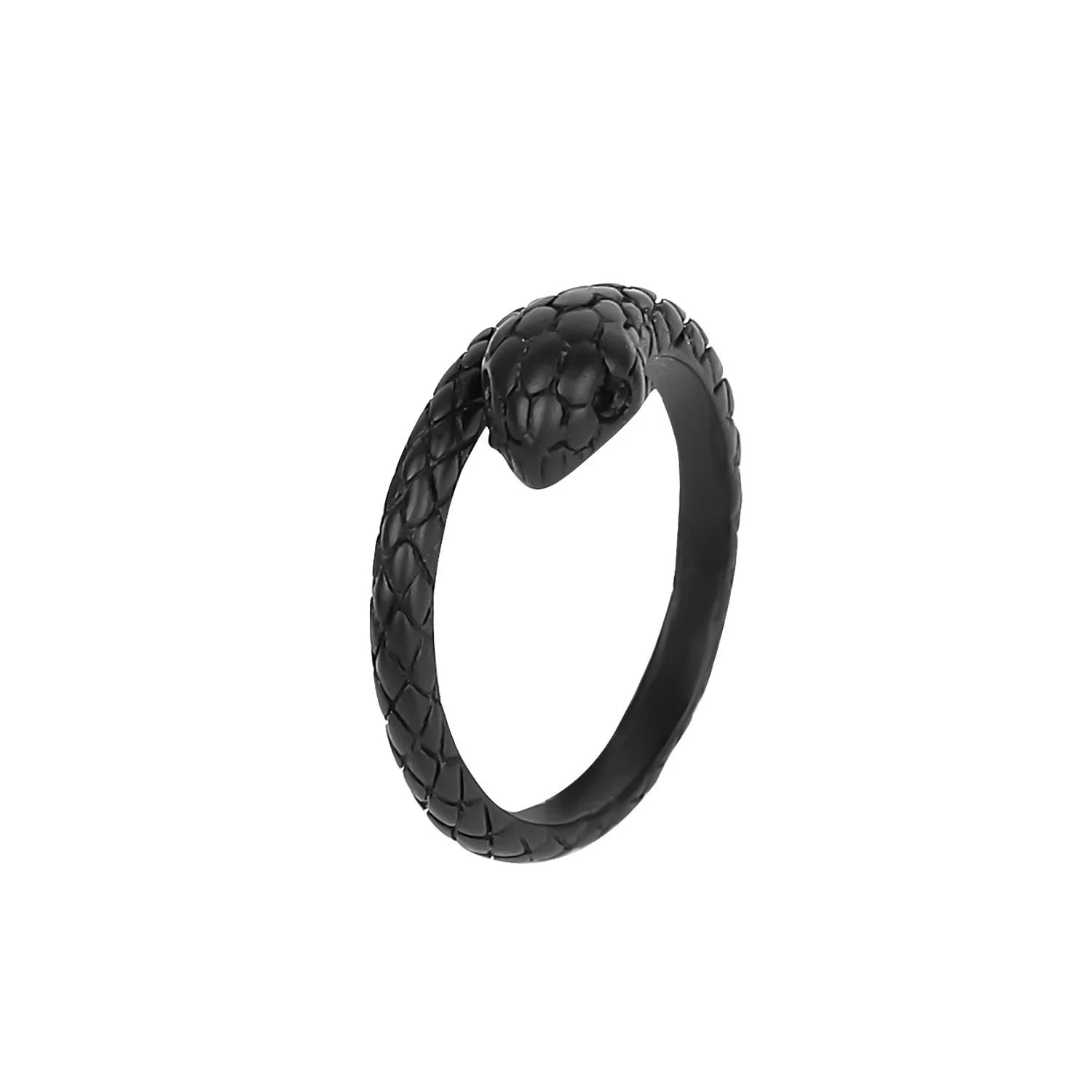
A coiled design like this Snake Ring shows why detail matters: every scale can trap residue a cloth cannot reach.
Daily Habits That Prevent Most Damage
Put jewelry on last and take it off first. That habit keeps perfume, hairspray, sunscreen, and lotion off the finish. Let any scent or cream dry fully before a ring or bracelet goes on.
Take jewelry off before swimming, showering, and heavy workouts. Chlorine, salt water, and sweat speed up dulling, and soap leaves a film in carved areas. Household cleaners are harsher still, attacking plated finishes and stone first.
Watch what rubs against your pieces. A bracelet under a tight cuff scuffs faster than one on a bare wrist, and a ring knocking against a desk loses its darkened finish on the high points. Wear should happen slowly and evenly, not in one scratched patch.
How to Clean Each Type of Gothic Jewelry
Stainless Steel Rings and Bracelets
Mix a drop of mild dish soap in warm water, soak the steel piece for a few minutes, then brush gently with a soft toothbrush, focusing on skull eyes, teeth, and chain links. Rinse and dry immediately with a soft cloth; never air-dry steel in a damp bathroom.
For a film soap does not shift, a polishing cloth made for steel is enough. Avoid abrasive pastes and silver polishes, which can strip darkened finishes. Polish only raised surfaces and leave blackened recesses alone.
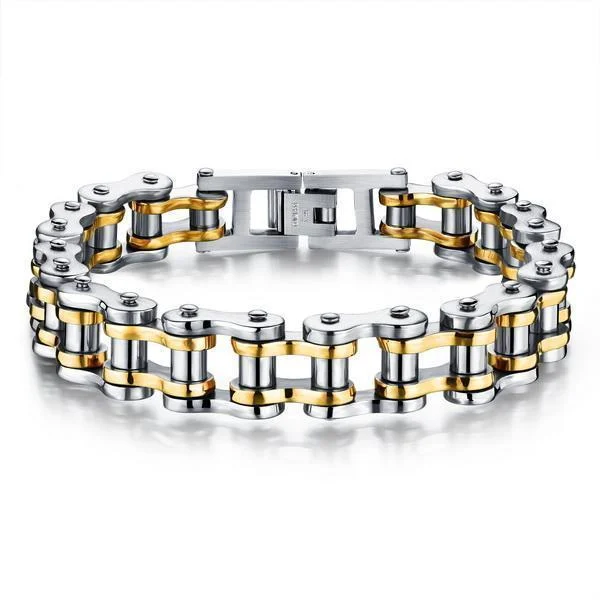
Linked pieces such as the Stainless Steel Bones Bracelet benefit most from soak-and-brush, because each link hides residue.
Leather Bracelets and Mixed Pieces
Wipe leather with a dry, soft cloth after wearing. If it gets damp, blot gently and dry at room temperature, away from radiators and sun. Never use a hair dryer, and never soak leather to clean its charms; wipe charms with a barely damp cloth instead.
Keep leather away from oils, perfumes, and hand cream: once absorbed, a scent or stain is hard to remove. If a strap feels stiff, test a tiny amount of leather conditioner on the inside first. Skip conditioner on suede unless it is made for it.
Natural Stone Bracelets
Dust stone beads with a dry microfibre cloth. For a deeper clean, use a cloth dampened in plain water only, then dry at once. Skip soap, vinegar, baking soda, and ultrasonic cleaners, and keep stone away from perfume and hairspray, which leave a sticky film.
Check stringing regularly. If beads slide loosely or the cord looks frayed, restring before it breaks. Store stone away from steel rings and keys, which are harder than many stones and will scratch them.
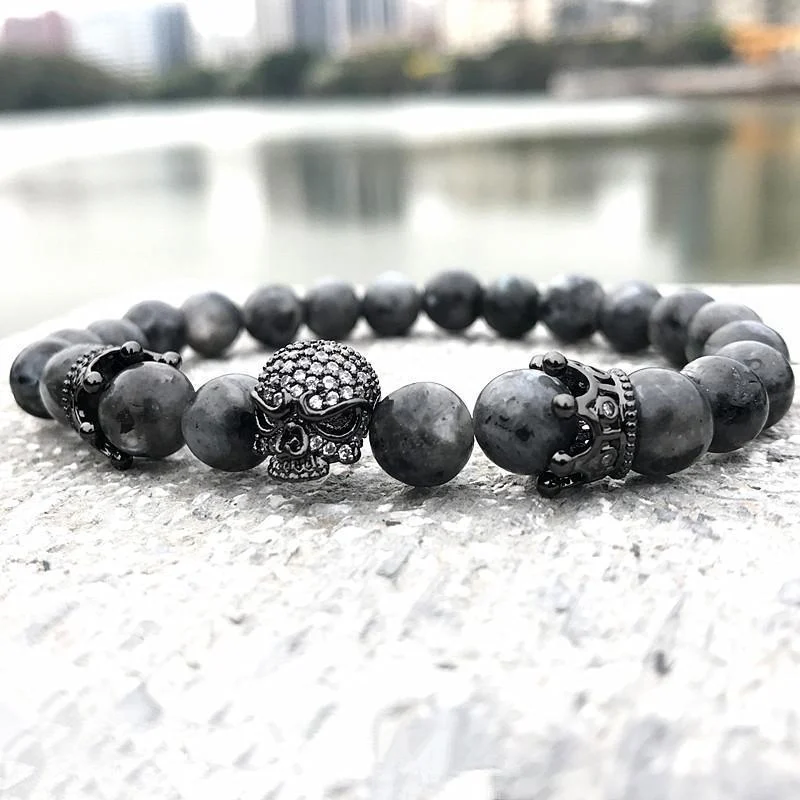
Stone pieces like the Natural Stone Skull Bracelet should be stored alone in a soft pouch, never with keys or steel.
Storage: The Step Most People Skip
Storage causes more damage than wearing does. A drawer of tangled chains and bracelets means constant scratching, and bathroom humidity speeds up tarnish. Give each piece its own space: a soft pouch, a lined compartment, or a separate hook.
Keep jewelry in a cool, dry room, not a bathroom. In a humid home, a silica gel packet in the box helps, and a zip pouch limits air exposure for rarely worn pieces. For travel, use a padded roll or individual pouches, never a loose bag pocket.
Untangle chains before storing them. Pulling a tightened knot straight damages links and clasps, so roll the chain loosely around two fingers, fasten the clasp, and lay it flat alone.
When to Repair Instead of Clean
Cleaning cannot fix a loose stone, a stretched cord, or a bent clasp. Stop wearing a damaged piece until it is repaired: one broken link usually leads to a lost piece. A jeweler can tighten settings, replace cords, and resize many steel rings cheaply.
Green or dark marks on skin usually mean a reaction to a base metal or trapped moisture, not a ruined piece. Let the skin rest, clean the jewelry, and check whether it is solid steel or plated. Plated pieces wear through faster under daily friction, so retire a piece if irritation returns every time.
Finally, accept honest wear. A ring worn daily for years will soften at the edges, and that patina is part of its story. The goal is not to freeze a piece on day one, but to slow the damage you can control, so wear looks intentional instead of neglected.
Frequently Asked Questions
Can I shower with stainless steel gothic jewelry?
You can, but do not make a habit of it: soap film builds up in carved details and hard water leaves spots. Take steel off to shower and it stays bright with less cleaning.
Why does my blackened skull ring look grey?
Usually the darkened finish is covered by oil and soap film, not gone. A gentle soap soak and soft brush restores most contrast; bright high points afterwards are normal wear.
How should I store gothic jewelry when travelling?
Use one soft pouch per piece, fasten clasps, and keep stone away from steel. A padded roll beats a loose pocket every time.
Good care takes minutes a week: clean by material, keep pieces dry, and store them separately. Do that, and your gothic jewelry will keep its darkness and detail for years.