Gothic Platform Shoes: Walk Tall Without the Wobble
Platform shoes give goths instant height without the punishing pitch of a stiletto, because the thick sole raises the whole foot at once. Pick a stable platform height, break the shoes in indoors first, and walk heel to toe with shorter steps. This guide covers platform styles, fit, walking technique, and care so your platforms look dramatic and feel walkable.
Why Platforms Are the Goth Shortcut to Height
Nothing changes a goth outfit faster than a platform sole. A few extra inches lengthen the leg line, sharpen a long coat silhouette, and make wide-leg trousers drape instead of dragging. Unlike a stiletto, a platform spreads weight across a broad base, so the foot sits at a gentler angle.
The trick is the pitch, not the total height. Pitch means the difference between the heel height and the front platform height. A 4-inch heel with a 2-inch front platform has only a 2-inch pitch, which feels closer to a modest heel. A 4-inch heel with no front platform forces the foot into a steep slope all day. When you shop, compare pitch first and total height second.
Three Platform Styles Worth Knowing
Platforms are not one shoe. Pick the shape that matches how you actually spend your day, then branch out.
The Everyday Chelsea Platform
The Chelsea platform is the easiest entry point. Its elastic side panels stretch as you step, the ankle sits low enough to flex, and the sole is usually one solid block rather than a separate heel. That makes it stable on pavements, easy to pull on before a gig, and forgiving for wider feet. Pair it with slim jeans and a cropped jacket for a daily goth uniform.
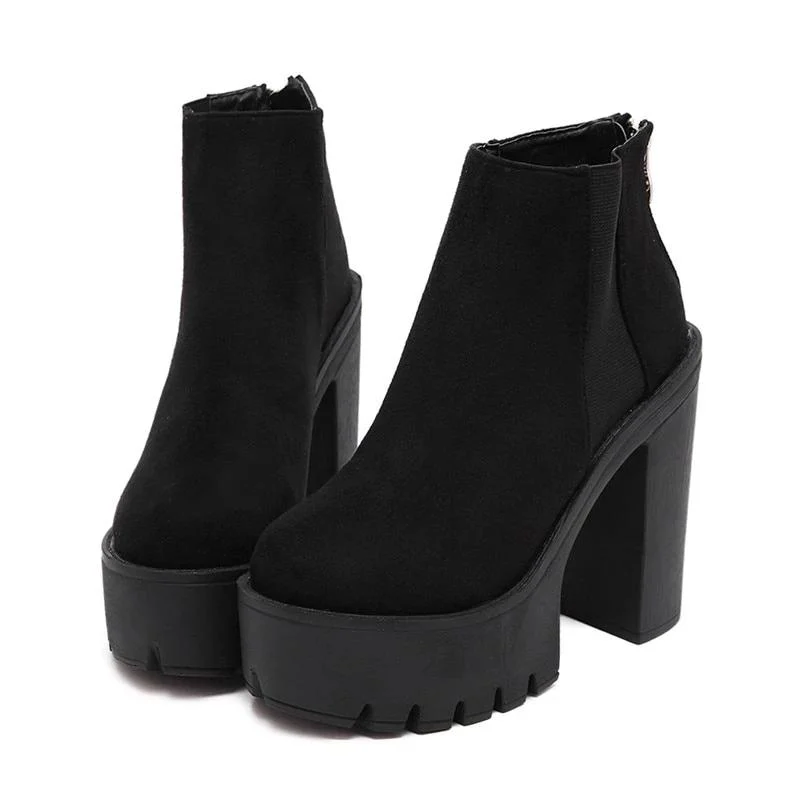
The Chelsea Platforms show the formula well: a clean black upper, a thick even sole, and no fiddly straps. If you have never worn platforms before, this is the height and shape to learn in.
The Statement High Platform Boot
High platform boots are the drama option. The shaft supports the ankle, which actually makes a tall platform easier to control than a platform shoe with no ankle coverage. Look for a snug shaft, a sturdy zip, and a treaded sole rather than a smooth slab. These boots carry long skirts, corset tops, and floor-length coats.
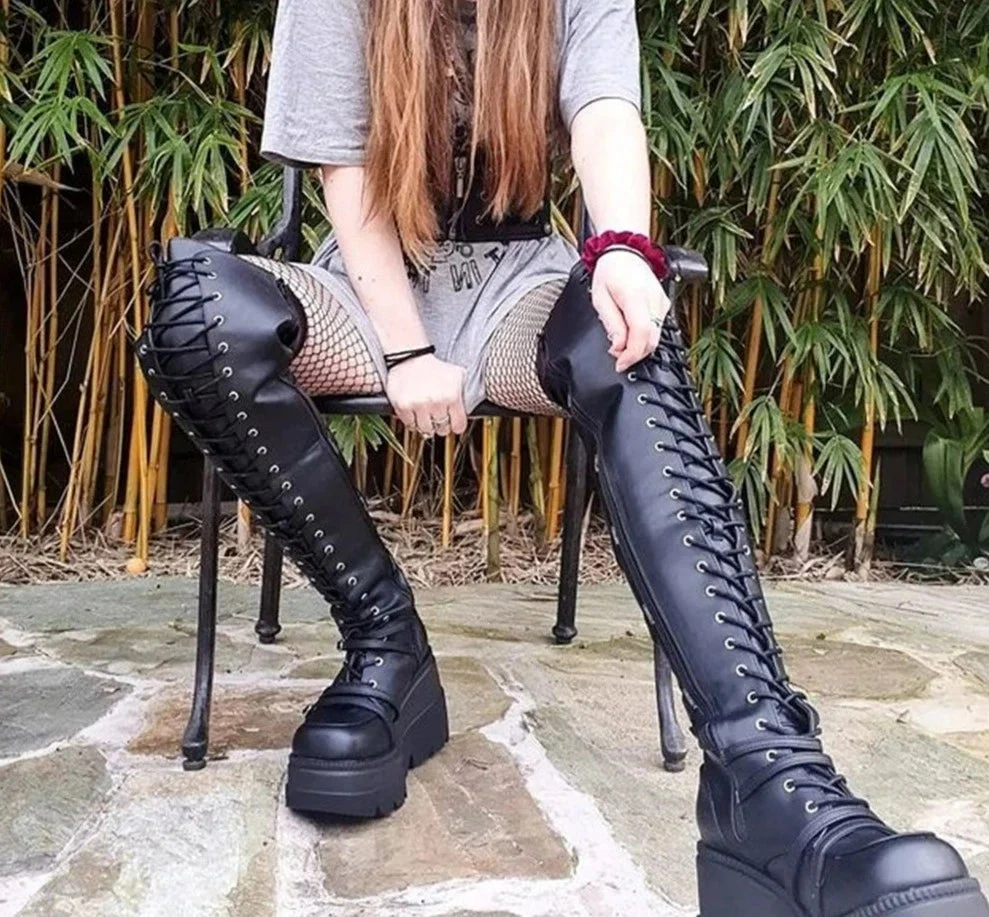
High platform boots are the pair for nights when height is the centerpiece. Budget a longer break-in: tall shafts soften slowly.
The Warm-Weather Platform Sandal
Platform sandals solve the summer goth problem: how to keep the silhouette when boots are too hot. A sandal platform works best with wide, secure straps across the foot and an ankle strap that actually holds, not a thin thong that lets the foot slide forward. The pentagram detail is decoration, but the strap layout is what keeps you upright.
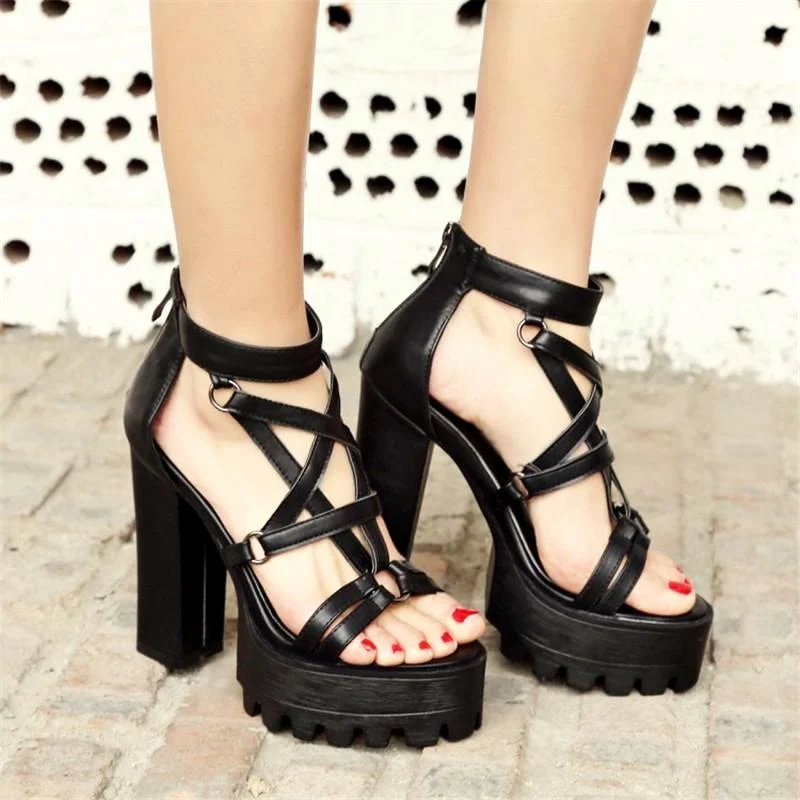
Pentagram platform sandals pair with fishnets and a babydoll dress or with shorts and a mesh top. Test them indoors first: sandal platforms offer less ankle support than boots.
How to Walk in Platforms Without Wobbling
Walking in platforms is learnable in an afternoon. The classic beginner mistake is taking long strides and landing hard on the heel, which tips the ankle outward. Shorten your stride by a third, land midfoot rather than stabbing the heel down, and roll through to the toe, knees soft.
Practice at home first: walk a hallway, turn both ways, and climb stairs holding the rail. On stairs, place the whole platform on each step, and come down sideways if the tread is narrow. Outdoors, step around cobbles, grates, and wet leaves rather than across them.
Ankle strength helps more than willpower: a few minutes of calf raises a day for two weeks makes a real difference. If your ankles roll easily, pick a boot shaft over a low shoe, and skip ultra-narrow platforms until your balance catches up.
Fit Rules That Prevent Blisters
Platform shoes fit differently from flat shoes because the foot cannot flex as freely. Buy for the widest part of your foot, not the length alone, and try both shoes on with the socks or tights you will actually wear. Your toes should not touch the front, and your heel should not lift with every step: heel lift causes friction, and friction causes blisters fast in a stiff platform.
Break platforms in gradually: wear them indoors for an hour, then two, then a short errand, before a full night out. Thick socks stretch the upper gently and protect hotspots. If one spot rubs, a gel pad there beats a whole-foot insole that changes your fit everywhere.
Watch two common buyer complaints. First, cheap soles can separate from the upper after months of daily wear, so check the join and re-glue early. Second, smooth soles slip on wet floors, so add grip pads or pick a treaded sole if your city rains often.
Choosing Your First Platform Height
Start at 2 inches if you have never worn platforms: it changes your silhouette without changing how you walk. Move to 3 inches once 2 feels boring, and treat anything over 4 inches as a statement piece for shorter outings.
Also weigh the shoe. Heavy platforms tire your legs on long days, and weight at the end of the leg feels heavier than the same weight in a bag. If a pair feels like a brick in the shop, it will feel worse after eight hours.
Keeping Platforms Looking Dark and New
Platform soles scuff first, at the toe and outer edge. Wipe them after each wear, and use black edge dressing to hide scuffs on dark soles. For faux leather uppers, wipe with a damp cloth and condition lightly a few times a year so the material does not crack at the flex points. Never machine wash platforms: heat warps soles and loosens glue.
Store platforms upright with shoe trees or rolled socks inside, and keep them out of direct sun, which fades black dye to brown over time. If a strap stretches, a cobbler can usually shorten it cheaply. A good pair only gets more comfortable as it molds to your feet.
Frequently Asked Questions
Are platform shoes comfortable for all-day wear?
Yes, if the pitch is low and the fit is right. A 2-inch platform often feels easier than a 2-inch stiletto, because it raises the front of the foot too. Break them in gradually and choose a lighter pair for long days.
Can beginners wear tall gothic platforms?
Start lower and build up. Begin with a 2-inch Chelsea platform, practice walking and stairs at home, then move taller once your balance feels automatic. Ankle-supporting boots make tall platforms easier, not harder, to control.
Do platform shoes damage your feet?
Poorly fitted platforms can cause blisters and ankle rolls, but well-fitted ones with a low pitch are no riskier than other heeled shoes. Rotate them with flats and stretch your calves.
The Bottom Line
Platform shoes earn their place in a goth wardrobe because they deliver height and a longer leg line without demanding ballerina balance. Start with a stable shape, learn the shorter stride, break them in indoors, and maintain the soles.