Gothic Theatre Night Outfits: Dark Elegance for the Opera
Wondering what to wear to the theatre as a goth? Match the venue, not the costume: rich fabrics like velvet, lace and satin, clean lines, one statement piece, and dark colours with a single jewel tone. This guide covers the dress code, a women’s look, a men’s look, shoes, and theatre etiquette.
The Theatre Dress Code, Decoded
Most theatres are more relaxed than their reputation suggests. The Metropolitan Opera in New York and the Royal Opera House in London have no official dress code. A few venues hold the line: Glyndebourne keeps black tie by tradition. Read the invitation, then dress one step above it. Three tiers cover most nights out. Opening nights, premieres and fundraising galas are black tie: floor-length gowns for women, a tuxedo or a formal tailcoat for men. Regular evening performances are cocktail or semi-formal: a polished dark outfit with one elegant touch. Matinees are the most relaxed tier. When in doubt, overdress slightly: at the theatre, too polished is rarely a problem.
Why Gothic Fits the Theatre So Well
The theatre was built for gothic style. Velvet, lace and satin are the fabrics formal dress codes already expect, and deep jewel tones like bordeaux, emerald and midnight are classics for evening wear. Let the drama come from the silhouette, not from a pile of accessories. One strong piece, clean lines, and the rest of the outfit steps back. A lace corset over a long black skirt, or an embroidered coat over a dark suit, reads as evening wear first and gothic second.
A Women’s Look: Bordeaux Lace Over Black
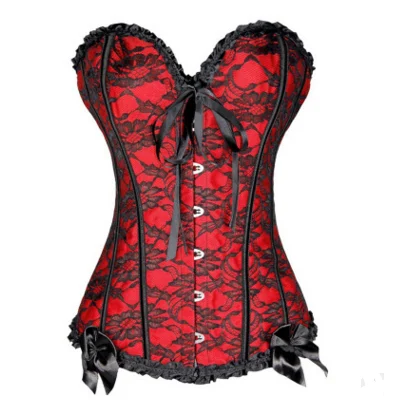
Start with colour. Black is always right at the theatre, but one deep jewel tone keeps an all-black outfit from looking flat. The Court Corset does that job in one piece: a bordeaux red, body-sculpting corset with a black floral lace overlay and satin bustier trim, a sweetheart neckline edged with ruffled lace, front ribbon lacing, and small black satin bows at the hem. Pair it with a long black skirt or tailored trousers, so it reads as an evening top, not a costume piece. Keep the rest quiet: a small dark clutch and one piece of jewellery. The corset is the statement; nothing else needs to compete.
A Men’s Look: The Victorian Tailcoat
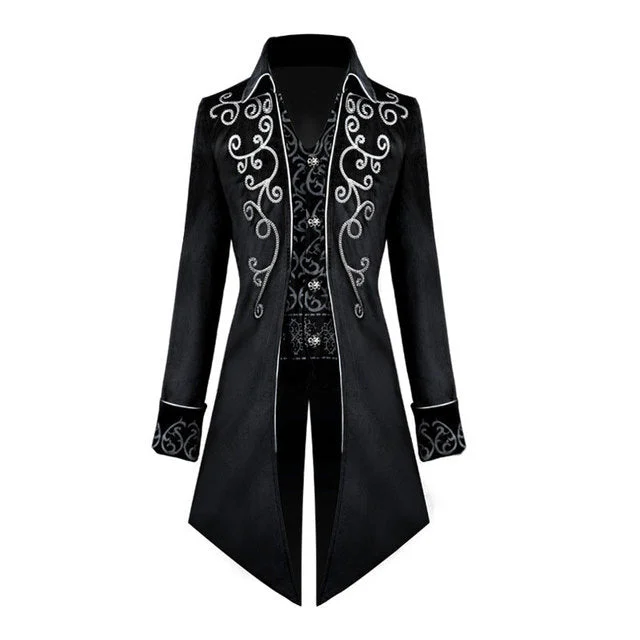
Men have the easier brief: a dark suit or a tuxedo is the expected answer. A tailcoat is the gothic way to meet that expectation without looking like everyone else. The Men’s Victorian Tailcoat is a limited-edition piece in a cotton and polyester blend, cut long with pointed tails, a high collar, white piping, and silver embroidered scrollwork across the chest and cuffs. Wear it over a black shirt and dark trousers with polished black shoes. The embroidery is the decoration: no chains, no pins, no extra hardware. Try the coat on with the shirt you plan to wear, and sit down in it. A tailcoat that pulls across the shoulders will bother you for three acts.
Shoes That Survive Three Acts
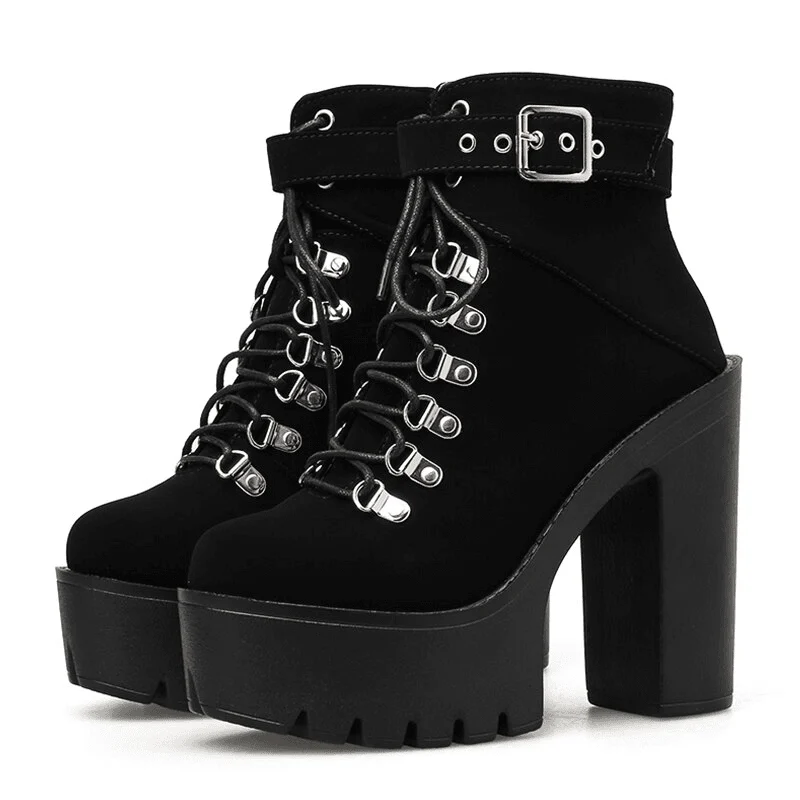
Theatre shoes work harder than they look: the walk, the stairs, two or three hours seated, then the interval crush at the bar. A block heel beats a stiletto here, because it spreads your weight and stays steady on marble floors and carpeted stairs. The Gothic Elegance High Heels are lace-up platform ankle boots in matte black, with a chunky block heel, a lug platform sole, silver D-ring eyelets and an ankle buckle strap. Laced snugly, the ankle support does real work on stairs. Break them in at home first, with the socks you will wear on the night. For men, polished black shoes are the safe choice; leave heavy platforms for the club.
Accessories: One Statement Piece
At a concert, five statement pieces feel right; at the theatre, one is enough. Pick one piece that matches your outfit: a velvet choker with a lace corset, a single silver skull ring with a tailcoat, or a dark clutch. Then stop. The people sitting behind you will thank you for skipping the tall hat, and the people beside you will thank you for skipping anything that jingles. Keep perfume light: an auditorium is a sealed room, and a heavy scent reaches the whole row.
What to Leave at Home
Some gothic favourites do not belong in a theatre seat. A tall top hat blocks the row behind you, so check it with your coat. Spiked bracelets and studded straps snag velvet seat fabric and your neighbour’s sleeve. Long chains swing and clink every time you shift in your seat. Heavy platform boots clomp on wooden floors during the quietest scene. Choose pieces that respect the room. A corset, a tailcoat and good boots are already a statement.
The Practical Bits: Coats, Seats and the Interval
Arrive early enough to use the cloakroom: a long coat over your arm for two hours is a nuisance. Auditoriums run cold, especially older ones, so bring a light layer for your shoulders even in summer. Sit in your outfit at home first: a boned corset needs a few minutes to settle, and a tailcoat needs a chair that lets the tails fall behind you. At the interval, order at the bar before the rush: the crush is the one moment your outfit will be tested by elbows.
Frequently Asked Questions
Can you wear all black to the theatre?
Yes. Black is the safest colour in a theatre audience, and the base of almost every formal dress code. The risk is not the colour but the texture: all black in a single flat fabric can read as a uniform or a costume. Mix matte and shine instead, and add one deep jewel tone such as bordeaux.
Do I need a ball gown for the opera?
No, unless the invitation says black tie or it is an opening-night gala. Most modern opera houses have no official dress code, and a polished dark outfit is welcome at a regular evening performance. Save the floor-length gown for galas and premieres, and check the venue’s own guidance before you go.
Can a man wear a tailcoat instead of a tuxedo?
At most theatres, yes. A tailcoat is formal evening wear with a long history on stage, and in a dark colour with clean lines it meets the same standard as a tuxedo. For a strict black-tie invitation, a tuxedo is still the safer choice. When the invitation is silent, a tailcoat over dark trousers is a confident middle ground.
A night at the theatre is the rare occasion where gothic style and the dress code want the same things: rich fabric, clean lines, one dramatic silhouette. Build the outfit around one statement piece, keep the accessories quiet, and leave the hardware at home. The Court Corset, the Men’s Victorian Tailcoat and the Gothic Elegance High Heels are three starting points that already understand the assignment.