Gothic Winter Boots: How to Stay Warm, Dry & Dark All Winter
Winter is hard on a gothic wardrobe: cold feet, wet slush, salt stains, and boots that look great in October but fail by January. The fix is not the heaviest boot you can find — it is the right warmth, waterproofing, grip, and fit. This guide covers all four, plus three dark boots for a winter rotation.
What Actually Makes a Boot a Winter Boot?
Plenty of boots look winter-ready and are not. A true winter boot earns the title in four areas — and these are the same four complaints goth shoppers repeat when a pair fails: cold toes, soaked feet, slipping on ice, and a fit that goes wrong once thick socks enter the picture.
Warmth comes from insulation and from trapped air, not from weight alone. A lined shaft and a roomy toe box will keep you warmer than a tight, heavy boot that cuts off circulation.
Waterproofing matters more than most buyers expect. Winter wet is not rain — it is slush, puddles, and snow that melts the moment you step indoors. Water that gets in through seams or unsealed leather stays there, and wet feet get cold fast.
Grip is about the outsole. Deep, widely spaced lugs shed snow instead of packing it flat, and a softer rubber compound stays flexible in the cold, where hard soles turn slick.
Height is the quiet one. A taller shaft keeps snow and slush out and adds ankle support on uneven, icy ground — one reason combat and mid-calf styles dominate winter goth outfits.
Warmth Without the Bulk
The most common winter-boot mistake is buying a size up and stuffing it with the thickest socks you own. Oversized boots let your foot slide, which causes blisters and actually makes feet colder, because the foot has to work harder and the air inside moves around too much.
Instead, try this order. First, choose boots that fit with the socks you will actually wear — bring those socks when you try boots on. Second, pick one good pair of merino or wool-blend socks over two thin pairs, which bunch and create pressure points. Third, if you still need more warmth, add a thin insole rather than a second sock; insoles add warmth without changing the fit as much, and are easy to swap out and dry.
Do not ignore circulation either. Laces done up too tight, or a shaft gripping the calf hard, will make feet feel colder no matter how warm the boot claims to be. If your toes tingle, loosen up before you blame the boot.
Staying Dry: Waterproofing Basics
Most gothic boots are not sold as fully waterproof, so treat waterproofing as maintenance, not a one-time feature. A spray-on waterproofer or wax, applied to clean, dry boots before the first snow and reapplied every few weeks, makes a real difference — especially on seams and stitching, where water usually enters first.
Watch the weak points: the welt where sole meets upper, the tongue gusset, and decorative hardware holes. If water gets in, it is almost always one of these, not the leather itself. Reproof after a soaking instead of waiting for the season to end.
One more habit that saves boots: never dry soaked boots on a radiator or with direct heat. Heat cracks leather and warps soles. Stuff them with newspaper, swap it once damp, and let them dry at room temperature — slower, but the boots survive this winter and the next.
Grip and Safety on Ice
No fashion boot grips black ice perfectly, so winter safety is part gear, part technique. Check the tread before you buy: deep, spaced-apart lugs clear snow as you walk, while smooth or shallow soles pack snow flat and slide. If your favourite pair has a worn-smooth sole, a cobbler can often add a grippy rubber half-sole far cheaper than a new pair.
On ice itself, shorten your stride, keep your weight over your feet, and avoid rushing. If you regularly walk ungritted paths, consider removable ice grips for the worst days rather than retiring your favourite boots until spring.
Three Gothic Boots for a Winter Rotation
One pair cannot do everything, so a winter rotation beats a single hero boot. These three dark styles cover the main jobs: statement, everyday rugged, and versatile all-rounder.
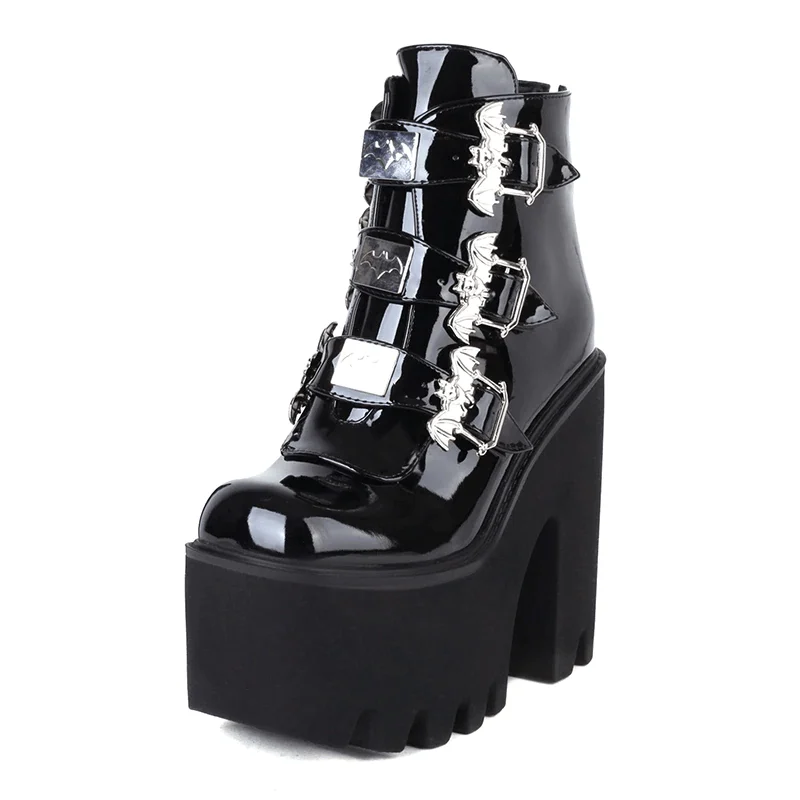
Coffin Boots: The Statement Pair
Coffin Boots bring the drama — a bold silhouette that anchors an all-black winter outfit without needing much else. Wear them with a long coat and let the boots carry the look, saving them for drier days when you want impact over mileage.
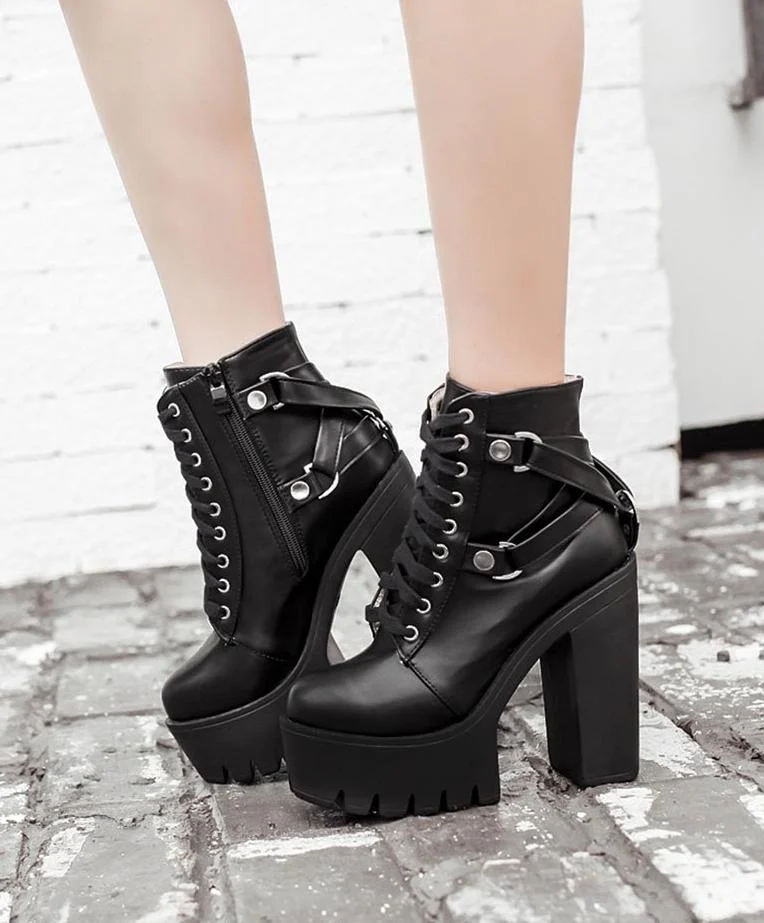
Militant Goth Combat Boots: The Everyday Workhorse
Militant Goth Combat Boots are the pair for daily winter wear: a combat profile and a height that keeps slush out. Pair them with thick socks, waterproof them early in the season, and they will handle commuting, gigs, and long cold walks alike.
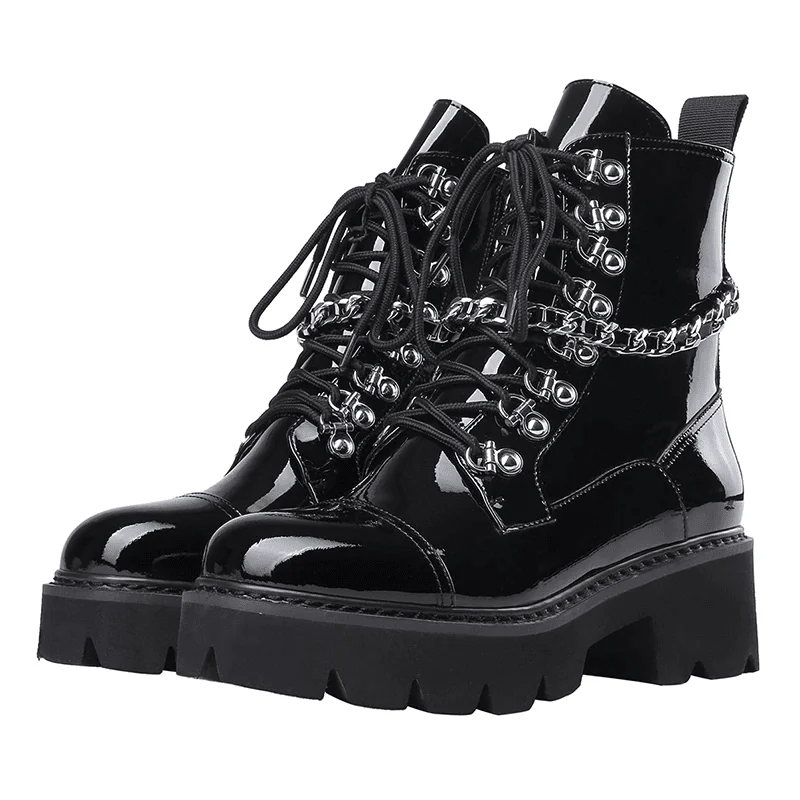
Eternal Darkness Boots: The Versatile All-Rounder
Eternal Darkness Boots sit between the two — dark and distinctive, but easy to wear with everything from skinny jeans to long skirts. A good pick for both everyday winter outfits and nights out.
Winter Styling: Boots with Coats and Layers
Winter goth styling is mostly about proportion. Taller boots balance long coats and layered outfits, while a shorter shaft works better with cropped jackets and wide-leg trousers. A chunky boot keeps a long, heavy coat from looking top-heavy; a sleeker boot keeps slim layers clean.
Colour is easy in winter: black on black works when textures differ. Pair matte leather boots with a wool or faux-fur coat, or glossy boots with a matte outfit, and the all-black look stays interesting instead of flattening into one dark block.
Winter Boot Care: Salt, Slush, and Storage
Road salt is the quiet killer of winter boots: left alone, it dries into white marks and damages leather and stitching. Wipe boots down after salty walks, and treat stubborn marks with a water-and-vinegar cloth before conditioning.
Between wears, keep boots upright and stuffed so the shaft holds its shape, and rotate pairs when you can — a day of rest lets boots dry fully inside and prevents the damp smell of daily wear. At season’s end, clean and condition them before storing, never in a sealed plastic bag, which traps moisture and invites mould.
FAQ: Gothic Winter Boots
Are platform boots warm enough for winter?
Platform soles add distance from cold ground, which helps, but warmth depends more on lining, fit, and socks than on sole height. A lined platform with room for wool socks beats an unlined one, however tall.
How do I stop my boots getting ruined by snow and salt?
Waterproof before the season, wipe off salt after every salty walk, dry at room temperature — never on a radiator — and condition regularly. Most winter damage comes from salt left sitting, not from one snowfall.
Should I size up for winter boots?
Only if you are fitting them with your actual winter socks. Buy for the socks you will wear, not for an imaginary extra layer, and use insoles for fine-tuning. A boot that fits in the shop with thin socks will pinch once thick socks go in.