Medieval Goth Style Guide: How to Dress Medieval Goth
Medieval goth blends the silhouettes of the Middle Ages with modern gothic style: long cloaks, tailored tailcoats, corset bodices, and deep jewel tones. This guide covers the core pieces, colors, fabrics, and outfit formulas you need to build a medieval goth look for Renaissance faires, LARP, concerts, or everyday wear.
What Is Medieval Goth?
Medieval goth is a branch of gothic fashion that borrows its shapes from medieval and Renaissance Europe: floor-length cloaks, lace-up bodices, bell sleeves, and heavy fabrics like velvet and brocade. It leans on drape, layers, and a dark-fantasy mood, somewhere between a castle hall and a forest at midnight.
The look grew out of Renaissance faire and reenactment communities, where people learned to wear period-inspired clothing for a full day, not just for a photo. That practical history is why it works: it was built to be worn and walked in, not just looked at. Today it shows up at faires, LARP events, and goth clubs.
The Core Pieces of a Medieval Goth Wardrobe
You do not need a full costume trunk. Medieval goth is built from a few anchor pieces, and one good outer layer does most of the work.
1. A Long Cloak or Hooded Coat
The cloak is the single most recognizable medieval goth piece. A long hooded coat gives you the same drama with more structure: a hood that frames the face, a button front, and a hem that moves when you walk. The Medieval Hooded Coat is a good example: a black, floor-skimming coat with a deep hood, a front button closure, and leather-look bands on the sleeves.
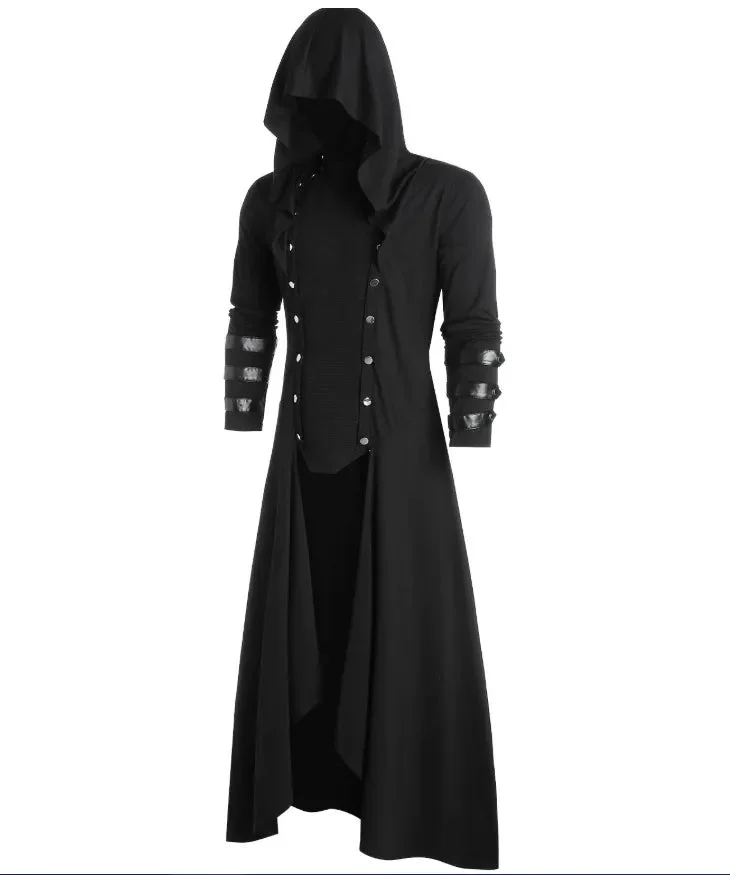
Fit tip: the hem should clear the ground by a couple of inches, and size for shoulder fit first. A cloak that pulls across the shoulders looks wrong at any length.
2. A Tailcoat
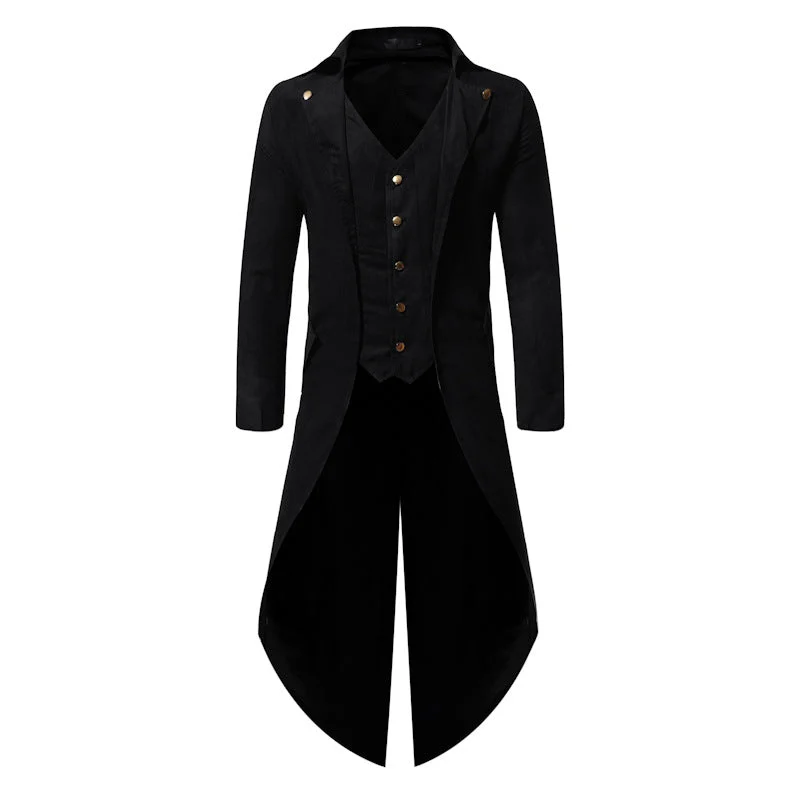
When you want structure instead of flow, reach for a tailcoat. The long split tails and fitted waist read as formal and a little severe, which is exactly the medieval goth mood for evening events. The Medieval Gothic Tailcoat pairs a black tailcoat with a matching buttoned vest and gold-tone buttons, so the layers are built in. Wear it with dark trousers and boots.
3. A Corset Bodice or Laced Top
Corsets are central to the medieval goth silhouette because they give flowing outfits a defined waist. Over a dress or long skirt, a corset bodice adds structure; over a blouse and trousers, it turns a simple base into a period look. If you are new to corsets, start with a lace-up style you can adjust yourself.
4. A Hooded Cowl
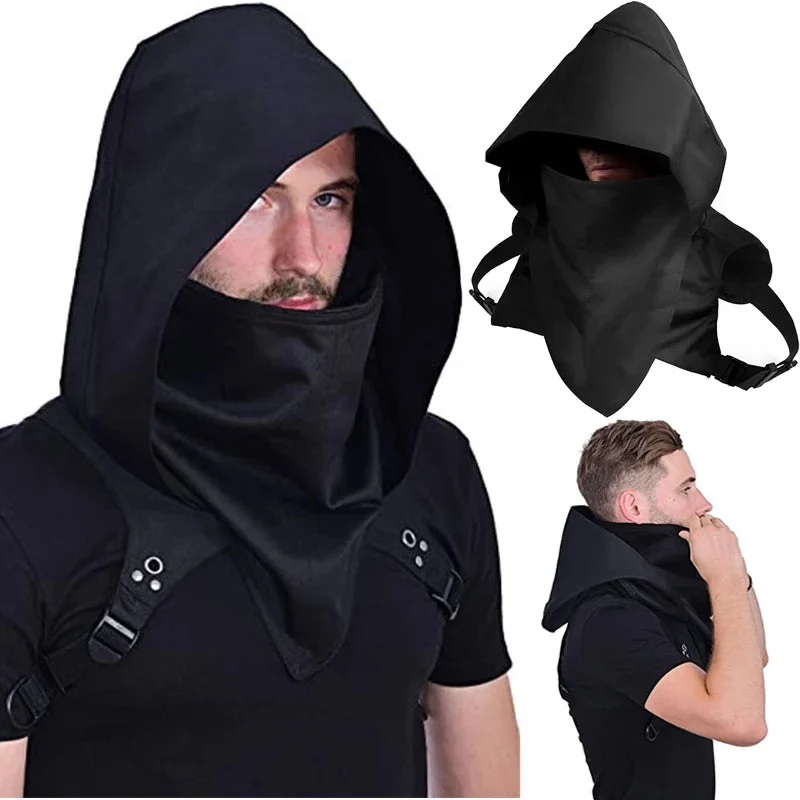
Small pieces do a lot of work in this style. A hooded cowl adds a rogue edge without the weight of a full cloak, and it layers easily over jackets and coats. The hooded cowl listed as the Men’s Medieval Vintage Hat is a good example: a black cowl with a face-covering panel and buckle straps at the shoulders.
5. Boots, Belts, and Pouches
Finish the silhouette from the ground up. Knee-high boots in black leather or faux leather ground the long lines of cloaks and tailcoats, and a wide leather belt with an ornate buckle defines the waist and gives you somewhere to hang a pouch.
Medieval Goth Colors and Fabrics
Black is the foundation, but medieval goth is one of the few goth styles where color does real work. Deep burgundy, forest green, dark purple, and royal blue are the classic palette, and they look best in heavy fabrics that hold a drape: velvet, brocade, and wool.
Fabric choice matters most at summer faires, where layers and heat collide. Cotton and linen breathe and are period-plausible, so a lace-up cotton shirt under a cloak keeps you cooler than a synthetic one.
Three Medieval Goth Outfit Formulas
Start from one of these formulas and change a single piece at a time.
The Faire-Ready Look
A hooded coat over a lace-up shirt and dark trousers, knee-high boots, a belt with a pouch, and the hooded cowl for sun and dust. Everything is comfortable to walk in for hours.
The Dark Noble
A tailcoat and matching vest over a dark shirt, slim trousers, and polished boots. Add one metal accent, a ring or a chain. The restraint is what makes it read as noble rather than costume.
Everyday Medieval Goth
One anchor piece, modern everything else. A hooded coat over jeans and boots, or a hooded cowl over a black jacket, works for a concert or a night out. Keep the rest plain so the medieval piece is the statement.
Where to Wear Medieval Goth
Renaissance faires are the natural home of the look: cloaks, tailcoats, and cowls all belong there, and half the crowd is dressed the same way. LARP events are the second home, where the same pieces double as practical kit. Beyond that, medieval goth travels well to goth clubs, concerts, and photoshoots.
One honest note: a full layered outfit is warm, so plan for shade and water at summer faires.
Medieval Goth vs. Victorian Goth vs. Cosplay
These three get mixed up, but they are different projects. Victorian goth is structured and urban: bustles, high collars, lace, and tailoring from the 1800s. Medieval goth is looser and older: flowing lines, hoods, cloaks, and fabrics from the Middle Ages. Cosplay, by contrast, recreates one specific character. Medieval goth is inspired by an era, not a character, so there is no single right version.
Buying and Fitting Tips
Buy the anchor piece first. A cloak or tailcoat sets the whole outfit. Check the length before you buy: floor-length looks dramatic but trips on uneven faire ground, so a hem that clears the ground by a few inches is practical.
Check how the hood sits: a deep hood should frame your face, not swallow it. If you buy online, measure yourself and compare against the size chart rather than guessing from your usual size, because period-style cuts often run differently from modern ones.
Medieval Goth FAQ
Is medieval goth the same as cosplay?
No. Cosplay recreates a specific character. Medieval goth borrows silhouettes, fabrics, and colors from the Middle Ages and mixes them with modern goth style, without playing a character.
Can I wear medieval goth every day?
Yes, if you keep it to one anchor piece. A hooded coat over jeans, or a tailcoat over a turtleneck, reads as dark fashion rather than costume. Save full layered outfits for faires, LARP, and events.
What should I wear to my first Renaissance faire?
Start simple: a lace-up shirt, dark trousers, comfortable boots, and one anchor piece such as a hooded coat or cloak. Add a belt with a pouch for your phone and keys, and bring water.
Medieval goth is one of the most forgiving goth styles to start: one cloak or tailcoat, a dark base, and a jewel-tone accent are enough. Build from the silhouette outward and let the look grow with each event.