Visual Kei Style Guide: How to Dress Visual Kei
Visual kei is Japan’s theatrical rock fashion: dramatic hair, bold makeup and layered black outfits that grew out of the 1980s underground band scene. This guide explains what visual kei is, the five substyles, the three-part outfit formula, three ready outfits and the mistakes that turn a look into a costume.
What Is Visual Kei?
Visual kei, short for visual style, is a Japanese music-centered subculture where how a band looks matters as much as how it sounds. It grew out of Japan’s underground rock scene in the 1980s, led by bands like X Japan, BUCK-TICK, DEAD END and D’ERLANGER. The clothes, hair and makeup are part of the performance.
That music-first origin is what separates visual kei from other goth styles. Hair is styled like part of the outfit, makeup is deliberate, and the shoes finish the silhouette. Start with the music and pick two or three bands you like as reference points.
The Three-Part Formula: Shape, Palette, Detail
Every strong visual kei outfit follows the same formula: one dramatic shape, a tight palette, and two or three sharp details.
1. One Dramatic Shape
Choose one area to make dramatic and keep the rest quiet: a long coat, a full skirt, wide sleeves, a cropped jacket over high-waisted trousers, or tall boots. One statement silhouette is enough.
2. A Tight Palette
Black is the classic anchor, but it is not the only option. Try black with white and one accent like deep red, or silver and grey with a single sharp black layer. Limit yourself to two or three main colors.
3. Two or Three Sharp Details
This is where the personality lives: a studded belt, a chain, lace trim, a ribbon, buckles, layered necklaces. Pick two or three. If every inch has a detail, nothing stands out.
Five Visual Kei Substyles
Visual kei is not one outfit. It is a family of looks, each branch with its own colors, shapes and attitude.
Kote Kei: Loud and Dramatic
Kote kei is the original wave: big teased hair, heavy makeup, layered black with lace and ruffles, tall boots. It is the most theatrical branch.
Oshare Kei: Bright and Playful
Oshare kei flips the palette: bright colors, playful prints and cheerful styling. The shapes stay dramatic, but the mood is fun instead of dark.
Angura Kei: Dark and Theatrical
Angura kei means underground style. It leans dark, vintage and theatrical, with a mood closer to old Japanese theatre than to a rock stage.
Nagoya Kei: Sharp Black and White
Nagoya kei is sharp and dark, usually built around black and white with strict lines. It is the most minimal branch: clean silhouettes, strong contrast, very little decoration.
Tanbi Kei: European and Romantic
Tanbi kei takes its cues from European historical dress: high collars, velvet, lace, ornate jackets, ruffled shirts and long skirts, with corset-style details and dramatic boots. Bands like MALICE MIZER and Versailles made this branch famous.
Three Pieces That Carry the Look
You do not need a stage costume to dress visual kei. Three strong pieces do most of the work.
A Statement Jacket With One Bold Print
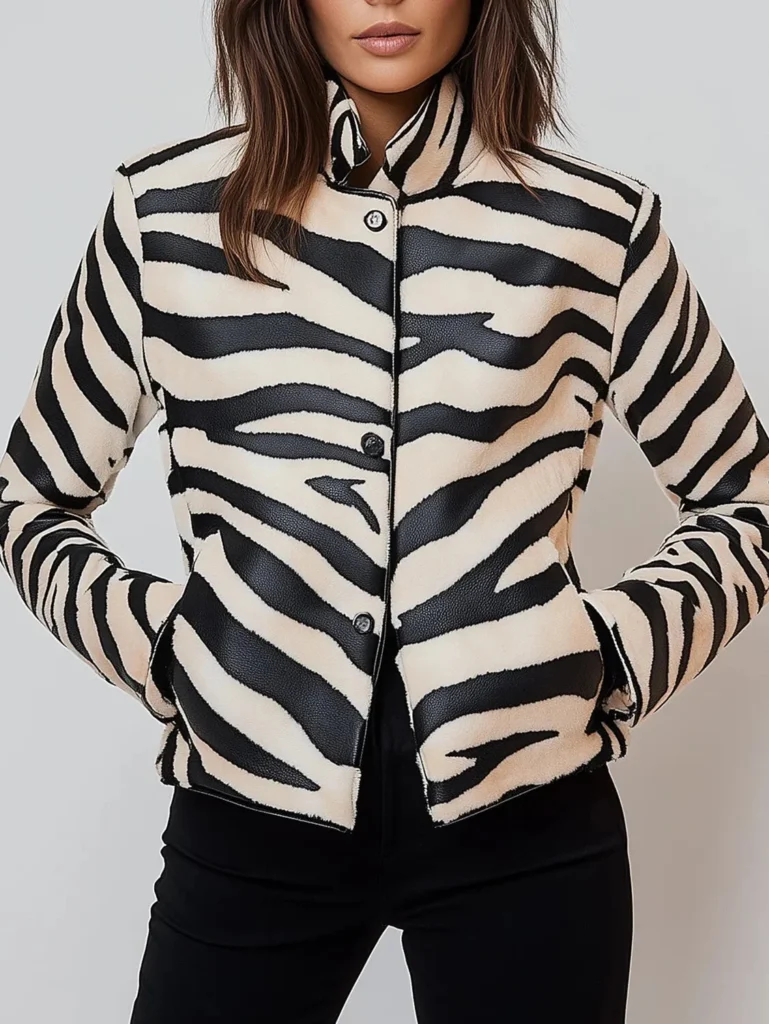
The dramatic shape in a visual kei outfit is often the jacket. The Zebra Stripe Faux Shearling Statement Jacket shows why: an allover cream and black zebra stripe in plush faux shearling, with a stand collar and a cropped cut. Worn over plain black trousers, the print does the talking.
A Ruffled Mesh Layer for Texture
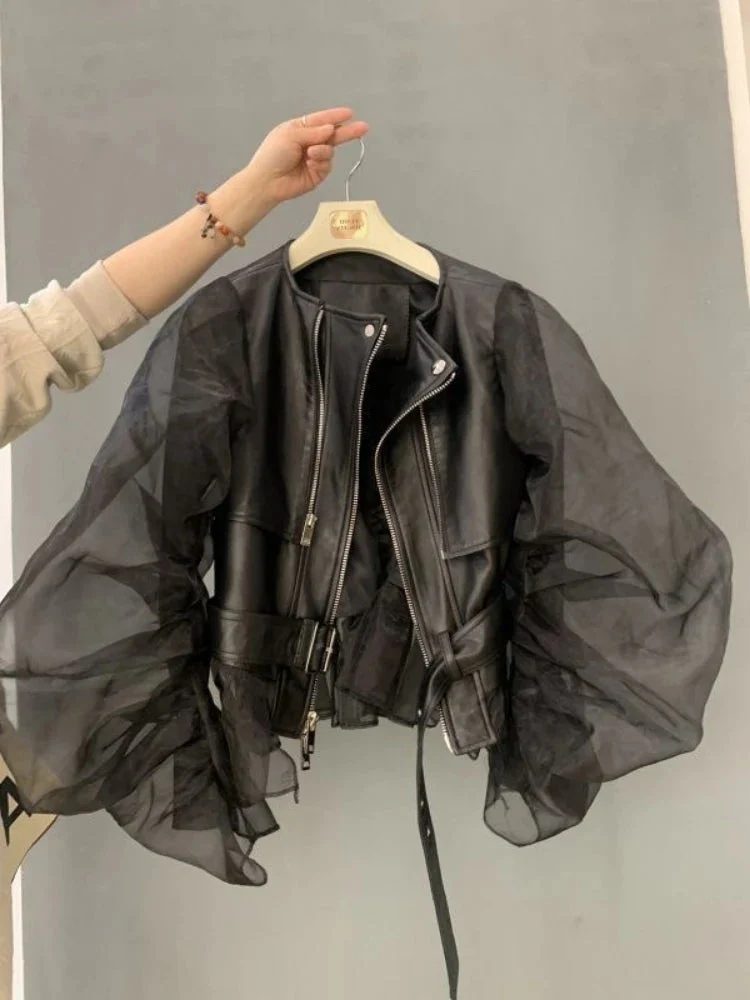
Visual kei loves texture, and mesh is the fastest way to add it without adding bulk. The Women’s Ruffled Mesh Jacket pairs a black faux-leather biker body with sheer mesh ruffled puff sleeves, an asymmetric zip and a belted waist. The ruffles give it a romantic, tanbi-kei feeling, while the leather body keeps it sharp.
Platform Boots That Anchor the Silhouette
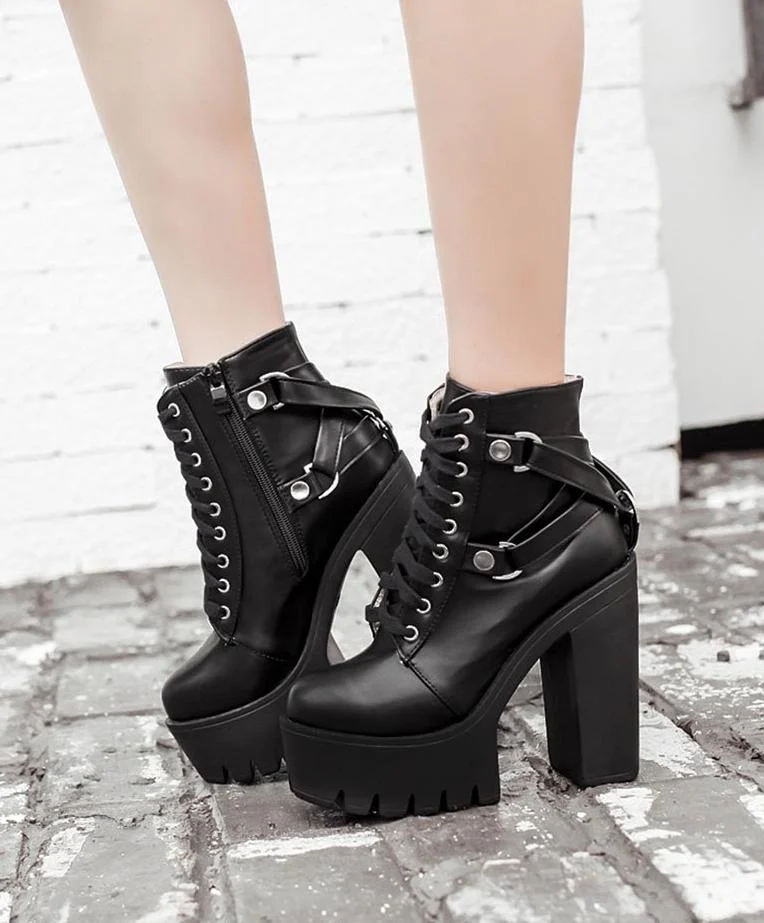
Boots anchor the whole look. Their heavy shape balances dramatic tops and wide-leg trousers, and they add the height flat shoes cannot. The Militant Goth Combat Boots are built exactly this way: chunky platform heels on a corrugated non-slip sole, a lace-up front with silver eyelets, a side zip, and two buckle straps crossing over the back of the ankle.
Hair and Makeup You Can Actually Wear
Hair is the part of visual kei that intimidates beginners most, and it is also the part you can scale down the furthest. Classic visual kei hair is layered, textured and shaped with lots of lift, sometimes in unusual colors. For everyday wear, one expressive element is enough: a layered cut with volume at the crown, a streak of color, or a sharp asymmetric fringe. Makeup follows the same logic. Heavy eyeliner, smoky eyes, defined brows and dark lipstick are all common on stage. For a wearable version, start with dark eyeshadow and eyeliner.
Three Ready Visual Kei Outfits
Everyday: Graphic Jacket and Platforms
Black slim trousers, a plain black tee, the zebra stripe statement jacket and the Militant Goth platform boots. Add smoky eyeliner and one silver chain.
Night Out: Ruffles, Mesh and Heavy Boots
A black slip skirt or slim trousers, the ruffled mesh jacket over a black cami, and the platform boots. Layered necklaces, one ring, dark lipstick.
Cold Weather: Long Coat Over Layers
Visual kei handles winter well because layering is already part of the look. Start with a black thermal, add the mesh jacket, then a long wool-style coat, dark jeans and platform boots. A wide-brim hat in your accent color finishes the outfit.
Five Mistakes That Flatten the Look
Visual kei fails when it stops being edited. First, wearing every detail at once: lace, ruffles, chains, buckles and spikes in a single outfit reads as a costume. Pick two or three details per outfit. Second, copying a band look piece for piece: stage costumes are designed to be seen from the back row. Third, ignoring comfort: if you cannot walk in the boots, you will not wear the outfit twice. Fourth, mixing branches without a plan: a bright oshare print with a dark angura coat pulls in two directions. Fifth, forgetting hair and makeup: visual kei is a whole look, and a dramatic outfit with untouched hair looks unfinished.
Frequently Asked Questions
Is visual kei the same as goth?
No, though they overlap. Visual kei grew out of Japanese rock music, and its looks range from bright oshare kei to dark tanbi kei. Goth grew out of post-punk and stays closer to black. A tanbi kei outfit and a romantic goth outfit can look similar, but their roots are different.
Can you wear visual kei every day?
Yes. Start with the beginner outfit: black trousers, a graphic top, a dark jacket with an unusual cut, boots and one distinctive accessory. Add a layered hairstyle or smoky eyeliner, and the look reads as visual kei.
Do you need expensive clothes to dress visual kei?
No. Most visual kei-inspired outfits start from basics you already own: black jeans, a fitted band tee, a dark jacket and boots. The style is about shape, palette and detail, not price. One statement jacket or one pair of platform boots can turn a plain black base into a finished look.