How to Wear Gothic Bracelets: Stacking, Sizing & Styling Guide
How do you wear gothic bracelets without looking overdone? Pick one lead bracelet, support it with lighter pieces in odd numbers (3 or 5), and keep the stack on one wrist. Mix textures — leather with metal — instead of matching sets, size cuffs so they cannot slide off, and let the wrist lead while necklaces stay quiet.
The One-Lead Rule: Stacking Without the Clutter
The single most repeated piece of advice in gothic styling communities is deceptively simple: choose one lead bracelet and let everything else support it. A wide skull cuff, a heavy chain, or a spiked leather wrap becomes the focal point; thinner chains, slim leather cords, and bead strands fill out the stack around it. This visual hierarchy is what separates a styled look from costume jewelry.
Stacking fails when every piece fights for attention: two heavy cuffs clang together, scratch each other, and read as clutter. One heavy piece plus two or three lighter ones reads as intentional — one frontman, a rhythm section behind.
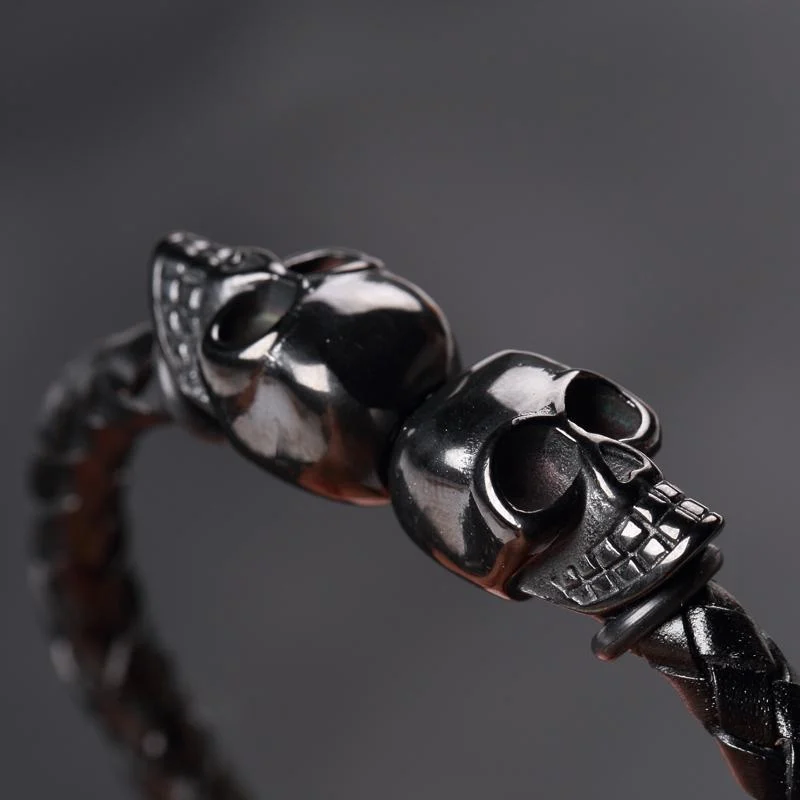
Mix Textures, Not Matches
Leather wraps and thin chain bracelets stack the cleanest because the contrast creates visual depth. A braided leather skull band next to a slim steel chain looks deliberate; two identical braided bands next to each other looks like a bulk buy. The black leather skull bracelet works especially well as a stack anchor — the braided texture plays against smooth metals without competing with them.
The Odd-Number Trick
Styling guides consistently recommend odd numbers for a relaxed look: 3 bracelets for daily wear (a chunky piece in the middle, slimmer ones on either side), 5 for a night out, and up to 7 only for statement events. The ceiling test is physical — once the stack covers more than the lower third of your forearm, it reads heavy. If you cannot comfortably bend your wrist or type, you have overstacked regardless of the count.
How Many Bracelets Is Too Many?
Visual weight matters more than count: three lightweight chains can look balanced while two massive cuffs look crowded. Ask three questions: does one piece clearly lead, is there visible wrist between pieces, and does it still feel comfortable after ten minutes? A stack that pinches or clanks against your desk will come off by noon.
One Wrist or Two?
One focused wrist almost always looks cleaner than two equally heavy stacks — asymmetry is a strength in gothic styling. If you want both wrists dressed, make one side visibly lighter. Most people stack on the non-dominant arm so writing and typing stay unobstructed.
Coordinate With Your Other Jewelry
One zone should lead. If your necklace is heavy, keep the wrist stack minimal; if the wrist is your focal point, the necklace goes delicate or disappears. The same logic applies to rings — a full hand of skull rings plus a stacked wrist is a lot of metal in one square foot. See our ring styling guide and necklace layering guide for the full breakdown.
Leather vs. Metal: Choosing Your Base Material
Leather — braided, wrapped, or riveted — is the entry point for most goth wrists: lightweight, forgiving on sizing, quiet, and it ages beautifully as it darkens and softens. Metal brings the shine and the weight; it photographs better and reads more formal, but demands more attention to fit.
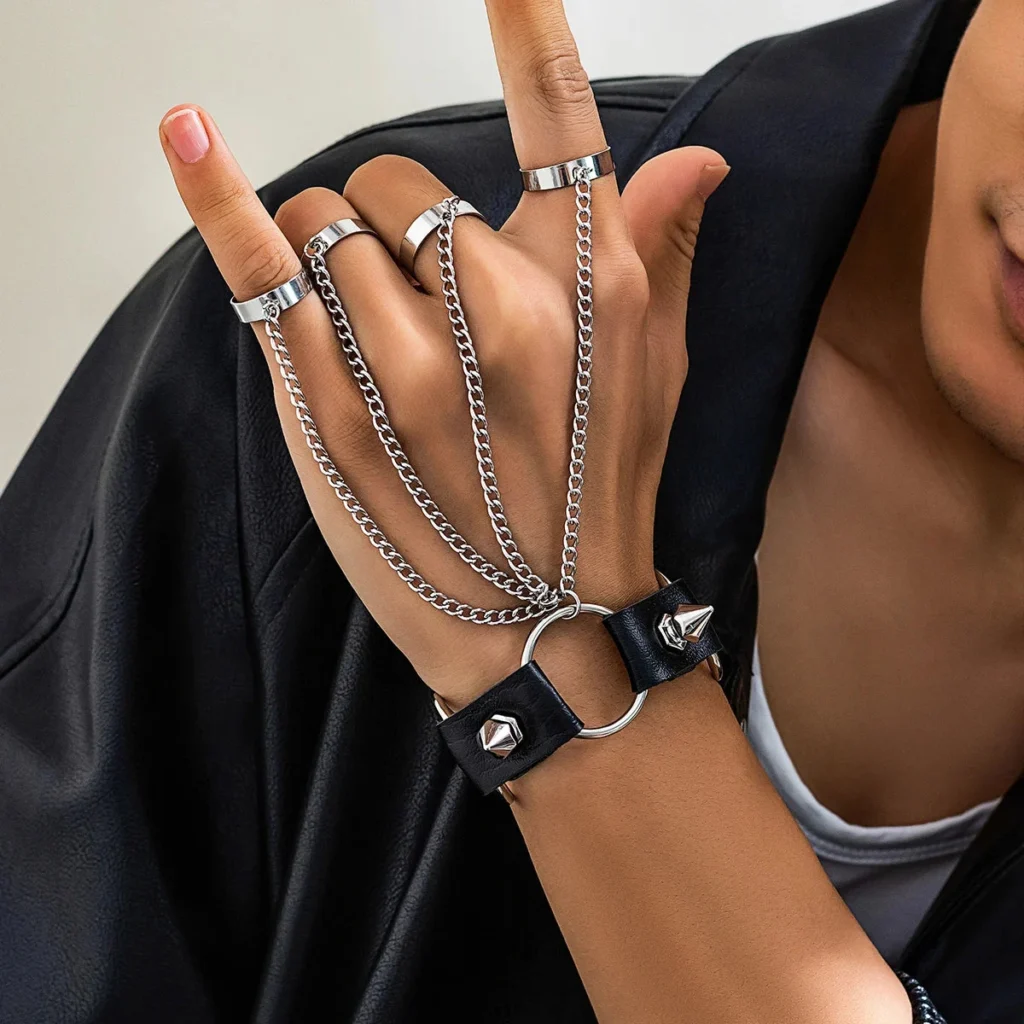
A practical starter combination is one leather piece and one metal piece: the two materials balance each other and give you a base to build on. The gothic chain bracelet, with its riveted leather-and-chain construction, is effectively this combination in a single piece — black PU leather links with silver-toned hardware that bridges both camps.
Men’s Styling Notes
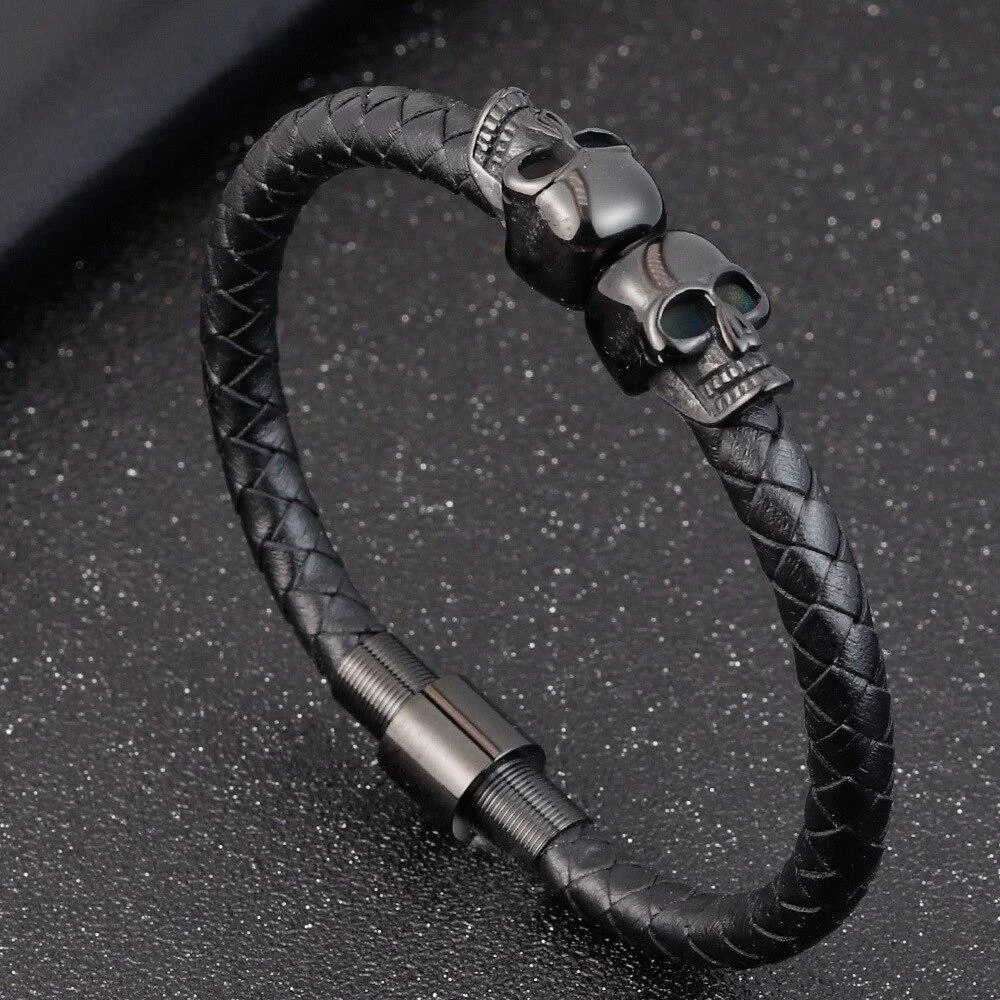
For men, the stack usually replaces the watch or works around it: treat a watch as the statement piece and layer lighter bracelets around it, or move the stack to the opposite wrist. Wider bands (10mm+) suit larger wrists. The men’s skull bracelet in braided black leather with steel hardware is the classic template — dark, low-shine, and substantial enough to anchor a stack alone.
Sizing: The Snug-but-Sliding Test
The most common bracelet sizing complaint is not that pieces run small — it is that they slide off. The correct fit is snug but sliding: it should move a centimeter or two along your forearm but never reach your hand when your arm hangs down. Measure just below the wrist bone and add 1–2 cm for comfort.
Cuffs, Bangles, and Snap Closures
Open cuffs are adjustable — squeeze or widen the ends — but keep the gap narrow enough that the cuff cannot slide over your wrist bone. Test it: flick your wrist downward sharply; if it flies off, tighten it. Bangles with no opening must fit over your hand, so expect them to slide. Leather wraps with snap closures are the most forgiving — use the middle snap so you can adjust in either direction.
Sleeves and Jackets
A biker-community rule worth repeating: push the jacket sleeve up past the bracelet rather than forcing jewelry underneath — cramming a spiked cuff under a tight sleeve damages both. On heavy-coat days, skip wide cuffs; a slim leather wrap survives under sleeves that a cuff will not.
Matching Bracelets to the Occasion
Match your stack to your outfit’s energy. A bold stack works for concerts and nights out; under office lighting, scale back to one slim leather band or a single chain — the silhouette stays dark without the noise. For events, build up: 5 pieces, mixed textures, one clear lead. The simpler the base outfit, the more room wrist detail has to look intentional.
Care: Keeping Your Stack Sharp
Bracelets rubbing together develop micro-scratches — silver on silver is fine, but stainless steel will mark softer metals, so store pieces separately rather than in one tangled pile. Clean leather with a dry cloth (never soak it), wipe steel with a soft dry cloth, and treat silver with a silver cloth when it tarnishes. Tarnish is normal oxidation, not damage.
Skin note: green or black staining comes from copper alloys oxidizing against sweat — stainless steel and quality plating avoid it entirely. If nickel bothers your skin, our sensitive-skin jewelry guide covers hypoallergenic metals in detail.
FAQ
How many gothic bracelets should I wear at once?
Three for daily wear, five for a night out, seven at most. Judge by visual weight and comfort — if the stack covers more than the lower third of your forearm, remove a piece.
Should I wear bracelets on both wrists?
Usually one wrist leads: a full stack on the non-dominant wrist plus a single slim piece on the other looks balanced, while two equally heavy stacks look cluttered.
Do gothic bracelets turn skin green?
Only copper-alloy pieces do — the green is copper oxidation, harmless but annoying. Stainless steel, titanium, and quality plating do not cause it.