Gothic Jewelry for Sensitive Skin: Hypoallergenic Metals That Won’t Itch, Rash, or Turn You Green
If gothic jewelry makes your skin itch, rash, or turn green, the metal — not you — is the problem. Nickel allergy affects roughly one in five people, and cheap copper or brass alloys stain skin in sweat. The fix: choose 316L stainless steel pieces, read metal listings carefully, and use barrier tricks for jewelry you already own.
Why Gothic Jewelry Bothers So Many People’s Skin
Goth style lives close to the skin. Chokers hug the neck, rings sit on fingers all day, and pendants rest against the chest where sweat collects. That constant contact is why metal sensitivity shows up fast — a rash shaped like your necklace, or a green ring around your finger by evening.
The usual culprits are well documented. Nickel is the most common contact allergen in jewelry; dermatology estimates put nickel sensitivity at around 18–20% of the general population, and it is the top cause of the itchy, blistered rash called allergic contact dermatitis. Copper and brass are the green-stain offenders: copper ions oxidize in sweat and deposit a greenish tint on the skin. And most budget gothic pieces are made from unlisted “mystery alloys” — zinc, copper, and nickel mixes with a thin plating on top. Once that plating wears through from friction and sweat, the reactive base metal is in direct contact with your skin.
Community threads repeat the same story: a choker that left a red ring after one wear, a ring that turned a finger green at a summer festival. The answer is not giving up dark jewelry — it is choosing the right metal.
The Safe-Metal Shortlist for Sensitive Skin
316L stainless steel: the goth standard
For sensitive skin, 316L stainless steel is the professional benchmark. It is the same grade used for body piercings and surgical instruments, and it is engineered to stay neutral against the body. The chromium in the alloy forms a self-healing oxide layer that blocks corrosion, so metal ions do not leach out and react with sweat the way copper or nickel alloys do.
Practically, this means: no green skin, rare nickel reactions because the nickel stays locked in the metal lattice, and no tarnishing from daily wear. It is also affordable and heavy enough to give statement pieces real presence.
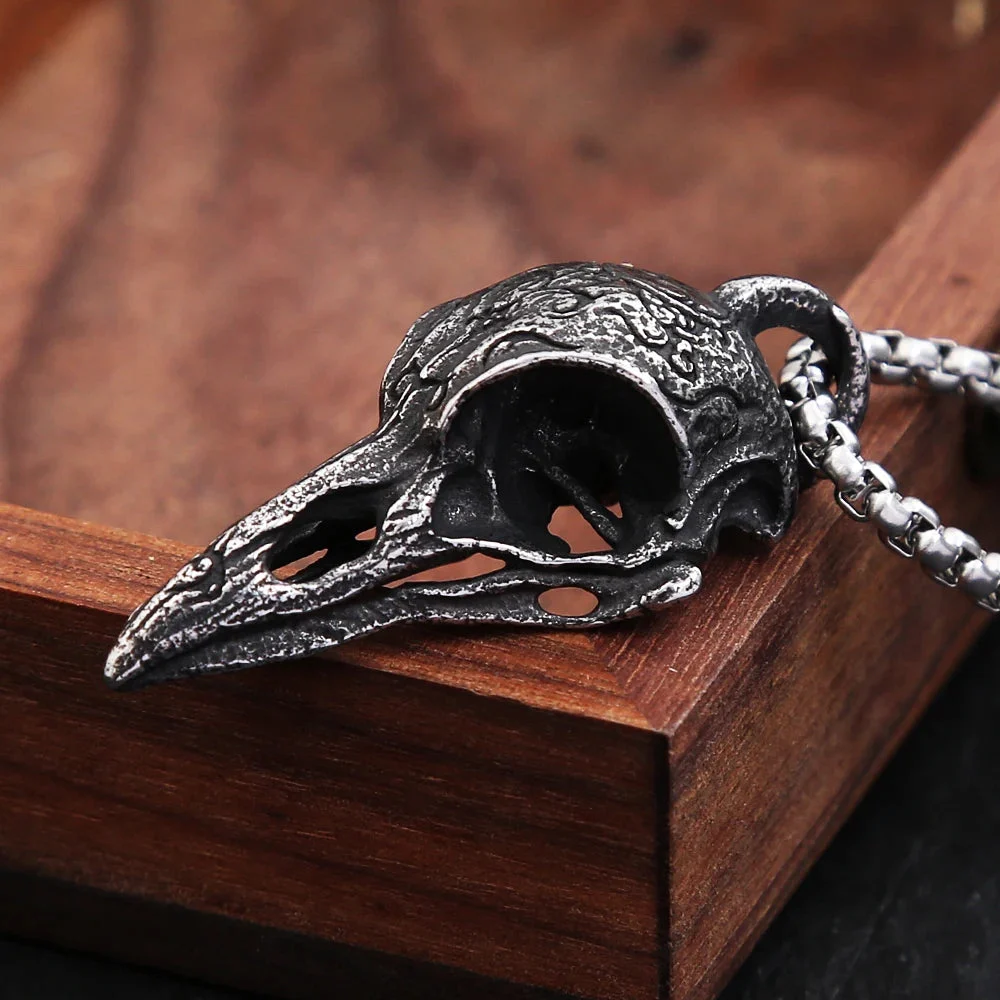
A piece like the Punk Viking stainless steel crow skull pendant shows why this grade works for the aesthetic: aggressive Nordic skull detailing, a chain built to carry a weighty pendant, and a metal you can wear against bare skin all day without the evening itch.
Metals to avoid
Skip listings that will not name the metal — “alloy” or “fashion metal” almost always means a nickel-heavy mix. Avoid copper and brass for pieces that touch skin for hours — they are the classic green-stain metals. Be cautious with plated jewelry: the plating is a temporary barrier, and once sweat and friction wear it thin, the reactive core underneath reaches your skin. Rose gold and some white golds can also irritate, since their alloys may contain copper or nickel.
How to read a product listing like a dermatologist
Look for the words “316L,” “surgical steel,” or “nickel-free” in the materials line. In the EU, the Nickel Directive limits how much nickel jewelry may release, so EU-compliant sellers are generally safer bets. If a listing hides the metal entirely, assume the worst and keep shopping. And remember that sensitivity can develop over time — a necklace you wore fine for years can start causing reactions, which is a sign to upgrade the metal, not your tolerance.
How to Shop Smart and Test What You Already Own
Before committing, do a 48-hour patch test: wear the piece inside your wrist and watch for redness or itching. For chokers, check the back of the pendant and the chain links, not just the decorative front — cheap findings and jump rings are often the reactive part.
For jewelry you love but cannot wear, try the community’s favorite hack: paint the skin-contact side with clear nail polish to seal metal away from sweat. It wears off and needs reapplying every few weeks, but it rescues statement pieces you refuse to retire. Silicone earring-style barrier discs and a thin layer of petroleum jelly before long wear days work on the same principle.
Fit matters too. A choker that is too tight traps sweat against the neck and accelerates both corrosion and irritation — our gothic choker sizing guide covers the two-finger rule that keeps air circulating. Rings are the same story: a snug band holds moisture against the finger, so get the size right with our gothic ring sizing guide before blaming the metal.
Skin-Friendly Gothic Pieces That Still Look Dangerous
Safe metal does not mean boring. These three pieces pair classic dark iconography with skin-friendly construction:
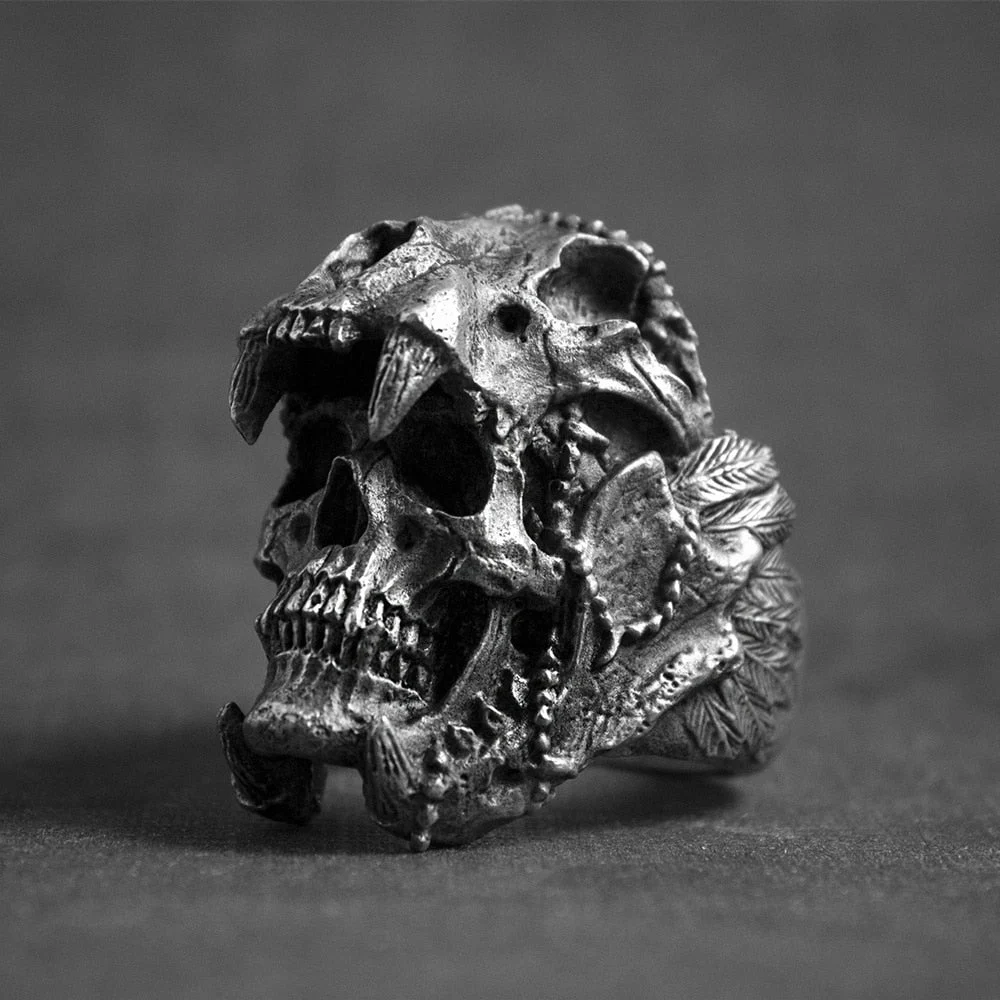
The 316L skull ring. Rings get the harshest test of any jewelry — constant skin contact, hand washing, sweat. A solid 316L stainless steel skull ring passes it because there is no plating to wear through and no copper to stain. The deep-carved skull detailing reads just as aggressive as any mystery-alloy ring, minus the green finger.
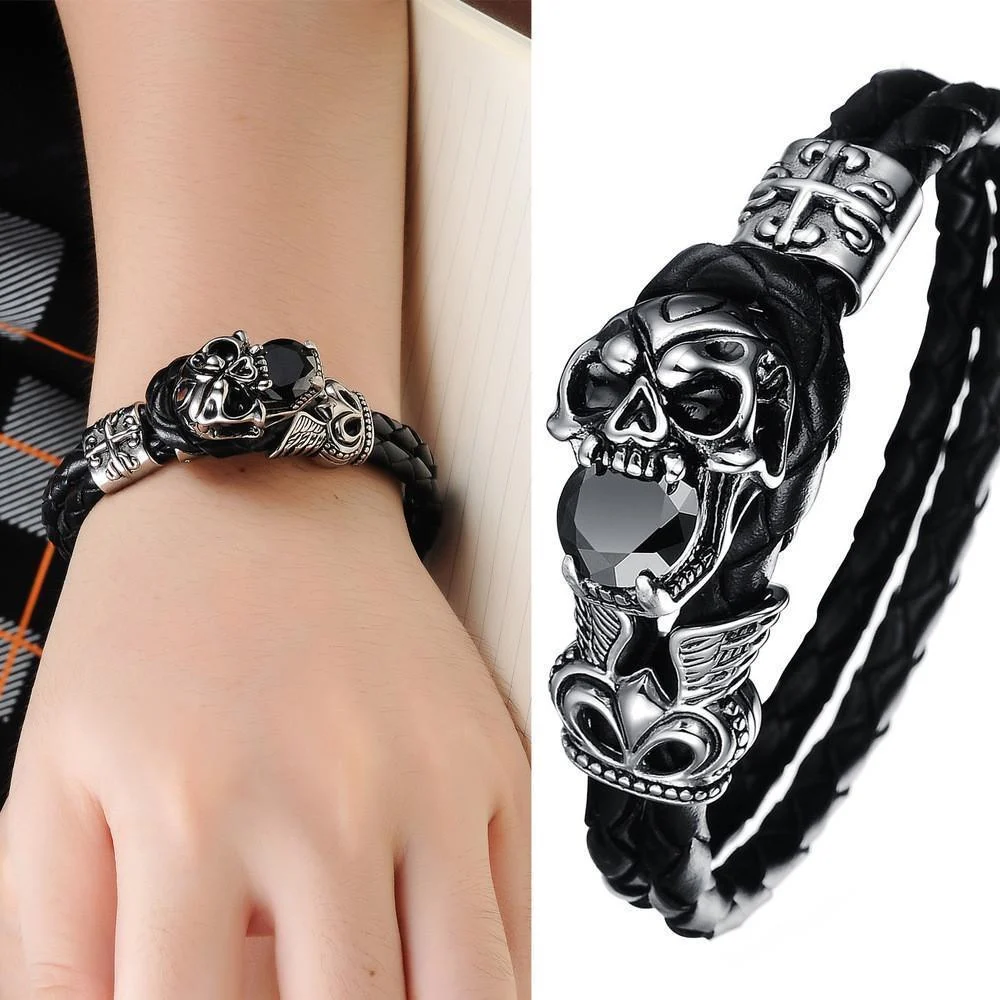
The leather-and-steel skull bracelet. Mixed-material pieces are smart for sensitive skin: genuine leather keeps most of the metal off your wrist while stainless skull hardware delivers the look. The genuine leather stainless steel skull bracelet balances both — braided leather against the skin, steel skulls on top. If you want the full symbolism breakdown of the skull motif, our gothic symbols guide covers what the skull has meant from memento mori to biker culture.
Keep Your Skin-Safe Pieces That Way
Even good metal lasts longer with basic care. Rinse jewelry with clean water after heavy sweating — salt accelerates corrosion on any metal. Dry pieces fully before storing, and keep them in a dry box or pouch rather than a humid bathroom. Keep perfume, sunscreen, and hairspray off the metal; apply them first, let them dry, then put jewelry on. For more detail, our jewelry tarnish prevention guide walks through the full routine. If you use the clear-polish barrier trick on older pieces, reapply it monthly and strip it with non-acetone remover before recoating.
FAQ
Does stainless steel ever turn skin green?
Quality 316L essentially does not — it contains no copper, and its chromium oxide layer stops the ion release that causes green staining. If a “stainless steel” piece stains you, it is usually low-grade steel, a plated piece with a copper or brass core, or damaged plating exposing the base metal.
Can I keep wearing my old nickel jewelry with clear nail polish?
For mild sensitivity, yes — a clear-polish barrier on all skin-contact surfaces works as a stopgap, but it needs reapplication every few weeks. For true nickel allergy with blistering or persistent rashes, retire the piece; barriers fail at clasps and high-friction points first.
Is sterling silver safe for sensitive skin?
Usually, yes — sterling silver (.925) is generally well tolerated, though very sensitive individuals can still react to its copper content. For goth jewelry, 316L stainless steel is cheaper, tougher, and needs less polishing than silver.
3 Comments