How to Layer Gothic Necklaces: Chains, Chokers & Pendants Without the Tangle
Summary: The secret to layering gothic necklaces without tangling is spacing: keep at least 2 inches between each chain, dress longest first and shortest last, and anchor the stack with one structured piece like a choker. This guide covers lengths, metal mixing, tangle fixes, and three ready-made dark stacks.
The 2-Inch Rule: Spacing Is Everything
Most tangling happens because chains share the same territory. Two necklaces within an inch of each other in length will find each other, rub, and knot by midday. The fix used by stylists is simple: keep at least 2 inches between every layer. A classic gothic stack runs a 14–16 inch choker, an 18–20 inch pendant, and a 22–24 inch statement chain — each piece living in its own zone with no overlap to fight over.
This rule matters doubly for dark jewelry, because blackened chains show every scuff from metal-on-metal grinding. Wide spacing isn’t just anti-tangle; it protects the finish.
Dress in Reverse: Longest First, Shortest Last
Fasten each clasp before the necklace goes around your neck — fumbling with a tiny clasp against two already-worn chains is exactly how knots are born. When the night ends, reverse the order: shortest off first, longest last.
Build the Stack: Choker, Pendant, Statement
Three layers is the sweet spot — build yours like this:
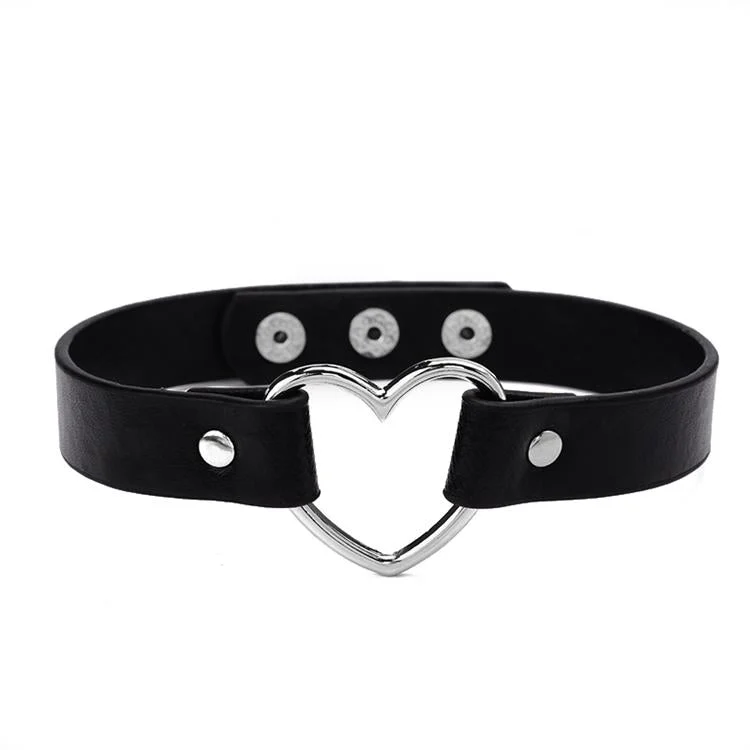
Layer 1 — the anchor (14–16″): a choker. Structured pieces like leather or velvet chokers barely move, which makes them nearly tangle-proof. A leather heart choker sits high and tight, giving the floating chains below a visual anchor — and because it doesn’t swing, it stabilizes everything beneath it.
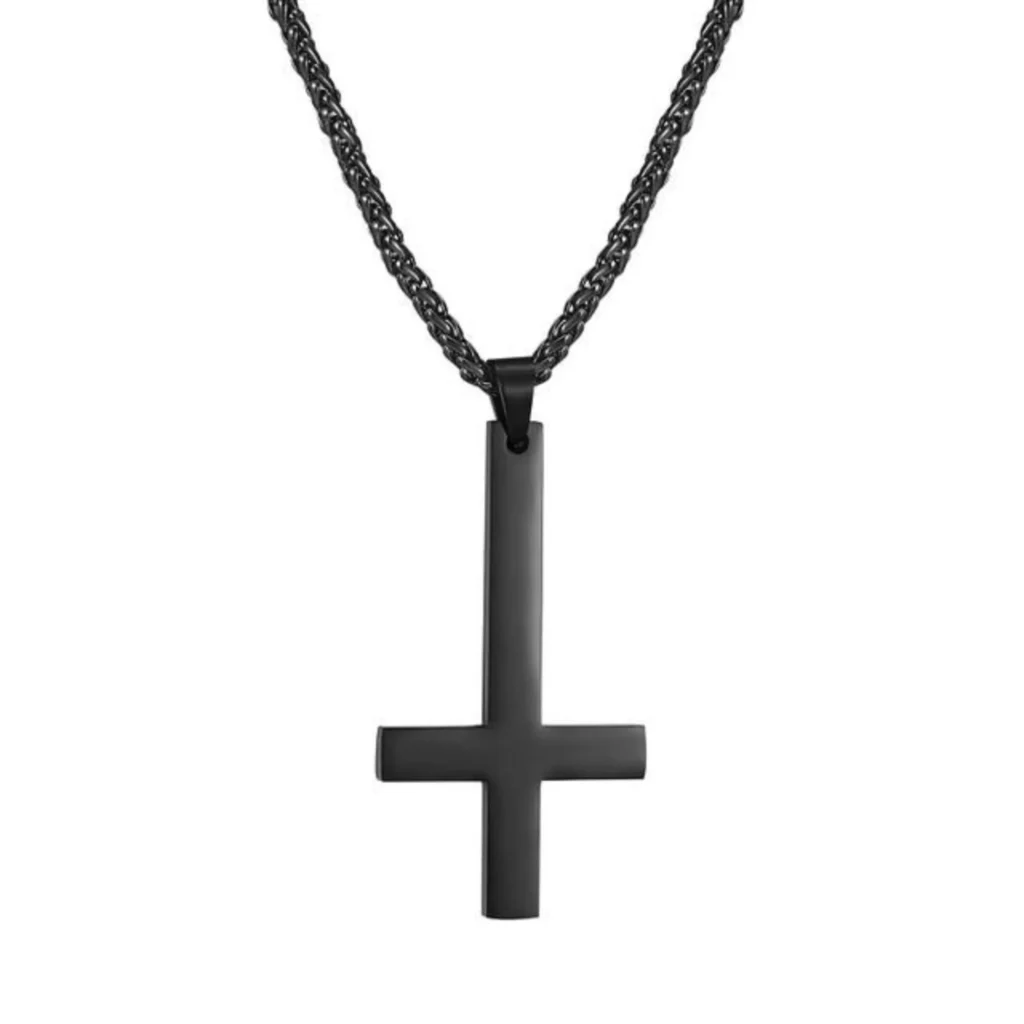
Layer 2 — the identity (18–20″): one pendant. This is the focal point of the stack — a cross, coffin, bat, or blade that says what the look is about. Stick to one pendant per stack: multiple large pendants compete for attention, and each swings on its own arc, multiplying tangle risk.
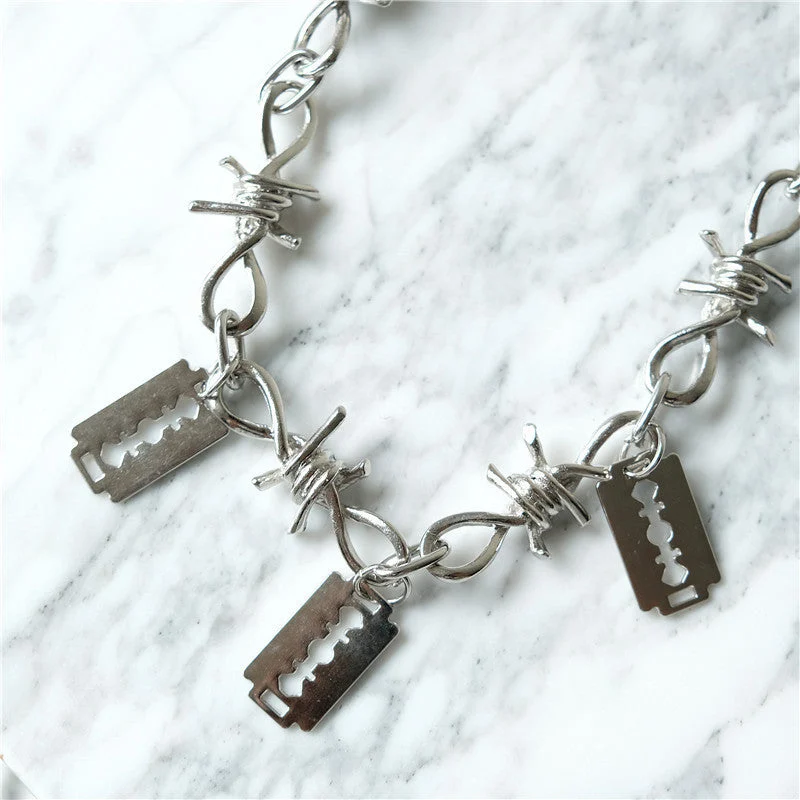
Layer 3 — the presence (22–24″): a chain with weight. Cuban links, Figaro, or a razor-blade chain add the long vertical line that makes a stack look deliberate — and a substantial bottom layer limits the range of motion of everything above it.
The heaviest piece always goes lowest: a heavy pendant on a short chain flips backwards and drags the stack off-center by evening.
Mixing Metals Without Looking Messy
Blackened steel plus silver always works because black reads as a neutral. The dominant-metal rule keeps mixed stacks coherent: choose one metal for two of your three layers and let the third be the accent. Three different metals in three layers looks accidental; two-and-one looks styled.
Vary texture as well as color: different finishes catch on each other less than identical chains, which also means less of the rubbing that wears plating off — a problem we break down in our gothic jewelry tarnish guide.
A pendant that sits too high looks cramped against a choker; at 20 inches the same pendant gets room to breathe. Our gothic necklace length guide maps standard lengths to neck sizes and pendant weights.
When They Still Tangle: The Fix List
When a well-spaced stack still knots, these fixes actually work:
1. A necklace spacer clasp. This small bar holds each chain’s clasp apart at a fixed distance — the single most effective purchase for chronic tanglers: under ten dollars, invisible at the nape, and it eliminates the root cause.
2. Lobster clasps over spring rings. Spring rings pop open under tension and their levers snag neighboring chains; lobster claws stay shut with a smooth profile. Check clasp type in product photos before chain style.
3. Rotate clasps to the back. After dressing, spin every clasp to the nape — thirty seconds that prevents hours of micro-snagging against pendants and textured links.
4. The straw trick for travel. Thread each chain through a drinking straw before closing the clasp, then pack flat. The straw keeps chains rigid and separated — free and effective.
5. Respect high-motion nights. Dancing, concerts, windy markets: tangle factories for delicate chains. Switch to chunkier gauges or drop to two layers — one fewer necklace beats an evening of bathroom-mirror untangling.
6. The mirror test. Turn your head side to side after dressing. If chains cross excessively, the combination is wrong — swap one length before leaving, not after the knot forms.
Comfort Rules Nobody Mentions
Match gauge to weight. A heavy pendant on a fine chain saws at your neck by evening and stretches the links permanently. Real heft needs matching link gauge.
Watch for nickel. Itching, redness, or green marks usually mean nickel in cheap alloy — the neck shows sensitivity first. Stainless steel layers are the sensitive-skin answer: durable, nickel-safe, and they hold a blackened finish well.
Choker fit is a science. Two fingers between choker and neck. Tighter migrates and chafes; looser rides into the pendant layer and becomes a tangle accomplice. Our gothic choker sizing guide covers measuring in detail.
3 Ready-Made Gothic Stacks
The Classic: a leather heart choker at 14 inches, an inverted cross pendant at 18–20 inches, and a razor blade chain at 22–24 inches. Black leather anchor, silver statement pendant, edged long chain.
The Minimalist: a thin black cord choker, one small bat or coffin pendant at 18 inches, and a single long silver chain. The spacing rules still apply, just quieter.
The Maximalist: a spiked collar, a coffin pendant, and a chunky Cuban chain. Maximum drama for low-motion nights — dinners, galleries, photoshoots.
FAQ
How many necklaces can you layer at once?
Three is the sweet spot for daily wear. Beyond four, tangling rises sharply unless lengths are widely spaced and one layer is a structured choker.
Why do my layered necklaces always twist to one side?
Usually a heavy pendant on too fine a chain, or clasps that migrated forward. Rotate every clasp to the nape, match gauge to weight, and confirm lengths are truly 2 inches apart.
Can I mix silver and blackened chains in one stack?
Yes — keep one metal dominant across two layers, let blackened pieces act as neutrals, and vary link texture so chains don’t catch. Clean spacing makes the mix look intentional.
2 Comments