Why Your Black Jeans Fade So Fast (and How to Keep Them Black): The Gothic Denim Care Guide
In short: Black jeans fade because black dye coats the yarn’s surface instead of soaking deep inside — so every wash, dryer cycle, and sun exposure strips more color away. Keep them dark for years: wash less often, turn them inside out, use cold water with a darks detergent, skip the dryer, and pre-soak new pairs in vinegar and salt.
Why Black Jeans Fade So Fast
Faded black jeans are one of the most common complaints in denim reviews — and it’s not your imagination. Black denim dye behaves like indigo: the pigment coats the outside of the cotton yarn instead of soaking through the core, so the color is always one hard wash away from rubbing off.
Three things destroy black dye fastest: heat (hot water and dryers open cotton fibers and release dye), friction (jeans tumbling against other clothes), and UV light (sunlight breaks dye molecules apart). Wash your black jeans after every wear on a warm cycle and toss them in the dryer, and they’ll go charcoal-gray within months.
Rule #1: Wash Your Black Jeans Less Often
The most effective anti-fade trick is also the simplest: stop washing your jeans so often. Most fading happens in the machine, so fewer washes means less fading — full stop.
Spot-clean stains with a drop of mild detergent on a damp cloth instead of running a full cycle. Between wears, hang jeans in fresh air. For the post-gig funk, denimheads swear by a 50/50 mix of water and plain vodka in a spray bottle — mist, air dry overnight, and odors disappear with no wash cycle at all. A realistic rhythm: wash every 5–10 wears, not on autopilot.
Always Wash Inside Out in Cold Water
When wash day comes, turn black jeans inside out first. This is the most repeated tip in denim care threads for a reason: it shields the outer surface — where the dye lives — from direct detergent contact and from zippers and buttons on other garments.
Use cold water only. Hot water swells cotton fibers and releases dye, and a gentle cycle with a small, balanced load keeps friction low. Never wash new black jeans with light clothes — fresh black dye bleeds, and your white tees will pay the price.
Set the Dye: The Vinegar-and-Salt Pre-Soak
Before wearing a new pair for the first time, give them a dye-setting soak — a classic from denim communities and textile guides alike. Vinegar helps close cotton fibers and rebind loose dye; salt acts as a mordant that strengthens the bond between pigment and fabric.
- Fill a bucket with cold water — never warm or hot.
- Add 1 cup of white distilled vinegar per gallon of water, plus 2 tablespoons of non-iodized salt (kosher or sea salt).
- Turn the jeans inside out, submerge fully, and soak 30–60 minutes. No twisting or scrubbing.
- Rinse lightly in cold water and air dry.
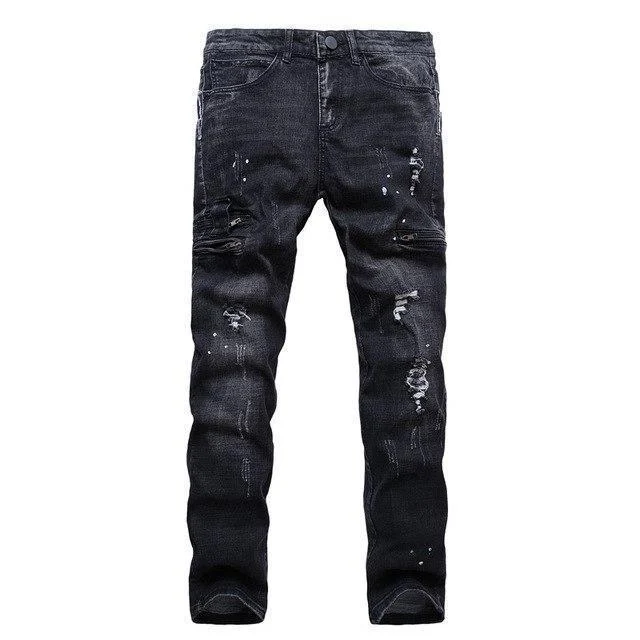
Use white distilled vinegar only — apple cider or balsamic vinegars contain pigments that can stain. This one-time soak won’t make jeans fade-proof, but it locks in noticeably more dye from day one, which is exactly what you want from a wardrobe staple like the Men’s Black Jeans, the deep-black foundation of most gothic outfits.
Use a Detergent Made for Darks
Regular detergents don’t distinguish between dirt and dye. Switch to a mild formula made for dark clothing — no bleach, no optical brighteners, no heavy enzymes. Use less than you think you need; excess residue dulls black denim. Skip fabric softener entirely: its waxy coating changes denim’s texture and can accelerate fading. Half a cup of white vinegar in the rinse cycle is a cheaper alternative that locks in color and rinses residue away.
Skip the Dryer — Air Dry in the Shade
The tumble dryer is black denim’s worst enemy: heat releases dye while tumbling abrades the surface. Dryers also break down the elastane in stretch denim, so jeans lose their shape faster.
Hang jeans by the belt loops or cuffs and let gravity pull out wrinkles. Dry in the shade or indoors — sunlight is a silent dye-killer that bleaches black denim, so keep outdoor-hung jeans inside out.
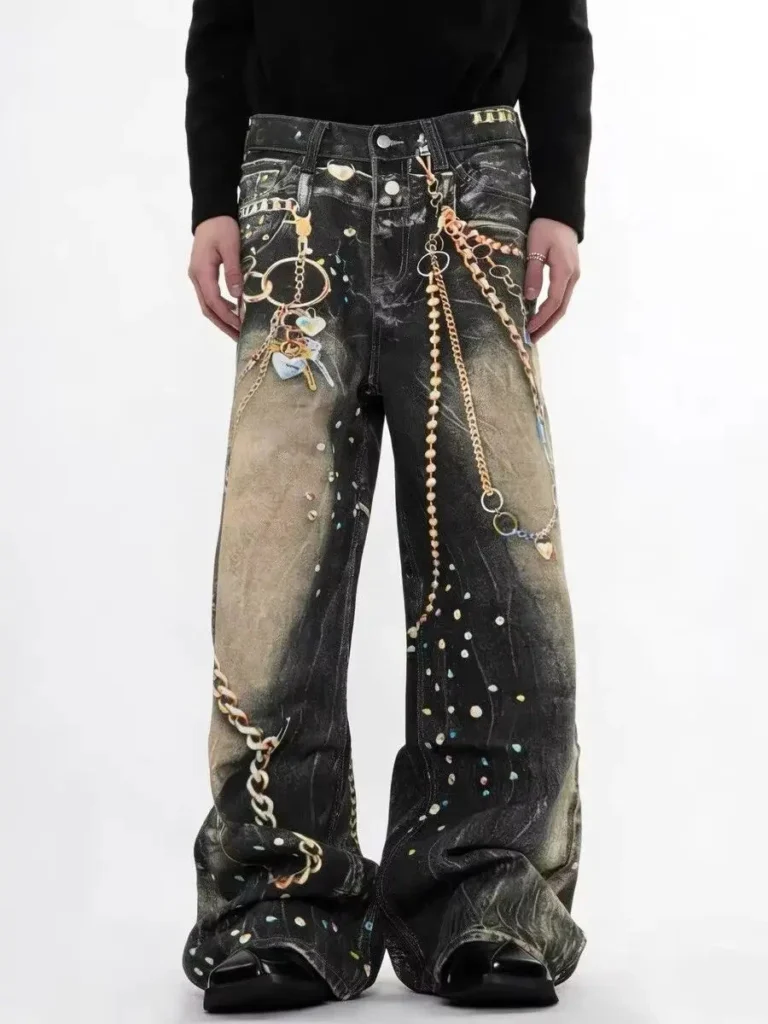
Drying habits matter most for statement pairs with hardware, like the Gilded Chain Grunge Jeans — dryer heat can tarnish chains and weaken attachment points, so air drying protects both the denim and the metalwork.
How to Revive Black Jeans That Already Faded
Already staring at a gray pair? A 30–60 minute cold vinegar soak rebinds residual dye and restores surprising depth; a salt soak improves tone consistency. For heavily faded jeans, the honest fix is a commercial black fabric dye used exactly per instructions — it re-pigments the yarn instead of masking the fade.
One myth to drop: freezing jeans does not kill odor-causing bacteria. It only puts them dormant until the jeans warm up. Air-drying and the vodka spray are the methods that actually work.
Buying Black Jeans That Stay Black Longer
Care matters most, but the jeans matter too. Check reviews for colorfastness — reviewers report fast when black jeans fade after two washes, and praise pairs that stay dark. Deeper-dyed, slightly heavier denim generally holds black longer than thin, cheaply dyed alternatives.
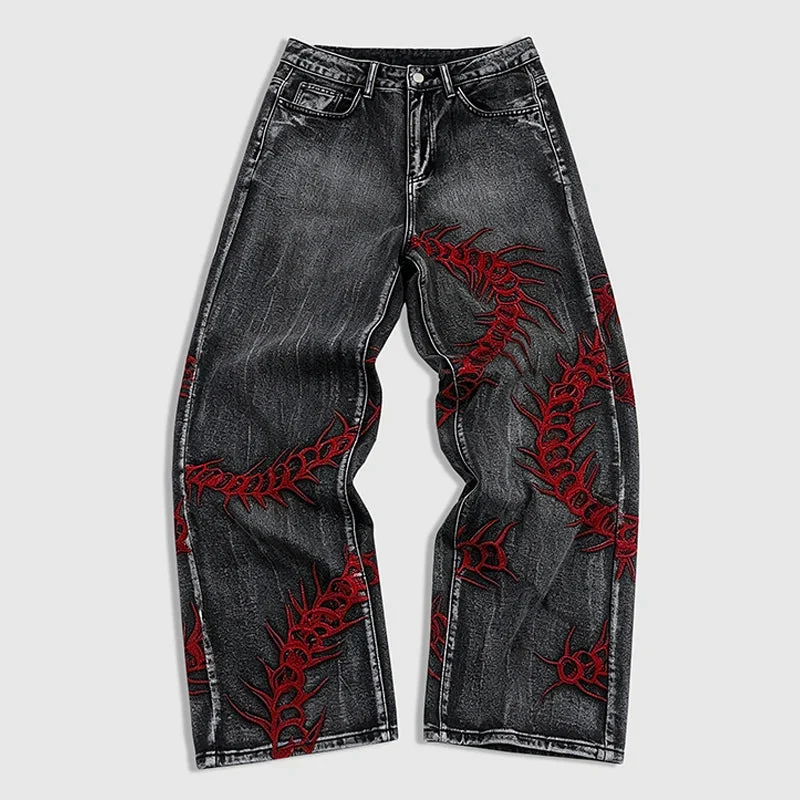
Buy from brands that build for the aesthetic rather than fast fashion. The Ash Noir Red Scorpion Gothic Jeans pair deep black denim with gothic detailing that looks its best when the black stays truly black.
FAQ: Black Jeans Fading
How often should I wash black jeans?
Every 5–10 wears. Spot-clean stains and air them out between washes — the fewer full wash cycles, the longer they stay black.
Does vinegar really keep black jeans from fading?
Yes, as a dye-setting aid. A cold pre-soak with white distilled vinegar (plus salt) helps fibers hold dye, and vinegar in the rinse cycle removes dulling detergent residue. It slows new color loss measurably, though it won’t reverse heavy fading.
Why did my black jeans turn gray after one wash?
Usually one of three culprits: hot water, a harsh detergent with bleach or brighteners, or the dryer. Wash inside out in cold water with a darks detergent, air dry in the shade, and the difference is dramatic.
1 Comment