Why Your Gothic Handbag Falls Apart: How to Choose a Durable Goth Bag That Actually Lasts
Most gothic handbags die the same way: the strap snaps at the hardware, the faux leather starts peeling within months, and the seams split along the edges. This guide explains why cheap goth bags fail, the five durability checkpoints to inspect before buying, and the simple care habits that keep a dark, detailed bag looking sharp for years instead of weeks.
Why Goth Bags Fall Apart: The 3 Most Common Failure Points
Scroll through any review section for gothic handbags and the same complaints repeat. Know these three failure points and you will know exactly what to inspect before spending money.
1. Straps snapping at the hardware
The number one review complaint is the strap detaching where it meets the metal ring or clasp. That junction carries the bag’s entire weight, and on cheap bags it hangs on a single row of stitching or a thin glued fold. One overloaded day and the strap tears free. Choose straps anchored with reinforced stitching, rivets, or folded-and-stitched loops — never a single glued seam.
2. Faux leather peeling and flaking
Peeling is the most dreaded fate of a gothic bag. The synthetic coating on low-quality PU dries out, cracks, and flakes off — sometimes while the bag sits unused in a closet. Handles and flex points go first. Once peeling starts it cannot truly be repaired; paint and glue only disguise it. Prevention and construction quality matter far more than any fix.
3. Seams and piping splitting
Piping along the seams coming away after months of daily use is the next most common complaint. Edges take the most friction — tabletops, doorways, lockers. Bags with bound edges, double-stitched seams, and reinforced corners survive far longer than bags with raw glued edges.
Faux Leather Truth: Why It Peels and What You Can (and Can’t) Do
Most gothic handbags use faux leather — and that is not automatically a problem. Quality vegan leather with a textured grain can look excellent and hold up well. The problem is cheap, smooth-coated PU with a thin plasticized surface layer. That layer is what flakes.
Heat and humidity accelerate the breakdown: hot closets, damp basements, and car trunks kill coatings fast, while sunlight dries the surface and fades the black dye. And the honest part reviewers wish someone had told them: once faux leather starts peeling, no conditioner fully reverses it. Conditioners slow further damage but cannot re-bond a delaminated coating. Buy the best-constructed bag you can, then protect it from day one — a well-made vegan leather bag you maintain will outlast a poorly made “genuine leather” bag every time. Construction quality beats material labels.
5 Durability Checkpoints Before You Buy a Gothic Bag
Use this checklist on any product page. It takes two minutes and filters out most bags destined for an early grave.
Checkpoint 1: Strap anchors and hardware
Zoom in on where the strap meets the bag. You want metal hardware with the strap looped through and stitched down — not glued. Metal feet on the bag’s base are a bonus: they keep the bottom off wet, abrasive surfaces.
Checkpoint 2: Stitching density and seam finishing
Look for tight, even stitching — double rows along stress seams are a strong durability signal — and bound or piped edges, which resist fraying far better than raw cut edges.
Checkpoint 3: Zipper and closure quality
Metal zippers outlast plastic ones and should glide without catching on the lining. Magnetic snaps and buckles should feel firm, not wobbly. A surprising share of one-star reviews are about zippers that jammed or pulls that snapped in the first month.
Checkpoint 4: Lining and interior construction
A sturdy fabric lining protects the bag from the inside — keys and chargers abrade unlined interiors quickly. Interior pockets also stop heavy items from pooling in one corner and stressing a single seam.
Checkpoint 5: Shape, size, and honest capacity
Overstuffing is a silent killer. A bag carried daily at 150% capacity strains every seam and strap anchor. Choose a silhouette that fits your everyday carry — a structured crossbody for daily essentials beats an oversized tote you will inevitably overload.
6 Care Habits That Double Your Gothic Bag’s Life
- Store it stuffed and upright. Fill the bag with tissue so it holds its shape, and keep it in a breathable dust bag — never plastic, which traps moisture.
- Keep it cool, dry, and dark. Heat, humidity, and sunlight are the three fastest agers of faux leather. A closet shelf beats a car trunk every time.
- Clean gently and regularly. Wipe with a soft, slightly damp cloth and mild soap, then dry immediately. Ground-in dirt accelerates cracking.
- Condition lightly. A faux-leather-safe conditioner every few months keeps the coating supple. Test on a hidden spot first.
- Rotate your bags. Daily use without rest wears any bag faster. Give your favorite a day off each week so materials recover their shape.
- Don’t overload it. Respect the bag’s capacity — carry heavy extras separately instead of forcing every seam into overtime.
Styling: Crossbody vs Handbag for Your Dark Wardrobe
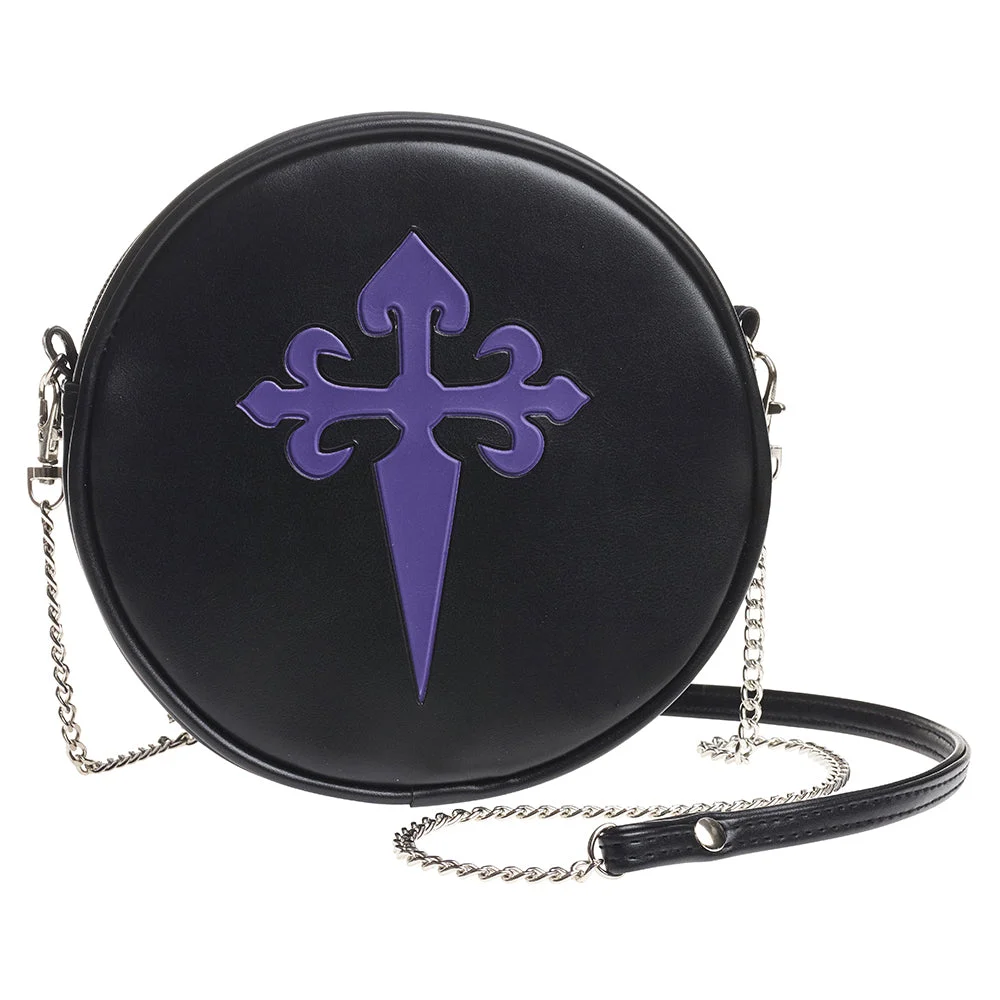
Durability aside, the silhouette should match how you live. A crossbody keeps hands free at concerts and nights out, and the diagonal strap spreads weight across your torso instead of hanging it on one shoulder. It pairs naturally with corset tops, band tees, and layered chokers.
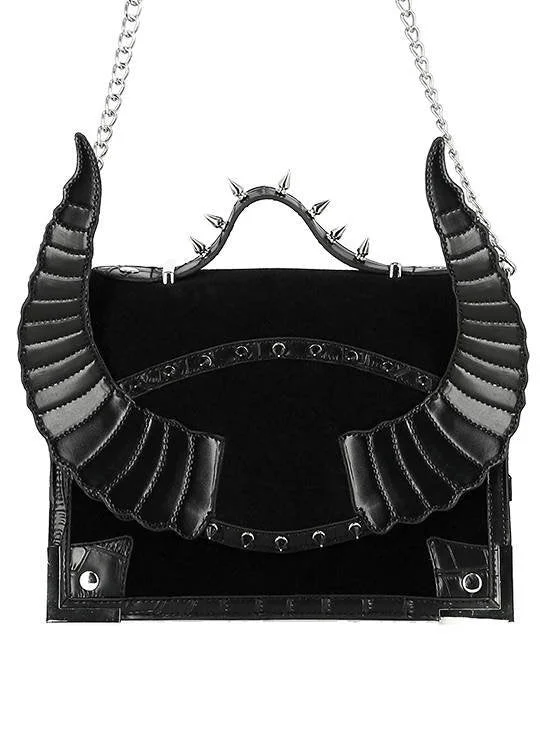
A structured handbag makes a stronger statement: coffin shapes, spiked details, and horn accents turn the bag into the outfit’s centerpiece. Style it with a long black coat or lace-up dress and let the hardware echo your jewelry. Statement bags with heavy embellishments benefit most from reinforced strap anchors — check those checkpoints twice.

FAQ: Gothic Handbag Durability
How long should a gothic handbag last?
A well-constructed faux leather bag with reinforced stitching and metal hardware should survive 2–4 years of regular use. Cheap bags with glued seams and thin coatings often fail within 6–12 months — usually at the strap anchors or through peeling.
Can you stop faux leather from peeling?
You can slow it significantly: store the bag cool, dry, and out of sunlight, and use a faux-leather conditioner. But once the coating delaminates, it cannot be truly repaired — only disguised. Prevention beats repair every time.
What is the most durable gothic bag style for daily use?
A medium crossbody with a wide strap, metal hardware, and a structured body: the weight distribution is kinder to straps, and the compact size discourages overstuffing.
Final Word: Buy Once, Carry for Years
The gothic handbag market is full of beautiful bags that fall apart — but the failure patterns are predictable, and so is the fix. Inspect the strap anchors, stitching, zippers, lining, and capacity before you buy; then store, clean, and rotate the bag like you mean it. Do that, and your next goth bag becomes a long-term companion instead of a one-season casualty.
Ready to pick one that lasts? Start with these proven silhouettes: the Diabolica Handbag for a spiked, horned statement piece; the Gothic Cross Bag as an everyday crossbody workhorse; and the Skull Crossbody Bag for skull detailing in a practical daily size. Run each through the five checkpoints above — and carry it for years.
1 Comment